Thursday, March 30, 2023

The Truth About the Story of the Real Life Vigilante Serial Killer

The line between serial killer and, say, a prolific executioner such as 17th century German executioner, Frantz Schmidt, who killed 394 people and disfigured and otherwise tortured about the same number elsewise (more on him in the Bonus Facts at the end of this video), is that one murdered and mutilated people deemed by local society to have deserved it, and the other did basically the same because they wanted to for whatever reason. Overlapping these two ends of the murderous spectrum in a ven diagram of awful is a man who, today, is celebrated by many for his actions, and currently walks the streets as a free man despite having murdered a confirmed 71 people. Here now is the story of Pedro Rodrigues Filho, aka Pedrinho Matador or Killer Petey.

While it’s often stated that Pedro only killed rapist and murderers and the like who he deemed deserved it, this isn’t exactly accurate, and the real story of the man is, in some ways, a bit more similar to many serial killers than some like to illustrate, though given he spent most of his life with nothing but criminals around did have a high density of criminal kills, and does have a bit of a redeeming arch at the end.

For starters, the first person Pedro tried to murder at the tender age of 13 in 1967 was, according to him, an older cousin he doesn’t give the name of. What did this cousin do? Apparently insulted Pedro’s mother in front of him in some way. If the prevalence of Yo Mama jokes the world over are to be accounted for, let’s just say we should all be glad Pedro wasn’t our youthful buddy. As to his method of attempted murder here, he states he pushed his cousin into a sugar cane press, which for a visual here usually consists of some rollers that pull in the cane and, well, squish it. Fortunately for his cousin, Pedro states, “I pushed him thinking his whole body would go through, but just his arm went through,” before the machine jammed up allegedly.

Pedro’s first actual murder likewise wasn’t exactly someone killing for any sort of vigilante justice, but rather murdering two people simply because he was upset his father got fired from his job as a security guard. Note to self, do not besmirch Pedro Filho’s parents in any way… Although Pedro’s father frequently beat the crap out of his mother without reprisal from Pedro up to this point so… hmmmm…

In this first instance of removing someone from our universe because he felt they deserved it, the Deputy Mayor of Alfenas fired Pedro’s father for allegedly stealing supplies from a high school kitchen, in Pedro’s view without any evidence. Whether his father actually did this or not isn’t really clear, with the then 14 year old Pedro becoming convinced a different security guard was responsible for the actual thefts.

Whatever the truth here, Pedro took it upon himself to take a shotgun that belonged to his grandfather, then directed the weapon at said Deputy Mayor until dead from the unfortunate holes in his body that resulted… For good measure, he also killed the other security guard with said weapon, because, why not? Justice!

Naturally sticking around after these murders wasn’t going to be a good idea, so Pedro absconded to the Mogi das Cruzes region of Sao Paulo, where he embraced a life of crime and murder for fun and profit, which is what he got up to for the next 5 years.

While little is generally said of the murders during this time that don’t fit the narrative of killing for vigilante justice, the ones people do like to focus on are those which followed a local gang murdering his pregnant girlfriend, Maria Aparecida Olympia, aka Botinha.

Of course, she was only killed in retribution for Pedro’s own brutal actions against the gang including allegedly a few murders, but nonetheless, his woman was dead and this is where Pedro decided to combine his self proclaimed love of murdering people (which by the way he has “I love to kill” tattooed on his body), with murdering only people he felt deserved it for what they’ve done… save, you know, all the other murders after nobody seems to want to mention such as the time he murdered someone who got his cousin pregnant but refused to marry her, and some guy because he snored too loud and it was annyong Pedro… But whatever, narrative! Or, I mean, have you ever slept next to someone who snored extremely loudly chronically? I guess we’ll give you a pass on this one Pedro…

But as for the gang who murdered his lady love in retribution for his own violent actions against them, Pedro got together a small group of his own gang of friends, showed up at a wedding some members of the rival gang were at, and killed the rival gang’s leader and six others. Also at the wedding 16 other people were severely injured, but managed to survive the ordeal. While it’s commonly reported, no doubt as it fits the narrative people put forth about Pedro, that the only people killed or injured at the wedding were the rival gang members, this strains credibility given Pedro’s little group opened fire on the large group of closely packed wedding guests… unless we are to assume only rival gang members and no family or the like were attending the wedding and that Pedro’s group were all among the world’s best sharp shooters.

On the plus side, I mean, everybody all dressed up for the wedding, if they wanted to, could just stick around for the funerals to kill two birds with one stone. Pedro was just considerate like that. A hero if anything…

All good things must come to an end, and in this case we’re discussing Pedro’s freedom, not the joyful murdering, and the 19 year old Pedro was ultimately arrested for his countless and often brutal crimes on Mary 24, 1973.

However, at one point being transported by the police, he was put in the back of a police van with two other criminals and, upon finding out one of said individuals was arrested for raping someone, went ahead and killed him, which the police only discovered when they stopped to get the criminals out.

In the end, Pedro was convicted and sentenced to 128 years in the clink, later ballooned to around 400 years when he kept on murdering away while in prison… Which was the perfect place for someone who loved him some murdering and had decided to get his kicks from murdering people who he felt deserved it. I mean, no matter who you are, or what life subjects you to, everybody needs a hobby.

Besides the snorer and another inmate whose slight against Pedro seems to have just been sneakily watching Pedro get it on with someone during a conjugal visit, perhaps the most notable killings or attempted killings he had while in prison included trying to murder a fellow serial killer, João Acásio da Costa, ironically enough with him concluding said man deserved to die for his serial killing crimes. Senor Costa was bludgeoned to near death, but survived apparently. Pedro also murdered a handful of people who’d dared try to kill him for his own murderous crimes.

Among the 47 or so murders he committed while in prison, arguably the most notable kill was killing his own father… Allegedly. Now, we should point out on this one that there are conflicting accounts of whether Pedro killed his father after Pedro was also in prison, or before, and even whether he actually killed his father at all or is just lying about that. As to those who state he killed his father before being imprisoned, these accounts state he went to the prison his father was being held at and brutally murdered him. As to the former story, Pedro was apparently also incarcerated in the same prison as his father and just did the deed there. As to him lying about the whole thing, we’ll get to that.

So which story is true? While we couldn’t find record of any death certificate or the like of his father to look at the date to determine the truth, we are inclined to go with that Pedro himself, if he killed his dad at all, was incarcerated at the time he did this. First, because if he really visited his father’s prison as a free man and then brutally killed him, we’re guessing he would have been arrested right then and there, unless the prison officials were quite literally the most incompetent of all time. Second, because, for whatever it’s worth, the man himself says he was in prison at the time he killed his father. And while trusting the word of a psychopathic serial killer on face value may seem questionable, especially concerning events that happened decades before and when the man himself has some inconsistencies in other stories he’s told after, this one seems likely enough given, again, that we just have a hard time believing he wouldn’t have been arrested immediately after if he’d been a free man at the time.

Whatever the case, why did he allegedly kill his father he previously had been so keen to defend?

Well, turns out his father had taken things up a notch on the brutal beatings of his mother and instead of just abusing her, much like his son’s favorite activities after, he murdered and mutilated her.

Pedro noted of this that, in his view his father had not previously killed his mother out of fear of Pedro, stating, “He was afraid of me. He was afraid that I would take his life… So he waited for me to go to prison to kill my mother.”

Pedro further states he was allowed to leave the prison under guard to attend his mother’s funeral, and, “I swore revenge in front of my mother’s coffin.”

On the murdering of his dear old dad, Pedro describes, “I killed my father in prison. I was already in prison then… I found a way to get to the cell where my father was.” At which point he stabbed him 22 times, and then, to quote this bastion of vigilante justice, “I cut out a piece of his heart. I chewed it…. Because I had said I was going to eat his heart. That’s what I did. It was revenge.”.

But for anyone wondering, Pedro doesn’t swallow, and instead after chewing a piece of his dad’s heart a bit, spit it out and “threw it over the body.”

Now, as alluded to, for whatever it’s worth a prison psychologist who worked with Pedro would later state none of that is true at all and Pedro’s father was actually killed by one of his former lover’s family members who was also in prison with Pedro’s father, and took issue with dear old dad’s abusive acts against said former lover.

But, I mean, if you can’t trust the word of a psychopath, who can you trust? Q.E.D.

Now, you might think this and the few dozen other murders (along with many other attempted murders) he committed while in the clink would ensure Pedro would never breathe free air again, but you’d be wrong. As we covered in our Who is the Most Prolific Serial Killer of All Time? video, several South American countries have a max number of years an individual can spend behind bars for things like murder, regardless of the number of years the courts level at them. And, in this case, at the time, the max sentence that could be leveled in Brazil was 30 years.

As such, despite all the killings on April 24, 2007 Pedro was released from prison.

Now, if you’ve been paying attention, you might at this point be thinking “1973 to 2007 is 4 more years than 30”. And, well, your mathematical skills are impeccable, as we are none-too surprised given you’re intelligent enough to watch our videos. Scholars and gentlemen all of you… Except, of course, all you in the audience who are not, in fact, men. Scholars though? Nailing it.

As for these approximately 4 extra years, they were tacked on separately owing to the near four dozen murders he committed while in the clink. Let that be a lesson to anyone thinking of committing crimes while incarcerated in a Brazilian prison. The Brazilian courts will absolutely put the smack down on you for it, clearly.

It maybe didn’t help that in an interview around the original time he made his first release request in 2003, that his main defense in his own words was, “[People] never seek to understand why I kill. You see, I never killed children. I love children…. I also never killed women or fathers of good families.” He also stated, “I can’t kill you for free. Why would I kill you if you have never done me or other people wrong?” Why indeed…

Interestingly here, unlike other unrepentant serial killers who found their way to freedom, Pedro seems to have decided to stop the killings despite him stating they gave him great pleasure, although did for a time wind up back in prison starting September 15 of 2011. On this one, he was given an eight year sentence for apparently rioting and depriving someone of their liberty, though he was let out a year early in 2018 owing to this time, not only not killing anyone, but also general good behavior.

Noteworthy here is that while the man himself today doesn’t appear to necessarily repent the murders, what he does have great regret for overall is his choice to enter a life of crime at all. And, indeed, even has a YouTube channel where he talks about his crimes and tries to counsel young people to not follow his former example. Stating, “Crime is no joke. Many are coming in because they see the branches [fame and money], not the root [prison and death]. [Crime] is like the devil: he gives with one hand and takes away with the other. He has a lot of  young people who come in, and when they want to leave, it’s too late.”

As to whether he will ever murder again, channeling his inner Sling Bade (“I don’t reckon I got no reason to kill nobody.”), Pedro states, “No. I would only kill again if someone came to take my life or the lives of the people I love, who are my family.”. Essentially having adjusted his rubric for who deserves to be murdered from anyone who committed a heinous crime in his view, or, you know had a snoring problem, to those threatening his loved ones or himself. Which, to be fair, is an improvement, and one, to an extent, most people can probably get behind.

And, indeed Pedro states of his rehabilitation, “Even those seen and stigmatized as evil can find their light…. Nobody said it would be easy. I [accept] my mistakes, I paid my penalty, so I don’t need to be judged or defended by anyone anymore.” And “For those who believe, follow me on the journey to the light because darkness has already consumed more than two-thirds of my life.”

Today something of a minor celebrity in some ways, with many admirers who approach him to get pictures and the like with the man, Pedro doesn’t really enjoy this attention on his past crimes. Stating “I [don’t] want to be known by that name anymore. Leave Pedrinho Metador alone…. [I want to] live the rest of the life I have in peace.”

If you liked this article, you might also enjoy our new popular podcast, The BrainFood Show (iTunes, Spotify, Google Play Music, Feed), as well as:

Bonus Fact:

Going back to 17th century German executioner, Frantz Schmidt, over the course of his near five decade career he executed 394 people and disfiguring or otherwise tortured or flogged roughly the same number.

Schmidt was one of those thrust into the profession as his father was strong-armed into becoming an executioner, condemning Schmidt to the same life once he came of age, though Schmidt’s story has something of a happy ending.

Like many executioners, Schmidt was given a wide berth by the public in his day-to-day life, but the incredible professionalism with which he conducted his grisly duties earned him the begrudging respect of both the general public and those in power. In his later years, Schmidt was able to parlay this into a meeting with Nuremberg authorities and then was able to appeal to Emperor Ferdinand II himself, with the goal of restoring his family honor.

Swayed by not just Schmidt’s words, but also letters from city council members and other notable people extolling Schmidt’s character and dedication to his duty, the then 70 year old executioner was granted both Nuremberg citizenship and had his family name cleared, allowing his progeny to escape the bloody specter of his work.

Of course, being ultra-professional with the profession was something of a necessity for Schmidt as, at the time in Germany, there was a law stipulating that any executioner tasked with doling out death by the sword (a form of execution largely reserved for especially important individuals) who took more than three swings to behead a victim would be condemned to die themselves.

Even where such laws didn’t exist, the job of an executioner was extremely dangerous as executioners were also at risk of being killed either by vengeful relatives or the crowd witnessing an execution. In regards to the latter, if an executioner was especially cruel in their meting out of punishment, simply incompetent to the point that they caused undue suffering, or just otherwise acted in an unprofessional manner in performing their duties, it wasn’t unheard of for a crowd to retaliate by killing the executioner on the spot, generally with no consequence to anyone in the mob.

This constant danger of the job was something Schmidt himself talked about several times in his journal, though he only notes one instance where the crowd turned into a mob. This occurred during a flogging he was performing, with the person being beaten ultimately stoned to death by the crowd.

As you might imagine from this, in cases like Schmidt who was trained from childhood to take over the job from his father, a rather lengthy apprenticeship was called for, including a robust education from one’s parent, followed by assisting in executions and torture from a young age. Schmidt also notes that he practiced executions extensively on various animals before being allowed to actually execute a human himself. The end goal of all of this was to make sure he wouldn’t screw up, as raucous mobs didn’t really care if it was someone’s first day on the job or not.

”Expand


How Exactly Did One Become an Executioner in Medieval Times?


https://ift.tt/AH9Cm8n


https://ift.tt/2lOmFEP


Case 127: Killer Petey


https://ift.tt/O6RoYet


https://ift.tt/M83PnsL


https://www.dailystar.co.uk/news/latest-news/serial-killer-opens-up-how-24219740


https://ift.tt/zCnKZHw


https://ift.tt/tiUKh5a


Pedro Rodrigues Filho: The Man Who Only Killed Criminals


The post The Truth About the Story of the Real Life Vigilante Serial Killer appeared first on Today I Found Out.


from Today I Found Out
by Daven Hiskey - March 30, 2023 at 05:39PM
Article provided by the producers of one of our Favorite YouTube Channels!
-

Wednesday, March 29, 2023

Forgotten History- That Time Hitler had His Agents Secretly Attack Germany in Order to Justify Starting WWII

On the first of September, 1939, nearly 1.5 million troops, 2,750 tanks, and 2,300 aircraft of Adolf Hitler’s Third Reich stormed over the border into Poland. That same day, Britain and France, bound by treaty to defend Polish sovereignty, issued an ultimatum calling for the immediate withdrawal of German forces. The ultimatum was ignored, and on September 3 the Allied powers declared war on Germany. The Second World War in Europe had begun. While Hitler’s true goal was plain for all to see, the Führer justified the invasion as a response to growing Polish aggression, pointing to a series of attacks against German citizens both within Poland and just across the border. But while many of these attacks did indeed take place, they were carried out not by Poles but rather German agents in a carefully-coordinated false flag operation designed to give Hitler the justification he needed to launch his war of conquest. This is the shadowy story of Operation Himmler.

Poland had been high on Adolf Hitler list of grievances since taking power in Germany in 1933. On June 28, 1919, in the wake of the First World War, the victorious Entente powers forced a defeated Germany to sign the Treaty of Versailles, which saddled the country with the sole responsibility for starting the war and a series of harsh concession. The country was forced to pay the modern equivalent of $33 billion in reparations, forbidden from having an air force or a standing army larger than 100,000 men, and stripped on 65,000 square kilometres of territory and all its overseas colonies. Among these territorial concessions was the creation of the Danzig Corridor, a 50-kilometre-wide strip of land which connected the newly restored Polish Republic to the Baltic coast and completely cut Germany off from its territory of East Prussia.

A popular narrative holds that the terms of the Treaty of Versailles – particularly the monetary reparations –  were excessively harsh, and led directly to the hyperinflation of the 1920s, the rise of the Nazis, and the outbreak of the Second World War. Indeed, following the signing of the treaty, Allied Supreme Commander Marshal Ferdinand Foch prophetically declared:

“This is not a peace. It is an Armistice for twenty years.”

In reality, reparations played only a partial role in Germany’s post-war economic troubles, while the reparation payments themselves were cancelled in 1932 after Germany had paid only 5 billion of its $33 billion obligation. Nonetheless, for many Germans the Treaty of Versailles was a national humiliation, and Adolf Hitler ruthlessly exploited this resentment to carry himself and his National Socialist Party to power. Hitler wasted no time reclaiming the territory lost to the Treaty of Versailles. On March 7, 1936, German troops re-occupied the Rhineland, which had been de-militarized since 1919, while on March 12, 1938, the Anschluss unified Germany and Austria into “Greater Germany.” Hitler next laid claim to the Sudetenland region of Czechoslovakia, home to a large minority of ethnic Germans. These claims precipitated an international crisis and brought Europe to the edge of war. In desperation, in September 1938 British Prime Minister Neville Chamberlain flew to Munich and negotiated the handover of the Sudetenland in return for the cessation of German territorial expansion. This compromise infamously backfired, for Hitler, emboldened by the Allied policy of appeasement, proceeded to invade the rest of Czechoslovakia on March 15, 1939. However, as there were hardly any ethnic Germans in this part of Czechoslovakia, the invasion laid bare Hitler’s true intentions. Thus, when he next demanded the return of the Danzig corridor to Germany, the Allied powers were far less willing to negotiate. Hitler therefore turned to the infamous Schutzstaffel or SS – his bodyguard-turned-political paramilitary force – to engineer a series of supposedly Polish attacks along the border to justify the outright invasion and occupation of Poland, scheduled for August 26, 1939. On August 22, as troops were massing at the border, Hitler told his generals:

“I will provide a propagandistic casus belli. Its credibility doesn’t matter. The victor will not be asked whether he told the truth.”

The task of planning these false-flag operations -codenamed Undernehemen Himmler after Heinrich Himmler, head of the SS – fell to Heinrich Müller, chief of the Gestapo secret police, and Reinhard Heydrich, head of the Sicherheitsdienst or SD, the SS intelligence service. Operation Himmler would consist of a series of 21 staged attacks by SS troops dressed in Polish uniforms, carried out against various targets just across the German border, including the railway at the Jablunka [“Ya-bloonk-ah”] Pass, the German customs station at Hochlinden [“Hock-lihn-den”], the railway station at Alt-Eiche [“Ahlt-ike”], and the forest service station at Pitschen. The most elaborate operation, however, would be directed at the radio station at Gleiwitz [Glaye-vits”] in Upper Silesia. Built in 1935 by German electronics firm Lorenz, the complex’s 33-metre-tall antenna mast remains the tallest wooden structure in Europe. Upon seizing control of the station, the SS troops would use the transmitter to broadcast a pro-Polish message across Germany, providing indisputable proof of Polish aggression. And to make this and the other operations look even more convincing, inmates from the Dachau concentration camp would be dressed in Polish uniforms, drugged, shot in the face to prevent identification, and left behind at the scene of the attacks. In a classic example of dark Nazi euphemism, these planted bodies were referred to as konserve or “canned meat,” leading to the common but false claim that the whole operation was code-named Unternehemen Konserve. 

The man tasked with leading the attack on the Gleiwitz radio station was 29-year-old SS-Stürmbannführer Alfred Naujocks [“Naw-yocks”], an accomplished amateur boxer and street brawler from the Nazi Party’s earliest days. By 1939 he had become one of Reinhard Heydrich’s most trusted agents and placed in charge of the SD’s foreign section, forging passports, identity cards, money, and other documents for SD agents operating abroad. As Naujocks told a reporter in 1960, Heydrich summoned him to his office and explained:

“Within a month we shall be at war with Poland. The Führer is determined. But first we have to have something to go to war about. We’ve organised incidents in Danzig, along the East Prussian border with Poland, and along the German frontier. But there has to be something big and obvious.”

In mid-August 1939, Naujocks and a squad of six Polish-speaking SS soldiers travelled to Gleiwitz and checked into Oberschlesischer [“Oh-burr-shlay-sick-er”] Hotel, claiming to be mining engineers prospecting for minerals in the area. They then went about assembling the Polish uniforms, documents, weapons, cigarettes and other items they would need to carry out the staged attack. Intimately involved in this procurement process was an unexpected figure: none other than Oskar Schindler, the industrialist who would later go on to save the lives of 1,200 Jews during the Holocaust. In 1939, however, Schindler had yet to have his change of heart, and still actively supported the Nazi war effort. Indeed, this was not even his first collaboration with German intelligence. In 1936 Schindler, broke and desperate following a series of failed business ventures, joined the Abwehr [“Ab-vayr”], the German military intelligence agency, and was assigned to spy on Czech military defences near the town of Ostrava. Unfortunately, Schindler proved an even worse spy than he was a businessman, and was soon arrested, charged with treason, and sentenced to death in August 1938. But before he could be executed, Germany invaded Czechoslovakia and Schindler was freed. He was then promoted by the Abwehr and made deputy commander of intelligence in Ostrava, which was less than 20 kilometres from Gleiwitz. Uniforms and other materials for the Glewitz operation were stored in Schindler’s apartment, while a network of Abwehr agents under his command helped smuggle SS agents across the border into Poland.

By August 25, everything was ready, and Naujocks and his squad awaited the codeword “Grossmutter gestorben” – or “Grandmother has died” – that would set the operation in motion. However, Hitler, sensing that Poland and its allies might soon capitulate to his demands, postponed the invasion to September 1, leaving Naujocks and his men waiting for nearly two weeks. Finally, on the evening of August 31, a phone call bearing the codeword arrived at Oberschlesischer Hotel, and the squad piled into two cars and drove to the Gleiwitz radio station. Also in one of the cars, dressed in a Polish uniform and drugged into unconsciousness, was Fasciszek Honiok, a 43-year-old Upper Silesian farmer who had been arrested by the Gestapo for collaborating with Polish saboteurs.

The squad reached the station around 8 PM and stormed up the stairs and through the front door. They met no resistance from the guards and quickly overpowered both them and the engineers on duty, binding and locking them up in the basement. Fasciszek Honiok’s unconscious body was then dragged from the car, shot through the back of the head, and draped over the front stairs as “proof” of Polish involvement in the raid. But as one of Naujock’s men, Karl Hornack, prepared to make the staged pro-Polish broadcast, he realized he had made a crucial error. The building the squad had raided contained no broadcast studios, only transmitting equipment designed to broadcast signals received via cable from the city of Breslau. After a desperate 10-minute search of the building, Hornack resorted to using emergency storm microphone, designed to warn radio listeners of inclement weather. In perfect Polish, Hornack barked over the airwaves:

“Attention! This is Gliwice. The broadcasting station is in Polish hands.”

Hornack had intended to end the broadcast with a statement about Polish territorial claims in the region, but this part of the message was cut off – either due to technical problems or a Polish technician who managed to shut off the transmitter. But it was enough, and as Naujock’s squad withdrew from the complex, radio stations in Germany rebroadcast the transmission across the country as proof of Polish aggression. The other 20 Operation Himmler attacks were similarly successful – with one major exception. The squad tasked with raiding the Hochlinden customs post was not informed of the delay in the invasion plans and attacked before the post could be cleared, resulting in the deaths of several German citizens. But it hardly mattered: Hitler had his pretext for invasion. The next morning, the Führer gave a speech before the German Parliament or Reichstag, declaring:

“I can no longer find any willingness on the part of the Polish Government to conduct serious negotiations with us. These proposals for mediation have failed because in the meanwhile there, first of all, came as an answer to the sudden Polish general mobilization, followed by more Polish atrocities. These were again repeated last night. Recently in one night, there were as many as twenty-one frontier incidents: last night there were fourteen, of which three were quite serious. I have, therefore, resolved to speak to Poland in the same language that Poland for months past has used toward us… This night for the first time Polish regular soldiers fired on our own territory. Since 5:45 a. m., we have been returning the fire… I will continue this struggle, no matter against whom, until the safety of the Reich and its rights are secured.”

As Hitler spoke these words, the combined might of the German Wehrmacht and Luftwaffe was already storming across the border into Poland. While the Allied powers were not fooled for long, the confusion sown by the Operation Himmler attacks bought Hitler valuable time to complete his invasion unopposed. On September 17, the Soviet Union, with whom Hitler had signed a non-aggression pact, invaded Poland from the east. By October 6, Poland’s fate was sealed, and the stage was set for the most destructive conflict in modern history.

If you liked this article, you might also enjoy our new popular podcast, The BrainFood Show (iTunes, Spotify, Google Play Music, Feed), as well as:

Expand for References

Graham, Bob, World War II’s First Victim, The Telegraph, August 29, 2009, https://web.archive.org/web/20120314190818/http://www.telegraph.co.uk/history/world-war-two/6106566/World-War-IIs-first-victim.html


Gliwice Radio Status, Museum on Radio History and Visual Arts, https://web.archive.org/web/20061104063227/http://www.muzeum.gliwice.pl/en/radiostacja/


Lebovic, Matt, 80 Years Ago, How a Very Different Schindler’s ‘List’ Helped Ignite WWII, The Times of Israel, August 30, 2019, https://www.timesofisrael.com/80-years-ago-how-a-very-different-schindlers-list-helped-ignite-wwii/


Pope, Cassie, How a False Flag Sparked World War Two: the Gleiwitz Incident Explained, History Hit, August 31, 2018, https://www.historyhit.com/gleiwitz-incident-explained/


Carlson, Cody, This Week in History: Nazis Stage Fake Attack at the Start of WWII, Deseret News, September 3, 2014, https://www.deseret.com/2014/9/3/20547775/this-week-in-history-nazis-stage-fake-attack-at-the-start-of-wwii


Dowell, Stuart, How the Death of a Farmer and a Bungled Siege of a Radio Tower Gave Hitler His Justification to Unleash WWII, The First News, September 1, 2020, https://ift.tt/lIHaz26

The post Forgotten History- That Time Hitler had His Agents Secretly Attack Germany in Order to Justify Starting WWII appeared first on Today I Found Out.


from Today I Found Out
by Gilles Messier - March 29, 2023 at 09:40PM
Article provided by the producers of one of our Favorite YouTube Channels!
-

Review: Humpty Dumpty Party Mix All Dressed


We've enjoyed many All Dressed snacks over the years, but usually they're just potato chips, so this was a rare chance to enjoy the Canadian delicacy on a variety of different types of snacks. ...

from Taquitos.net Snack Reviews
by March 29, 2023 at 10:35AM

Thursday, March 23, 2023

Review: Snack Worthy Sea Salted Caramel Puffs


When I spotted several shelves of Snack Worthy brand snacks at a truck stop, my first reaction was, how did I go 23 years reviewing snacks without knowing that this brand existed? So of course I had to buy one, and out of a few dozen varieties, this one seemed most worthy. ...

from Taquitos.net Snack Reviews
by March 23, 2023 at 08:29AM

Monday, March 20, 2023

Review: Cracker Jill The Original


This snack was just rename of Cracker Jack (kind of like when Herr's had His Chips) with the same combination of caramel corn and caramel-coated peanuts. ...

from Taquitos.net Snack Reviews
by March 20, 2023 at 07:51PM

Review: Takis Waves Intense Nacho


It seems that Barcel has gone all-in for branding every salty snack as Takis, as this follow-up to the Fuego Waves rippled potato chips had a flavor not previously seen on the Takis tubular tortillas (though the back of the bag seemed to announce a simultaneous release in both popcorn and tubular tortilla form). ...

from Taquitos.net Snack Reviews
by March 20, 2023 at 10:44AM

Review: Annie's Organic Original Snack Mix


This mix contained small, wiggly breads sticks, two shapes of small pretzels (round and 2x2 grid) and two flavors of bunny-shaped crackers (cheddar and butter). ...

from Taquitos.net Snack Reviews
by March 20, 2023 at 09:41AM

Review: Takis Pop! Fuego


This snack from Takis continued the trend of rebranding every Barcel snack that isn't actually Takis in the tubular tortilla sense as Takis anyway. ...

from Taquitos.net Snack Reviews
by March 20, 2023 at 09:09AM

Review: Sun Chips Minis Harvest Cheddar


This snack put miniaturized Sun Chips in the same type of can recently used for Doritos and Cheetos, which just happens to be identical in size to a Pringles can, and they've been spotted in some stores sharing the Pringles shelf. ...

from Taquitos.net Snack Reviews
by March 20, 2023 at 07:54AM

Friday, March 17, 2023

Review: Ilocos Chichacorn BBQ


This bag contained corn kernels in all sorts of strange shapes, with more shape variation than typical corn kernel snacks. ...

from Taquitos.net Snack Reviews
by March 17, 2023 at 05:17PM

Thursday, March 16, 2023

Review: Three Amigos Elote Mexican Street Corn Snack Mix


This small bag had a whole lot going on, with quite a few different snack elements and one of the longest ingredient lists we've seen. ...

from Taquitos.net Snack Reviews
by March 16, 2023 at 09:29AM

Tuesday, March 14, 2023

Review: Koloko Rice Crackers Tube Rice Pudding


We've reviewed many snacks from Koloko with the same shape as this one, but this was the first that was made with a rice base rather than peas. ...

from Taquitos.net Snack Reviews
by March 14, 2023 at 06:57PM

Monday, March 13, 2023

Review: Iberia Snack Crackers


These crackers looked like Ritz knockoffs, with the box offering three separately wrapped stacks of 28 round crackers each. ...

from Taquitos.net Snack Reviews
by March 13, 2023 at 07:30PM

Tuesday, February 28, 2023

Review: Gugën Churros Snack Cheese Cream


This individually wrapped churro promised a different flavor from the similarly packaged chocolate one. ...

from Taquitos.net Snack Reviews
by February 28, 2023 at 09:56AM

Sunday, February 12, 2023

Review: Trader Joe's Super Seedy Cheese Snack Bites


These squares of solidified parmesan cheese had a light beige color overall, with many bits of various shapes and sizes embedded inside. ...

from Taquitos.net Snack Reviews
by February 12, 2023 at 09:33AM

Wednesday, February 1, 2023

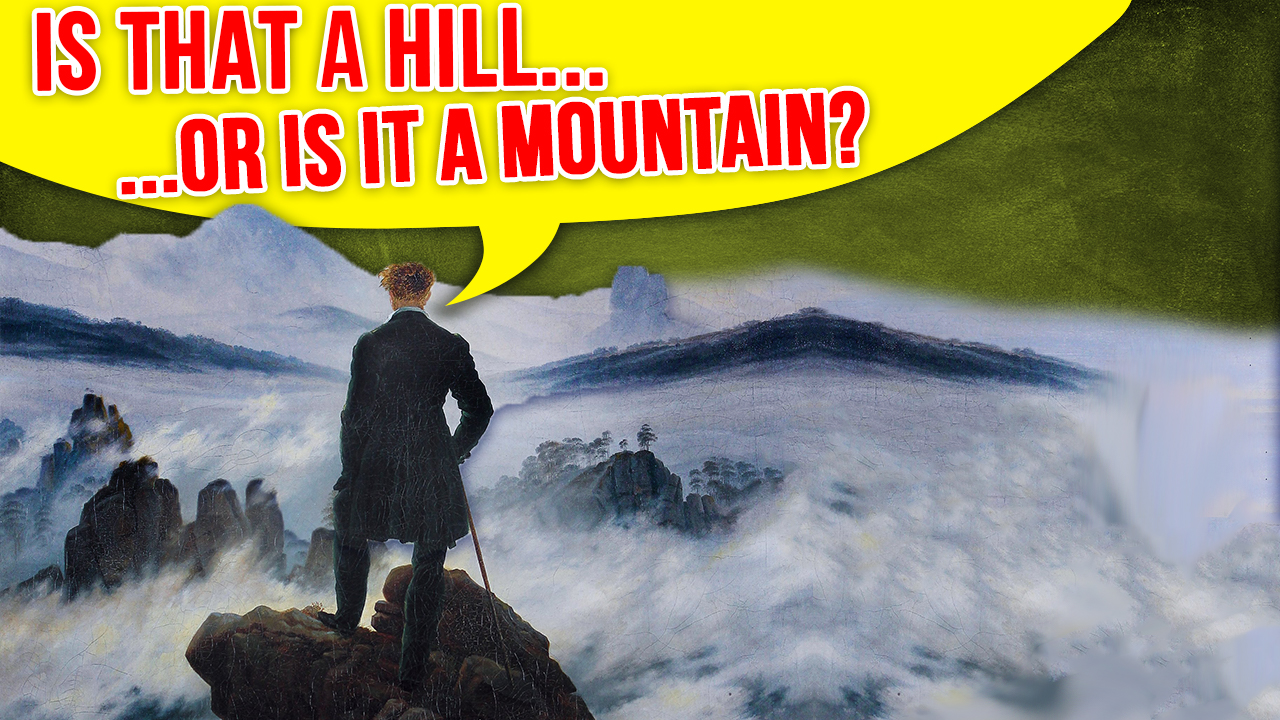
When Does a Hill Become a Mountain?

Ever wonder when a hill becomes a mountain? Well, it turns out that language, like the universe, likes to resist simplicity… So the answer is- it’s complicated. But that’s not very interesting, so let’s dive into it shall we?

To begin with, turning to our trusty Merriam-Webster Dictionary we have the following definition of a mountain: “a landmass that projects conspicuously above its surroundings and is higher than a hill”

Helpful…

Maybe the Oxford English Dictionary can do better? According to this bastion of English awesome, mountains are “a natural elevation of the earth surface rising more or less abruptly from the surrounding level and attaining an altitude which, relative to the adjacent elevation, is impressive or notable”

As you can see, the dictionaries of the world are slightly less than helpful at nailing down precise specifications of what constitutes a mountain vs a hill. And, it turns out, science and various countries and institutions are equally unhelpful, coming up with a variety of ways to define this in a specific case, though there are some general things to consider when trying to classify a given bump in the ground.

Now, as will come as a shock to absolutely no one, in all such cases, one of the main parameters for distinguishing hills and mountains is size. Tall enough, it’s a mountain and falling short it’s a hill. This would make the problem simple enough if that’s really the only defining attribute accounted for: Find a threshold above which you are atop a mountain and below which you are on a hill.

This is exactly what many countries, including merry old England used to do until the 1920s. Perhaps the most well-known discourse about the subject is the 1990s movie “The Englishman who Went up a Hill but Came Down a Mountain” where some Welsh villagers are appalled with Hugh Grant’s notion that their village’s mountain is – in the eyes of the Central English Bureaucratic Geographic Association – only a hill, but barely.

Moving on from size, another common idea is that a hill is a smooth rounded mound of earth, a bump in the natural landscapes, often remaining unnamed.  A mountain, on the other hand, must have a steep inclination. It thus dominates the landscape, messes with the path of clouds and, of course, has a name.

But this description only pertains to the extreme examples of ragged and spikey terrain. These, however, are merely a characteristic of geologically younger mountains, such as the Andes, the Alps or the Rocky Mountains. Geological grand-dad mountains can have a more smooth surface, such as the Pocono mountains in Pennsylvania.

Thus, to clarify things a bit, in 1936, Roderick Peattie, publisher of “Mountain Geography”, gave mountains three defining characteristics: They should be impressive, they “should enter into the imagination of the people that live in their shadows”, and they should have “individual character” and play a symbolic role in the local area.

If that still sounds vague to you… well, it is. But surely, there must be some harder rules? The answer is… no, not precisely.

As alluded to, until the 1920s, the British Ordnance Survey defined a mountain as a geographic feature rising higher than 1,000 feet (304 meters) from surrounding ground level. This arbitrary line is behind the plot of that Hugh Grant movie, as the villagers had to build up the additional distance needed to reach the threshold. America followed the same trend until the 1970s.

Nowadays, however, as Mr. Peattie suggested, local tradition plays a major role: Generally, a mountain should have a minimum height of 610 metres (2000 feet), but if the locals have always considered their hill a mountain, well, let’s not anger them just for the sake of size. It is, after all, not always about size, but presence and reputation. This is particularly the case if the subject observed is a single elevation in otherwise flat areas, so relativity should also be considered. Similarly, you may be a male the size of a stereotypical jacked up truck owner, but if there are no other men anywhere in a geographical area, we’re sure the ladies will still sing your praises anyway.

Today, the leaders in geography, like the United States Geological Survey (USGS), also do not have an exact definition of “mountain” and “hill”. Instead, the organization’s Geographic Names Information System (GNIS) tries to follow some of the aforementioned few generally accepted characteristics, again, things like climbability, is it characteristic in the landscape, what do the locals consider it, and so on and so forth.

Moving on from hills and mountains, perhaps we can better have clarity with regards to seas and lakes?

To begin with, simply put, if it has a significant amount of salt it is a sea and if it is surrounded by land then it is a lake. Of course, sometimes bodies of water fit both bills, such as the Dead Sea and the Caspian Sea, in which case people just call it as they see it, although sometimes this can have major political ramifications.

For example with the Caspian Sea, its classification is, in fact, a very political issue, as international waters have different legislative status depending if it is a sea or a lake. Adding pressure to the situation is the fact that the Caspian Sea is an area rich in oil and the countries sharing the borders – among others Russia and Iran – are not exactly known as meek in their political stances. So the status of the Caspian… waters has been an ongoing issue for decades. Before the fall of the Soviet Union. The problems were solved with bilateral treaties, as it bordered only the USSR and Iran. But after 1990, the Caspian liquid mass was surrounded by five countries: Azerbaijan, Kazakhstan, Turkmenistan, Russia and Iran.

So the definition of lake or sea made a big difference: A lake would be divided equally among bordering countries. Therefore Azerbaijan, which does not have a very long coastline, would prefer this solution. For seas, on the other hand, according to the UN’s Law of the Sea, the surface and bed are allotted, nearer to shore, according to the length of relevant coastline. So Kazakhstan, which has a long front of the Caspian waters, prefered the solution of calling it “sea”.

In 2018, a convention on the legal status of the Caspian Sea was held. Each neighboring country was granted jurisdiction over 24 km (15 mi) of territorial waters, plus an additional 16 km (10 mi) of exclusive fishing rights on the surface. This doesn’t add up to the full extent of the Caspian Sea, so the rest is considered international waters. The seabed, however, was not defined within the convention and remains subject to bilateral agreements between countries. Ultimately, the Caspian Sea therefore still isn’t a sea or a lake completely, but something in between.

And that’s still not where the controversy ends. When does meandering water become a river vs. a stream? Continents: What’s up with those guys? Are there five? Are there seven? Once more, it depends on the definition and it isn’t unilateral at all.

And when do landmasses stop being islands? Is Australia an island? One definition is that an island is a land mass surrounded by water and smaller than a continent. But for this we go back to the disputed definition of a continent. Oceania, for example, is defined either by its tectonic plate or by the landmasses that reach out of the water.

And so it is that, in our description of the environment, many of the words we use contain all these vague language notions that fail under the scrutiny of precise definition. Feel free to use this information to spark up a heated debate over whether the landmass you’re currently gazing upon constitutes a humble hill, or a mighty mountain!

If you liked this article, you might also enjoy our new popular podcast, The BrainFood Show (iTunes, Spotify, Google Play Music, Feed), as well as:

Bonus Fact:

The highest “mountain” of the Dutch nation is a mere 322 m, and it is located at their southern border, down at the Ardenne… There is a reason we call them the Netherlands.

But never you fear, there is a proposal for a change. A plan in the works that might elevate the Netherlands. In 2011, Thijs Zonneveld proposed the idea for a mountain. Because, sure, why not? To clarify, this would not be like the Dubai buildings, which are in essence tall sticks held up by clever static engineering. The plan was to build an actual mountain, 2 km tall and 5 km wide to dominate all of the Netherlands… Why? Well, you know… for tourism …and so that Dutch athletes have somewhere to train for the Winter Olympics without leaving the country… Tickets to the Alps are expensive apparently?

Unfortunately, with an estimated cost of more than five trillion dollars, it would probably literally be cheaper to build moon colonies than this training facility for Dutch athletes! But you know what they say: National pride is beyond cost…

A counter proposal for the costs is to fill the side of the mountains not needed for ski pistes with solar panels and wind turbines etc, so that you have a “green” mountain that also generates income or at least saves money through generating electricity. Of course, given the sky high costs, let’s just say the view from the Netherlands isn’t likely to change anytime soon.

Expand for References

The post When Does a Hill Become a Mountain? appeared first on Today I Found Out.


from Today I Found Out
by Nasser Ayash - February 01, 2023 at 01:38PM
Article provided by the producers of one of our Favorite YouTube Channels!
-

Tuesday, January 31, 2023

Forgotten History- The U.S. Military’s Obsessive WWII Ice Cream Crusade

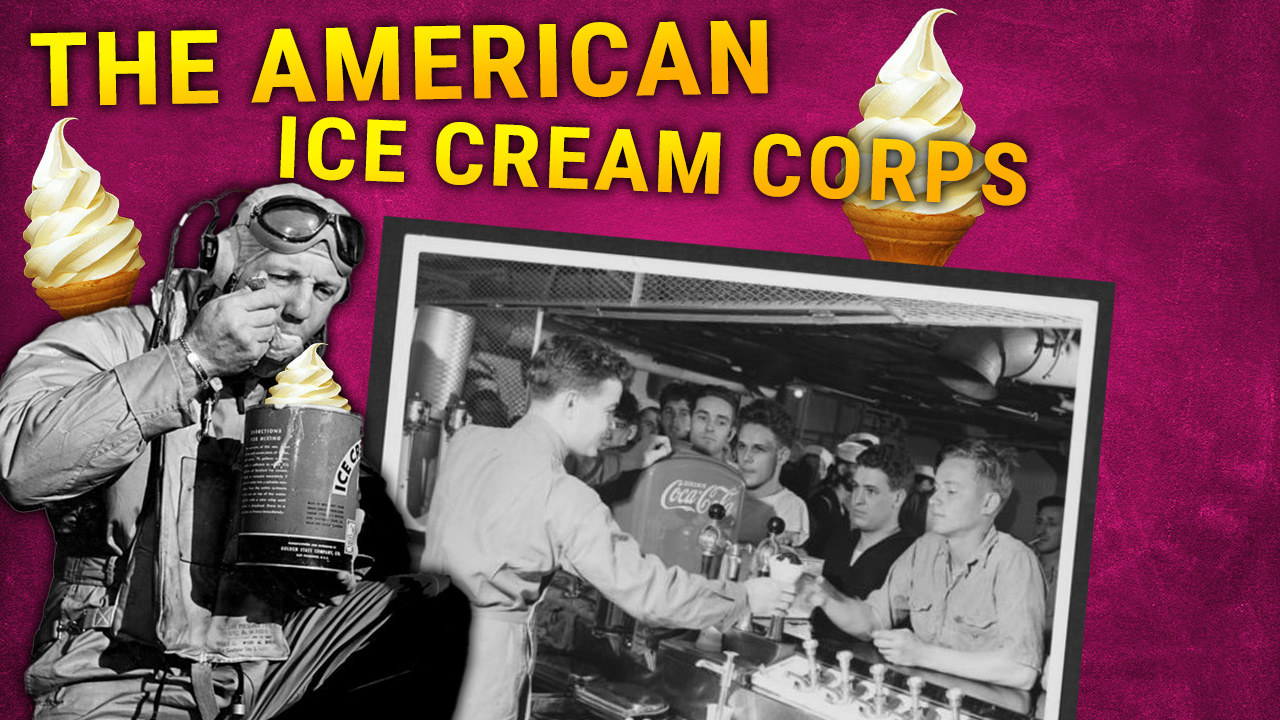
An army, Napoleon Bonaparte once noted, marches on its stomach. No matter how vast its ranks, advanced its weaponry, or brilliant its commanders, a military force full of hungry, malnourished troops is unlikely to be an effective one. The central role of food in combat effectiveness goes beyond merely supplying calories; there is no quicker way to sow demoralization or even outright mutiny than to supply one’s troops with low-quality food. Few countries have understood this better than the United States, which over the years has gone to great lengths to provide its fighting men and women with the best possible food no matter where they are deployed. Despite severe shortages of staple foodstuffs such as sugar, during the Second World War the U.S. Government made such comforts as chewing gum, coffee, chocolate, and tobacco an essential part of every serviceman’s rations. But few treats could match the morale-boosting power of ice cream. U.S. forces were addicted to the stuff, consuming nearly 135 million pounds of it in 1943 alone. So great was demand, in fact, that the U.S. Army even built miniature ice cream factories just behind the front lines, while the U.S. Navy spent $1 million dollars on a floating ice cream factory capable of churning out over 500 gallons of cold, creamy goodness every single day.

America’s obsession with ice cream goes all the way back to its founding. George Washington spent the modern equivalent of $5,000 on ice cream in a single summer, while Thomas Jefferson returned from his time as U.S. ambassador to France with a hand-cranked churn and a handwritten recipe for vanilla ice cream. Over the next 100 years, ice cream became intimately associated with childhood, seaside vacations, and other comforting experiences – so much so that ice cream became standard fare for patients convalescing in hospitals while, starting in 1921, immigrants arriving at New York’s Ellis Island were fed ice cream as part of their introduction to American life. But what really established ice cream as a cornerstone of the American experience was the 1919 passage of the 18th Amendment to the U.S. Constitution, which banned the manufacture and sale of alcohol in the country. Prohibition forced brewers such as Anheuser-Busch, Yuengling, and Stroh’s to switch to ice cream making in order to stay afloat, while those citizens uninterested or unwilling to seek out speakeasies and other sources of illegal liquor turned to soda fountains and ice cream parlours to fill the social need previously provided by bars and saloons. The Navy had been hit even earlier in 1914, when General Order 99 banned liquor aboard all naval vessels. As a result, between 1916 and 1925, ice cream consumption in the United States skyrocketed by 55%; by the end of the decade, Americans were consuming nearly one million gallons every single day. Curiously, the 1929 Stock Market Crash and the onset of the Great Depression only drove up consumption, as ice cream was among the few comforting luxuries almost anyone could afford to indulge in. Indeed, the popular ice cream flavour Rocky Road, consisting of chocolate mixed with nuts and chunks of marshmallow, was introduced by ice cream manufacturer William Dreyer in 1929 as a metaphor for the hard times he and his fellow countrymen were experiencing.

When the Second World War broke out in September 1939, shortages of sugar, milk, vanilla, and other raw ingredients forced most Allied nations to ban or severely restrict the manufacture of ice cream and other sweet treats, with the British Government even going so far as to recommend carrots on sticks as a patriotic alternative – and for more on that, please check out our previous video How World War II Made Everybody Think Carrots Were Good for Their Eyes. When the United States joined the war in December 1941, it initially followed suit and declared ice cream a non-essential food. However, faced with vigorous lobbying by the International Association of Ice Cream Manufacturers and the National Dairy Council lobbied, the Government reversed its decision, even going so far as to place ice cream on its official chart of Seven Basic Foods – the precursor to the modern and hilariously bad for you “food pyramid” (as previously discussed in our video The Preposterous Pyramid). Meanwhile, the armed forces doubled down on America’s national obsession, adopting a morale-boosting policy of supplying its troops, whenever possible, with as much ice cream as they could eat.

The Navy was particularly keen on ice cream, with Secretary of the Navy James Forrestal assigning the dessert top priority after one of his assistants reported that:

“…ice cream in my opinion has been the most neglected of all the important morale factors.” 

Nearly every ship in the fleet larger than a destroyer was fitted with refrigeration and ice-cream making equipment, the sweet treat being served at all hours in the “gedunk bar” or canteen. The origin of the naval slang “gedunk” is disputed, with some historians theorizing that it is an onomatopoeia derived from the sound of food falling out of a vending machine. Others posit that it comes from the popular comic strip Harold Teen, or from a Chinese word meaning “place of idleness.” Whatever the case, the gedunk bar and the ice cream it served became a revered fixture of Navy life and an unlikely source of equality in an otherwise rigidly-structured system. According to one likely-apocryphal story, one day two newly-promoted ensigns aboard the battleship USS New Jersey, flagship of the Third Fleet, went down to the ship’s gedunk bar to get some ice cream. Finding the line unacceptably long, the ensigns decided to pull rank and skip ahead past all the ordinary sailors. The moment they reached the ice cream bar, a voice barked out demanding they get back in line. The ensigns wheeled around to reprimand the insubordinate sailor, only to find their challenger to be none other than Admiral William Halsey, commander of the fleet – waiting his turn in line like everyone else.

But perhaps the most dramatic demonstration of the Navy’s obsession with ice cream came on May 8, 1942 during the Battle of the Coral Sea. At around 11:30 AM, the aircraft carrier USS Lexington was hit by multiple bombs and torpedoes dropped by Japanese aircraft, setting off a series of explosions and fires and completely crippling the ship. At 5PM the ship’s captain, Frederick Sherman, gave the order to abandon ship. The crew obeyed – but not before breaking into and consuming the ship’s entire supply of ice cream, with some sailors filling their helmets and licking them clean before lowering themselves into the Pacific Ocean.

By 1945, demand for ice cream had reached such proportions that the Navy spent $1 million converting a concrete barge into a floating ice cream factory in order to supply the needs of ships too small to carry their own ice cream making equipment. Due to a shortage of metal, early in the war the Navy had contracted Pennsylvania-based firm McClosky & Company to build twenty-four 6,000-ton concrete barges to transport supplies. The barges, which had no engines and had to be towed by tugboats, were unpopular with Navy crews, and most were fobbed off to the Army’s Transportation Corps. The unnamed ice cream barge, however, quickly became one of the most popular ships in the fleet. A marvel of wartime engineering, the barge could churn out 500 gallons of ice cream every day and had refrigerated storage capacity for nearly 2,000 gallons.

But the Navy was not the only service with a sweet tooth. Throughout the war, the Army’s Quartermaster Corps provided American troops with the machinery and ingredients to manufacture some 80 million gallons of ice cream every year; in 1943 alone it shipped out 135 million pounds of dehydrated ice cream mix to the front lines. Given a sufficient source of refrigeration, any soldier could combine the mix with water and standard-issue powdered milk to whip up a tasty frozen treat right on the firing line. But this was apparently not good enough for the Quartermaster Corps, who, in early 1945 as Allied troops were advancing through Germany, built dozens of miniature ice cream factories just behind the lines, allowing half-pint cartons to be brought right to the troops in their foxholes.

Even those without access to standard-issue ice cream found ingenious ways of improvising their own, with some soldiers reportedly mixing snow and melted chocolate bars in their helmets to create makeshift sorbet. But the undisputed masters of battlefield ice cream were pilots. In November 1944, after three months of savage fighting, American forces finally captured the South Pacific island of Peleliu from the Japanese. This was followed by a brief lull in the fighting which left the Marine Corps aviators stationed on the island with little to do. Hoping to raise the morale of his men, J. Hunter Reinburg, commander of a squadron of Vought F4U Corsair fighter-bombers, decided to turn his aircraft into a flying ice cream machine. Under his direction, maintenance crews cut an access hatch in the side of the aircraft’s fuel drop tank and suspended a metal ammunition can inside. Reinburg then filled the can with canned milk and cocoa powder and flew his aircraft to an altitude of 33,000 feet, where the freezing temperatures and the vibration of his engine would, he hoped, churn the mixture into ice cream. But when he landed 35 minutes later, the mixture was still a sticky liquid mess. Realizing that the drop tanks were too close to the aircraft’s hot engine, Reinburg moved the ammunition cans further outboard and tried again. While this time the milk-and-cocoa mixture froze, it still did not have the creamy consistency he was seeking. Reinburg eventually solved the problem by rigging the cans with small wind-driven propellers to churn the ice cream mixture directly as it froze.  Army Air Force crews flying bombers like the B-17 Flying Fortress and B-24 Liberator over Europe independently came up with the same technique, though like Reinburg they, too, initially placed the ice cream mixture too close to the engines. Eventually the perfect location for ice cream making was found to be the tail gunner’s turret, which was simultaneously cold and turbulent enough to produce a perfectly smooth, frozen treat – provided, of course, the aircraft and her crew returned in one piece.

The American military policy of providing its troops with ice cream endured well past the end of the Second World War. The only time it was seriously challenged was during the Korean War, when legendary Marine General Lewis “Chesty” Puller complained that ice cream was “sissy food” and that American troops would be tougher if supplied with beer and whiskey instead. The Pentagon disagreed, and issued an official statement guaranteeing that soldiers would be served ice cream a minimum of three times a week.

While many factors contributed to final Allied victory during the Second World War, ice cream played a small but crucial role in maintaining the morale of American troops and reminding them of the home they were fighting for. So the next time you dig into a pint of Ben & Jerry’s, remember to take a moment and thank it for its valiant service.

If you liked this article, you might also enjoy our new popular podcast, The BrainFood Show (iTunes, Spotify, Google Play Music, Feed), as well as:

Expand for References

Siegel, Matt, How Ice Cream Helped America at War, The Atlantic, August 6, 2017, https://www.theatlantic.com/health/archive/2017/08/ice-cream-military/535980/


Funderburg, Anne, Chocolate, Strawberry, and Vanilla: A History of American Ice Cream, Popular Press, University of Wisconsin, https://ift.tt/9fGm2rJ


Hegranes, Emily, We All Scream for Ice Cream: World War II and America’s Sweet Tooth, U.S. Naval Institute, July 25, 2019, https://www.navalhistory.org/2019/07/25/we-all-scream-for-ice-cream-world-war-ii-and-americas-sweet-tooth


Stilwell, Blake, This is How WW2 Marines Made Ice Cream at 30,000 Feet, We Are the Mighty, June 12, 2021, https://ift.tt/AiqwybG


WWII Builders of Concrete Ships and Barges, March 2013, https://web.archive.org/web/20180924224714/http://shipbuildinghistory.com/shipyards/emergencylarge/wwtwoconcrete.htm


O’Brien Caitlin, That Time the Navy Spent a Million Dollars on an Ice Cream Barge, Observation Post, July 21, 2021, https://www.militarytimes.com/off-duty/military-culture/2021/07/21/that-time-the-navy-spent-a-million-dollars-on-an-ice-cream-barge/


Meija, Paula, Why the U.S. Navy Once Had a Concrete Ice Cream Barge, Atlas Obscura, July 5, 2018, https://ift.tt/GoMDSqZ


Dunnigan, James & Nofi, Albert, Dirty Little Secrets of World War II, Perennial, New York, 1994

The post Forgotten History- The U.S. Military’s Obsessive WWII Ice Cream Crusade appeared first on Today I Found Out.


from Today I Found Out
by Gilles Messier - January 31, 2023 at 09:40AM
Article provided by the producers of one of our Favorite YouTube Channels!
-

The Amazonian Arrow Poison that Revolutionized Medicine

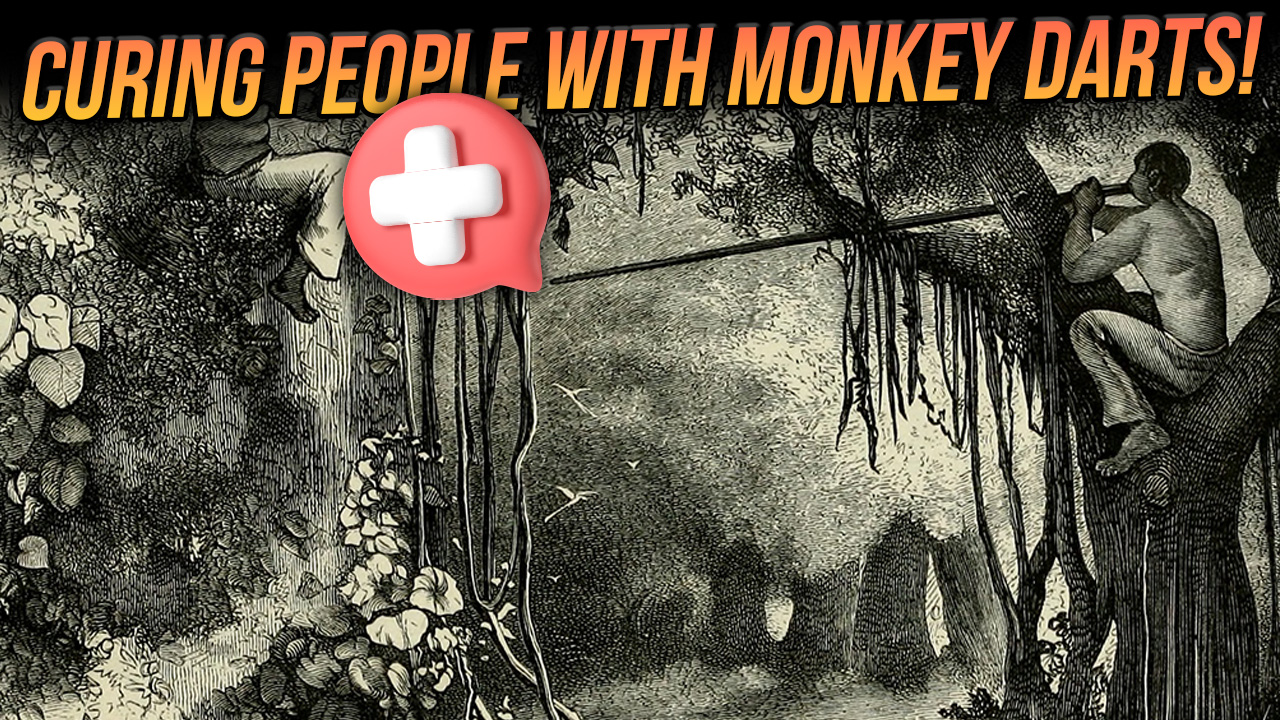
Somewhere deep in the Amazon, a monkey leaps nimbly through the rainforest canopy, blissfully unaware that it is being hunted. Down below on the forest floor, the hunter lurks patiently in the shadows, stalking its prey, waiting for the perfect moment to strike. When the moment comes, the hunter raises his long bamboo blowgun, places it to his lips, and blows hard, launching a small poison-tipped dart into the canopy. The dart strikes home, causing the monkey to flee in panic. But it lasts only a few minutes before collapsing and plummeting to the ground, dead. The hunter returns to his village with his prey slung over his shoulder, having once again exploited the deadly power of the Amazon’s most infamous poison. Once the source of countless myths and legends among early European explorers, in more recent years this substance has made a surprising transformation from deadly arrow poison to miracle drug, helping to unlock many of the mysteries of the human nervous system and make modern surgery safer and more effective. This is the fascinating story of curare [“Koo-rah-ree”].

Curare is manufactured and used by dozens of indigenous tribes across Central and South America and the Caribbean, from the Island Caribs of the Lesser Antilles to the Macusi of Guyana and the Yagua of Columbia and Peru. The term “curare” refers not to a single substance but rather a whole family of similar arrow poisons, and is derived from the Macusi word uirary meaning “it kills birds.” Over the centuries there have been numerous attempts by Western researchers to transliterate this word, leading to the substance being variously dubbed “Woorari”, “Woorara”, “Woorali”, “Ourari,” and finally “Curare”. In its traditional form, curare consist of a dark brown, sticky, resin-like paste which can easily adhere to the tips of arrows and blowgun darts. Due to the relative rarity of its ingredients and the significant time involved in its manufacture, curare is largely considered too valuable for use in warfare and is employed almost exclusively in the hunting of game. As most of the animals hunted using curare live high up in the dense rainforest canopy, great care is taken to maximize the potency of the poison so that prey animals cannot flee out of visual range before dropping to the ground. This potency is typically evaluated using animal tests – for example, by pricking a frog with a poison-tipped dark and counting the number of hops it makes before dying. For the most potent curare recipes, time to death ranges from 1-2 minutes for birds, 10 minutes for small mammals like monkeys, and up to 20 minutes for large mammals like Tapirs. As you might imagine, the process for making curare is very complex and often a closely-guarded secret, allowing certain tribes to establish local monopolies and grow wealthy on its manufacture and trade.

While it is not known exactly when curare was first discovered – or by whom – the poison first came to the attention of the Western world in the 16th Century as European explorers began pushing deeper into the South American continent. One of the first descriptions of curare comes from Pietro Martir d’Anghiera – better known as Peter Martyr – an Italian-Spanish historian who in 1530 compiled numerous accounts of South American exploration in a book titled On the New World. In the book, d’Anghiera describes battles between Spanish conquistadores and indigenous tribes in which soldiers and horses were struck by poisoned arrows and appeared to become paralyzed before eventually dying. This detail would be the first hint as to how this mysterious poison actually worked. d’Anghiera goes on to describe how curare was exclusively manufactured by “old criminal women” who were locked up in cramped huts and forced to produce the poison from various toxic plants. When these women were overcome by the toxic fumes and passed out, the poison was deemed to be ready for use. In reality, however, this account turned out to be a complete fabrication, for as later explorers and anthropologists would discover, most South American tribes believe women to be too ritually unclean to participate in the sacred rite of curare production. Indeed, allowing a woman anywhere near the manufacturing process would diminish the magical powers and thus the potency of the poison.

Another early description of curare comes courtesy of English adventurer Sir Walter Raleigh, who in 1595 travelled up the Orinoco River in modern-day Guyana in search of El Dorado, the legendary lost city of gold. But Raleigh’s account is no less fanciful than d’Anghiera’s. In his 1596 chronicle of the expedition, The Discovery of the Large Rich and Beautiful Empire of Guiana, claims that garlic, salt, sugar, or tobacco are effective antidotes to curare poisoning – claims which are known to be laughably false.

Thanks to such rampant exaggeration and confabulation – not to mention extreme secrecy on the part of indigenous tribes – for nearly two centuries the true nature of curare remained a total mystery, the substance passing into myth and legend as one of the many exotic dangers that lurked in the Amazon jungle. It would not be until the 18th century that explorers and scientists began to shed some light on this mysterious poison.

One of the first Westerners to acquire and study a sample of curare was French explorer and mathematician Charles Marie de la Condamine. Perhaps most famous for teaming up with philosopher Voltaire to exploit a loophole in the French National Lottery in 1729, in 1735 Condamine was sent to South America on a surveying mission to measure the length of one degree of latitude. However, Condamine was more interested in finding and bringing back examples of the Cinchona tree, whose bark was the source of the antimalarial drug Quinine. To this end, he travelled widely across the continent for nearly a decade, making many valuable discoveries along the way. For example, he was the first European to encounter and describe caoutchouc or natural latex rubber, identified valuable platinum ores, and brought back seeds of several exotic plants including cacao, vanilla, and sarsaparilla. During his travels he also encountered an indigenous tribe called the Yameos, from whom he acquired a large sample of black curare resin. Upon returning to Europe, Condamine teamed up with Dutch physicians Herman Boerhaave and Gerard van Swieten and anatomist Bernhardus Albinus at the University of Leyden in the Netherlands to investigate the properties of this legendary poison. By injecting various doses into a cat, the four scientists were able to confirm that curare works by paralyzing the muscles. To their surprise, however, they discovered that the cat’s heart continued beating for up to two hours following its apparent death.

Today, we know that curare works by interfering with the function of motor neurons – that is, nerves which command the muscles to contract. At the junction between two nerves or between a nerve and a muscle or organ lies a tiny gap known as a synapse. When a nerve impulse reaches a synapse, it triggers the release of special signalling chemicals known as neurotransmitters, which cross the gap and bind to receptors on the other side, transmitting the impulse across the synapse. In motor neurons, the primary neurotransmitter is acetylcholine. Curare works by binding to the acetylcholine receptor sites, preventing the neurotransmitter molecules from transmitting nerve impulses across the synapse and resulting in the flaccid paralysis of the victim’s entire body. The first muscles to be affected are usually those of the eyes, meaning that the first signs of curare poisoning are fatigue, double vision, and difficulty keeping your eyes open. Next to go are your tongue and throat muscles, making it difficult for you to swallow or speak, followed by your limbs and all other voluntary muscles. But while this in itself sounds bad enough, unfortunately it gets worse. For you see, curare only works on the voluntary and semi-voluntary muscles, meaning that your heart will be unaffected and continue to beat. However, curare does paralyze the diaphragm and intercostal muscles responsible for breathing, meaning your death will be a slow and agonizing one by asphyxiation. Even more horrifying, curare has no effect on human consciousness, meaning you will be fully awake – but unable to move or even call out for help – as you slowly suffocate. Lovely. About the only good news is that, as we shall see, it is now possible to survive curare poisoning thanks to advances in medical technology.

In addition to discovering that curare does not affect the heart, Condamine and his colleagues also found that the poison is harmless when swallowed and must be injected through the skin in order to take effect. Indeed, Western explorers reported that Amazonian tribes readily ate the meat of animals killed with curare with no special preparation. In the 1850s, famous French physiologist Claude Bernard would conduct even more detailed experiments on curare’s effects and mechanism of action, establishing much of what we now know about the poison.

The Leyden team’s research was next taken up by English botanist Edward Bancroft, who in his travels throughout South America became the first European to discover the botanical source of curare and witness its manufacture. This process was also recorded by German naturalist Alexander von Humboldt, who travelled widely throughout the Americas between 1799 and 1804. While recipes vary from region to region, the main ingredient in curare is typically the vine Strychnos toxifera, first identified and classified by German explorers and brothers Robert and Richard Schomburgk in the 1850s. This, along with other plants including Chondrodendron tomentosum and Sciadotenia toxifera – and sometimes even ant or snake venom – are crushed and boiled in water for up to two days, until the residue boils down to a black, sticky substance resembling pitch or molasses. Then, slivers of the Cokarito palm are dipped into the mixture and used to smear it on the tips of arrows and blowgun darts. While the alkaloids responsible for curare’s toxicity mainly come from the Strychnos toxifera vine, the other ingredients act as adjuvants to increase its effectiveness – for example, by accelerating its absorption into the bloodstream or preventing the blood around the arrow or dart wound from clotting. In 1895, German Pharmacologist Rudolf Böhm attempted to classify the different types of curare by the type of container they were stored in, identifying three main categories: tube curare, stored in sections of bamboo, pot curare, stored in terracotta pots, and calabash curare, stored in hollow gourds. This system, however, was later found to  have little factual basis. In reality, different tribes simply have different recipes for curare and different containers in which they typically store the finished product, the two being unrelated to one another.

In 1811, English surgeon Benjamin Brodie repeated Condamine, Boerhaave, van Swieten, and Albinus’s experiments, confirming that curare paralyzes the breathing muscles while leaving the heart unaffected. Crucially, however, he postulated that if the victim’s lungs could be kept mechanically ventilated using bellows, then life could be sustained until the poison wore off, allowing them to make a complete recovery. This hypothesis was confirmed in 1825 by fellow Englishman Charles Waterton, in a series of now-classic experiments conducted on a female donkey. Waterton, who had made his name as a South American explorer by – among other things – wrestling an alligator and a boa constrictor, first applied a tourniquet to one of the donkey’s legs to cut off blood flow before injecting the leg with curare. The donkey suffered no ill effects. But when Waterton removed the tourniquet, allowing blood from the leg to recirculate into the donkey’s body, the animal collapsed and stopped breathing within minutes, confirming that curare does not act locally and must be carried throughout the body to be effective. Once the donkey had collapsed, Waterton proceeded to insert bellows into its windpipe and artificially ventilate the animal for two hours until the poison wore off. The donkey made a full recovery with no lingering effects and lived for another 25 years, having been put to pasture as reward for her medical contributions. Waterton might not have known it at the time, but a century later this remarkable achievement would form the basis of a revolution in surgical science.

Based on these experiments, Waterton began to wonder whether curare might have medical applications. Observing that the action of curare appeared to be the exact opposite of tetanus, rabies, and strychnine poisoning, he suggested it be used in the treatment of these afflictions. Waterton had a particular interest in rabies, having been bitten by a dog as a child. Unfortunately, he never had the chance to test these theories. The closest he got was in 1839 when one Mr. Isaac Phelps, a police inspector for the city of Nottingham, was bitten by a rabid dog he was attempting to rescue from a deep hole. The wound healed and for a while Phelps appeared well, but seven weeks later he began displaying the classic symptoms of rabies – then known as hydrophobia – and was admitted to hospital. One doctor, who had read of Waterton’s theories, called for him at his home 80 kilometres away. Unfortunately, by the time Waterton arrived with his curare preparation, Phelps had already died. While Scottish physician George Harley would later prove that Waterton was correct about curare’s usefulness in treating tetanus and strychnine poisoning, the poison is unfortunately useless against rabies, which directly attacks the central nervous system.

It would be another 100 years before curare finally found a place in the pharmacopeia. In the meantime, however, the poison would play a vital role in solving a medical mystery and expanding our understanding of the human nervous system. In 1900, Austrian physiologist Jacob Pal was conducting experiments on digestive function using dogs. By this time, curare was commonly used to paralyze laboratory animals so that their automatic physiological responses to various drugs and treatments could be more easily observed. On one occasion, Pal injected a paralyzed dog with the toxin physostigmine, extracted from Physostigma venenosum – better known as the Calabar Bean. To his shock, the dog suddenly resumed breathing on its own. Pal had accidentally discovered the first known substance which could counter the effects of curare, unearthing a vital clue as to how the poison actually worked. This discovery in turn led to another dramatic medical breakthrough 35 years later. In 1935, Dr. Mary Walker at St. Alfege’s Hospital in Greenwich, England was studying a rare neurological disorder known as Myasthenia gravis, which causes profound and sustained muscle weakness and fatigue. After observing that patients with the disease were uniquely sensitive to small doses of curare, Walker hypothesized that the affliction was caused by a curare-like substance produced by the patient’s own body. Having read about Jacob Pal’s discovery three decades before, Walker decided to try injecting her patients with physostigmine. The results were dramatic – so dramatic, in fact, that the sudden and seemingly complete recovery of her patients is now widely known as the “Miracle at St. Alfeges.” It is now known that Myasthenia gravis is not, in fact, caused by a natural curare-like substance but rather by an auto-immune disorder that attacks the acetylcholine receptors in the motor neuron synapses. Physostigmine, meanwhile, acts as a cholinesterase inhibitor, interfering with the enzymes that break down acetylcholine molecules after a nerve impulse is sent, effectively resetting the nerve for the next impulse. This increases the amount of neurotransmitters in the synapses, allowing the nerves to overcome the effects of the disease.

Nonetheless, Walker’s discovery led to the discovery of acetylcholine’s role in motor nerve transmission, which had been hypothesized by English pharmacologist Sir Henry Dale in 1914. After two decades of research, Dale, along with German psychobiologist Otto Lowei, finally confirmed the function of acetylcholine, the two men sharing the 1936 Nobel Prize in Physiology or Medicine for their groundbreaking discoveries.

A year earlier, the composition of curare was finally worked out by English chemist Harold King, who determined that the most active toxins in the sticky mixture were the alkaloids curarine and tubocurarine. This attracted the attention of pharmaceutical company E.R. Squibb & Sons, who, intrigued by the potential medical uses for the poison, began purifying and selling small amounts of d-tubocurarine to medical researchers under the brand name intocostrin.

In 1939, curare finally saw its first medical application when American psychiatrist Abram Elting Bennett used it to paralyze patients undergoing metrazol-induced convulsive therapy. The precursor to electroconvulsive or shock therapy, this procedure was used to treat various psychiatric disorders including depression and schizophrenia and involved inducing seizures using a drug called Metrazol or Cardiazol. The problem was, the convulsions induced by this drug were so severe that patients often ended up injuring themselves. By paralyzing the patient with curare first, the procedure was rendered much safer – and for more on how this bizarre treatment came to be, please check out our previous video Who Invented Shock Therapy and Does it Actually Work?

But it was not until 1942 that curare would finally find its most prominent medical application. It was in that year that anesthesiologist Dr. Harold R. Griffith and resident Enid Johnson of Montreal’s Homeopathic Hospital, first experimented with the use of intocostrin in surgery. While surgical anaesthesia had been around since 1946 and was well-established a century later, it still wasn’t a perfect technology. While early general anaesthetics like ether, chloroform, and cyclopropane quickly and efficiently rendered patients unconscious, they did not completely inhibit their automatic responses, meaning patients could still twitch and move about on the operating table, with sometimes tragic results. And while such movements could be eliminated by administering more anaesthetic, this risked inducing respiratory arrest and other deadly side effects – especially in patients with severe medical conditions or bad hearts. Griffith and Johnson’s solution was to administer intocostrin in combination with the anaesthetic, inducing complete paralysis with none of the side effects and allowing less anaesthetic to be used. As he later recalled in 1944:

In June, 1939, Dr. L.H. Wright, of E.R. Squibb & Sons of New York, told me of this new work with curare and remarked how nice it would be if we could use some of it in anaesthesia to relax the muscles of our patients when they got a little too tense. I agreed that such an effect is often to be desired but was too horrified at the old poisonous reputation of curare to be seriously interested.  I met Dr. Wright again in October, 1941, and asked him how he was getting on with curare in anaesthesia.  He said he still thought the idea was sound, but that so far as he knew no one had tried it.  I thought I had better not pass up a good thing any longer, so Dr. Wright kindly sent me some ampoules of intocostrin and in January, 1942, we began using it in the operating room of the Homeopathic Hospital in Montreal.  We administered the drug intravenously to patients under general anaesthesia, and found that it acts quickly, producing in less than a minute a dramatic and complete relaxation of the skeletal muscles.  Even under the most favourable circumstances, and with every general anaesthetic agent, occasions do arise when it seems impossible to get the patient sufficiently relaxed to make abdominal exploration or to close a friable peritoneum.  To have a drug at hand which will give the patient at these critical moments complete relaxation, uniformly, quickly and harmlessly, has seemed to us a blessing to both surgeon and anaesthetist.”

So groundbreaking was this development that anesthesiologists often divide the history of surgery into “before Griffith” and “after Griffith”. Of course, the use of curare and its derivatives in this fashion also paralyses the patient’s lungs, requiring them to be artificially ventilated throughout the surgery. While this was initially done using a hand-pumped rubber bulb, in the late 1940s and early 1950s inventors like John Emerson and Forrest Bird developed mechanical ventilators which used electric or pneumatic motors to automatically breathe for the patient. These twin developments revolutionized surgery, allowing increasingly complex procedures to be performed more safely and with fewer side effects and postoperative complications. While curare derivatives like intocostrin have since been supplanted by safer but related paralytics like pancuronium, the basic procedure remains relatively unchanged since Griffith’s pioneering experiments. Like botox, digitalis, and other poisons-turned-medicines, curare has certainly come a long way from its deadly Amazonian origins.

Of course, as you might expect from a deadly poison, curare also has its darker uses. Indeed, pancuronium bromide is one of three drugs used combination for medical euthanasia and lethal injection – the official method of execution in 28 U.S. states. The other two drugs are sodium thiopental to induce unconsciousness and potassium chloride to stop the heart. While this method is intended to be quick and painless, as previously mentioned, paralytics like pancuronium have no effect on consciousness, meaning that it is impossible to tell whether a person is conscious during the procedure. This has led to speculation that many prisoners may actually experience severe pain during their executions, especially if an inadequate dosage of barbiturates is administered. Such fears have led eleven U.S. states to switch to a single-drug lethal injection method wherein death is induced via an overdose of sodium thiopental.

And if any murder mystery fans in the audience are wondering if curare has even been used in a crime, it most certainly has. Pancuronium was the lethal agent of choice of Efren Saldivar, a serial killer who is estimated to have killed up to 200 patients between 1988 and 1998 while working as a respiratory therapist at Adventist Medical Centre in Glendale, California. The drug was also used by four paramedics nicknamed the “Skin Hunters” to kill five elderly hospital patients in the Polish city of Lodz- the personal details of whom the killers sold to competing funeral homes. And finally, more than a century ago, curare was at the centre of a now long-forgotten assassination attempt. In 1916, a group of socialists and pacifists known as the Adullamites plotted to assassinate British Prime Minister David Lloyd George and Paymaster General Arthur Henderson in the hopes of ending the First World War. At the heart of the conspiracy was Alice Wheeldon, a women’s suffrage and anti-war activist who ran a chemist’s shop in Southampton – along with her two daughters and son-in-law. But before the plot could be carried out, Wheeldon’s group was infiltrated by one ‘Alex Gordon’, an agent for British Military Intelligence. When Gordon informed his handlers of the plot, they sent another agent, Herbert Booth, to gather more information. Booth must have been one hell of an actor, for he soon ingratiated himself to the conspirators to the point that they selected him as Lloyd George’s assassin! Given an air pistol and pellets dipped in curare, Booth was instructed to hide out on Walton Heath Golf Course in Surrey, and there ambush the Prime Minister. Instead, Booth betrayed the plot to his handlers and the conspirators were arrested and charged with treason. Five were put on trial and three found guilty, with Alice Wheeldon being sentenced to ten years in prison and her daughter and son-in-law seven and five years, respectively. A potentially disastrous wartime assassination was thwarted, and Lloyd George doubtless breathed a great – and thankfully non-paralyzed – sigh of relief.

If you liked this article, you might also enjoy our new popular podcast, The BrainFood Show (iTunes, Spotify, Google Play Music, Feed), as well as:

Expand for References


Curare (n.), Online Etymology Dictionary, https://www.etymonline.com/word/curare

Curare, a South American Arrow Poison, https://web.archive.org/web/20120728084632/http://www.botgard.ucla.edu/html/botanytextbooks/economicbotany/Curare/

Lee, M.R, Curare: the South American Arrow Poison, Journal of the Royal College of Physicians Edinburgh, 2005, https://www.rcpe.ac.uk/sites/default/files/curare.pdf

Birmingham, A.T, Waterton and Wouralia, British Journal of Pharmacology, April 1999, https://www.ncbi.nlm.nih.gov/pmc/articles/PMC1565951/\

Gray, T. Cecil, The Use of D-Tubocurarine Chloride in Anaesthesia, Royal College of Surgeons of England, April 17, 1947, https://www.ncbi.nlm.nih.gov/pmc/articles/PMC1940167/?page=1

From Arrow Poison to Surgical Muscle Relaxant, Ye Olde Log, https://web.archive.org/web/20080509154855/http://www.yeoldelog.com/medicinal/curare.shtml

Milner, Daniel, From the Rainforests of South America to the Operating Room: a History of Curare, Summer 2009, https://ift.tt/mbzXtQI

The post The Amazonian Arrow Poison that Revolutionized Medicine appeared first on Today I Found Out.


from Today I Found Out
by Gilles Messier - January 31, 2023 at 09:22AM
Article provided by the producers of one of our Favorite YouTube Channels!
-