Tuesday, May 5, 2020

Who was the First to Offer Free Samples?

Free samples are generally considered to be one of the most reliable ways to bolster sales of a product, sometimes to an insane degree if it’s done correctly. You see, free samples don’t just work because they give customers a chance to try something without the barrier of cost stopping them- which is an effective marketing trick in and of itself- but they also take advantage of the fact that humans seem hardwired to feel like we should do something in return when someone does something for us, in these cases invariably by buying something. Or as psychologist Susan Krauss Whitbourne sums up: “You’ve been given something, seemingly for nothing, and now you feel obligated to reciprocate by buying the item.”

There’s a reason there’s such a social stigma attached to taking 30 pieces of free food from the sample cart and then walking away without buying anything. It’s also one of the reasons you might decline a sample you actually want if you know you aren’t going to buy something after.

As an idea of just how overpowering the desire to reciprocate can be, in 1974 a researcher called Phillip R. Kunz sent out hundreds of Christmas cards to random people he’d never met just to see what would happen. Virtually every person replied and, interestingly, few of them were at all curious about who Kunz was- they simply felt that they had to return his gesture even though they had no idea who he was.

So this all brings us around to who the first person was to realise that giving people free stuff is an effective way of convincing them to buy something.

As you might expect given how integral this is to humans humaning, you may be unsurprised to learn that the answer to this question is, quite annoyingly, that we don’t really know; as far as anyone can tell, the idea of giving people free stuff to encourage them to become a customer may very well be one that has existed as long as we’ve bartered for goods and services.

On top of that, when you consider one of the oldest professions in history is one where some free kisses or a look at certain wobbly bits or the like may well have qualified as a “free sample”, it’s been hypothesized by some that this might have been the first widely practiced instance of this business staple.

Whatever one’s opinion on that, as for the earliest references to the free sample practise, there are many, such as the 14th century English poem written by William Langland called Piers Plowman, which features a line referring to taverners offering customers a “a tast for nouht” (a taste for nothing) to entice them to drink at their pubs. Though a minor, relatively unimportant, aspect of the wider narrative, this line establishes that the practise of giving customers a free sample is one that has at the least existed for centuries. As an aside, we specifically wanted to mention this example becase Piers Plowman is also noted as being the first known work of English fiction to refer to Robin Hood.

In any event, while it is true that nobody knows what intrepid businessman or woman first gave away free samples to potential customers, we do know the man who popularized it in more modern times as a remarkably effective way to entice customers- Benjamin T. Babbitt.

Born in early 19th century, Babbitt was a famed inventor and entrepreneur who became one of the wealthiest and well-known men of his era thanks to a combination of his business savvy and flair for advertising. Babbitt mostly made a name for himself in the soap industry, but held patents for everything from gun barrels to steam engines- a bit of a renaissance man.

Though respected as a prolific and skilled inventor (he is credited with inventing many of the machines in his own factories, in addition to owning the factories that made those machines), it’s Babbitt’s ideas when it came to marketing and advertising that really set him apart from his peers, and made him a household name for a time.

For example, Babbitt is credited with being the first person to package and sell soap in individual bars, which he would sell from garishly colored, impossible to miss street cars that were followed around by musicians singing about how great his soap was. On top of all that, to make the bars themselves as noticeable as possible, Babbitt spent a great deal on attractive, colorful packaging, making him one of the first people to recognise the potential of packaging in relation to selling a product. On top of this, knowing that the idea of individual bars of soap was a novelty to the public, Babbitt gave away thousands of bars for free, in special packaging bearing a simple tagline reading, “A fair trial is all I ask for it”.

As to his motivation for giving away thousands of dollars worth of product, Babbitt was aware of how fickle the public can be and that customers will, more often than not, buy the brand they know and have used their entire lives and be unwilling to try something new. Thus, to get his product in their hands, simply giving it to them free seemed the best way possible to at least, as he put it, get “a fair trial”.

Along with offering customers free samples, Babbitt made extensive use of other (at the time) radical advertising techniques such as slogans- his soap famously bore the inscription “Cleanliness is the scale of civilization” on their packaging. He also offered customers a tour of his factories, which of course ended with a gift of free samples for customers to try.

Babbitt further made sure that his likeness was a consistent theme in much of his advertising, essentially becoming one of the first company mascots. At the height of his fame, Babbitt’s name was so ubiquitous in households across America that there’s a famous, possibly apocryphal, story about Babbitt meeting a shoeshine who just so happened to be called B.T Babbitt. When Babbitt informed the boy that his name was also B.T Babbitt, the boy curiously inquired: “Did your momma get your name off a soap box too?”

Though he was by no means the first to think of giving customers a free sample of a product, the scale to which Babbitt did it and how famous he became for it, along with other marketing techniques, ultimately saw a massive and very well documented upswing of the practice across the business world.

For example, between 1894 and 1913, Coca-Cola relied heavily on free samples to get the word out about their new product, usually mailing out coupons to drug stores and random customers. The company estimates that during the 20 year period, 1 in 9 Americans were given a free drink on them in this way, which was a huge reason for the company’s early growth compared to the countless competitors making similar product at the time.

However, perhaps no one directly after Babbitt is more representative of the power of free samples than a man whose free samples ended up becoming his #1 product not once, but twice, with his original products ultimately being scrapped because of it. So let’s talk about William Wrigley Jr. shall we.

As a boy in Philadelphia in the late 1860s, Wrigley gained a reputation for being a bit of a prankster and a rebel. After running away from home then getting expelled from school on his return, he was sent to work in his father’s soap factory. Young Wrigley soon extricated himself from the daily grind which involved stirring the vats of soap, and by the tender age of 13 he became a soap salesman for his father instead. As a salesman, Wrigley found his niche, showing a flair for sales and advertising (a true son of the soapbox) that would become rather legendary after he branched out to form his own company William Wrigley Jr. Company in Chicago in 1891.

Most popular accounts of Wrigley’s origin say that he only had $32 in his pockets when he founded his now world famous company. Whether that’s true or not, he had other money besides what fit in his pockets- a huge amount of it actually, as his uncle gave him a check for $5,000 (about $130,000 today) to help get his new company up and running.

That business was not gum, however. Wrigley started out by doing what he knew best- much like Babbitt before him, selling soap. Also copying Babbitt in a certain way, he added an innovative twist that was representative of an approach that would have a far reaching impact on his future. Since merchants resisted carrying his goods due to the low profit margins and high amount of competition, Wrigley borrowed a page from Babbitt’s soap selling exploits by giving them free stuff. These freebies ranged from umbrellas to baking powder. As cake baking methods had changed in the mid-19th century and baking powder was a big part of that, it was no surprise that sales took off.

With the baking powder itself being a huge hit as a freebie and becoming more requested than his soap, Wrigley moved on from specializing in soap to instead baking powder, but still continued to offer freebies. This time around, it was baking powder with free chewing gum thrown in. Soon, the chewing gum was eclipsing the baking powder in popularity.

Adaptable as ever, Wrigley abandoned baking powder for selling chewing gum, the product that the company is famous for today. The gum Wrigley was selling in the 1890s was manufactured by Zeno Company. Distinguishing the product a bit, Wrigley recommended that Zeno use chicle to make the gum instead of the paraffin and spruce that were the traditional ingredients of the day. Then he focused on expanding chewing gum’s appeal to a younger demographic. Wrigley started with Vassar and Lotta gum and by 1893 at the World’s Columbian Exposition introduced a sweet, fruity flavor that is still one of the big names in the chewing gum business today, Juicy Fruit (more on where exactly the “juice” in Juicy Fruit is supposed to come from in the Bonus Facts in a bit). A few months later, he rolled out Wrigley’s Spearmint.

For the rest of the decade and into the 20th century, William Wrigley wore his promoter hat with vigor, traveling across the country again and again. He didn’t discontinue the premium offers though, combining gum with other items like lamps, pocket knives, fishing tackle and measuring scales. Understanding that purchasers bought gum impulsively, he also proposed placing the gum display cases in a place that is very familiar to us today – beside the checkout counter – and retailers agreed.

By 1907, when the country was grappling with a financial crisis and other gum manufacturers were cutting costs, Wrigley literally bet his life savings on his then fledgling company, mortgaging everything he owned and buying $250,000 (about $6.2 million today) worth of advertising. This was the springboard from which he launched his company to nationwide fame. His competitors’ sales stagnated, while his soared with Wrigley Spearmint’s sales alone jumped to more than $1 million a year following the ad blitz. In total, the general sales for the company leapt from $170,000 to $3 million (about $75 million today).

Wrigley didn’t stop there. He bought out Zeno by 1911 and by 1915 grabbed the title as one of the biggest advertisers in the country. But he wasn’t just using billboards and other traditional forms of advertising. For instance, in a huge marketing and sales frenzy, Wrigley mailed free gum to every address listed in US telephone directories. Later, he adopted a similar strategy by sending two sticks of gum to every child on his or her second birthday. All total, Wrigley’s sticks of gum, which now included the newly introduced Doublemint flavor, were shipped to over 1.5 million addresses in 1915 and to about 7 million homes in 1919. Also in 1915, Wrigley hired writers to re-write various Mother Goose rhymes such that they advertised Wrigley’s gum and then ultimately gave away a whopping 14 million copies of this book.

That same year, Wrigley wanted to offer stock to his employees so took the company public. Capping off a remarkably successful career, Wrigley became chairman of the board and turned the presidency over to his son, Philip in 1925, ultimately passing away in 1932 at the age of 70 with an estimated net worth of $34 million or about $582 million today.

If you liked this article, you might also enjoy our new popular podcast, The BrainFood Show (iTunes, Spotify, Google Play Music, Feed), as well as:

Bonus Fact:

Ever wonder what the “juice” in “Juicy Fruit” is supposed to be? Now you’d think that answering this question would be as simple as picking up a pack of Juicy Fruit gum and reading the ingredients list, but as with most things in life, we discovered it’s just not that easy. For starters, the ingredients listed on a pack of Juicy Fruit are incredibly vague; the only real piece of useful information you can glean from a pack itself is that the gum contains “Natural and artificial flavors”. Helpful…

This also isn’t helped by the fact that Wrigley are similarly coy about discussing what goes into their product, often choosing to refrain from mentioning any specific fruit in regards to its flavour and excusing this evasive behaviour by stating that the flavour is a trade secret.

That said, with a little digging, you’ll find that, in the past, Wrigley has explicitly said that Juicy Fruit contains notes of “lemon, orange, pineapple and banana” in response to emails from curious customers asking for more specific information about Juicy Fruit’s flavour. Again though, this isn’t entirely helpful in discerning whether or not the gum actually contains fruit juice, since (always awesome) science has made it possible to synthesize almost any flavour we want.

Curiously, there is a fruit out there known to taste almost exactly like Juicy Fruit- a lesser known fruit from the shores of Africa and Asia known as Jackfruit. Jackfruit tastes so much like Juicy Fruit gum that it is often one of the first things mentioned when it’s discussed by Western media and there is a small, but nonetheless dedicated subset of people who believe that it is the key secret ingredient in the gum.

However, although Jackfruit tastes like Juicy Fruit gum, this isn’t because Juicy Fruit contains any juice from the Jackfruit (a dead giveaway being that there are no records of Wrigely importing the fruit or juice). The real reason the two taste and smell so similar is because they both (probably) contain a chemical called, isoamyl acetate. The reason we have to say “probably” is because, as noted, Wrigley won’t confirm what exactly goes into making Juicy Fruit, which is their right as a company, but experts are still pretty sure that isoamyl acetate has something to do with Juicy Fruit.

One of the most compelling arguments for isoamyl acetate being the primary flavouring agent behind Juicy Fruit is that, like Jackfruit, the chemical is said to smell very similar to it. Even in literature that doesn’t mention Juicy Fruit by name, isoamyl acetate is said to have an indistinct, almost indescribably “fruity” smell that contains hints of banana, peach and other similar sweet fruits, which is pretty much the exact same way people who haven’t eaten Jackfruit describe Juicy Fruit.

Making this argument even more tantalising is that, historically, one of the few ways to obtain isoamyl acetate in commercially viable quantities was as a by-product of whiskey production. When Wrigley first began producing Juicy Fruit gum in 1893, they did so from a factory in Illinois, the biggest whiskey State in America at the time. Suggesting that, perhaps, Wrigley sourced isoamyl acetate, and hence Juicy Fruit’s unique flavour, from the many factories producing whiskey nearby.

Perhaps the most damning piece of evidence of all about Juicy Fruit’s flavour being the result of artificially created chemicals instead of real fruit is that they themselves used to explicitly advertise the “artificial flavor” of their product as a unique selling point up until a few decades ago. You see, early packs of Juicy Fruit starting around the 1940s carried the slogan “The Gum With the Fascinating Artificial Flavor” which they used as a way of enticing customers to try it.

It is only in recent years, with the trend to avoid artificial chemicals in consumables, that Wrigley has shied away from advertising the fact that Juicy Fruit’s unique flavour is, in all likelihood, the result of artificially created chemicals rather than a cocktail of chemicals directly extracted from fruit.

Expand for References

The post Who was the First to Offer Free Samples? appeared first on Today I Found Out.


from Today I Found Out
by Karl Smallwood - May 05, 2020 at 08:57PM
Article provided by the producers of one of our Favorite YouTube Channels!
-

What was the Largest Bet Ever Made?

Craig B. asks: What was the largest bet ever made?

The history of gambling is littered with examples of people dropping unthinkable amounts of money on things as trivial as the toss of a coin or a single roll of dice. Despite stories of such wanton excess, including many of individuals winning or losing tens of millions of dollars in a single night, discerning which of these high-rollers holds the honor of making the largest single bet in history is rather difficult.  This is in part because casinos and bookmakers tend to keep information about especially large bets close to their chests. For example, prior to the 2018 Super Bowl, it was reported by the MGM Grand in Las Vegas that an unnamed gambler had placed, to quote, “one of the largest reported bets… in Nevada”, wagering that the statistical underdogs, the Philadelphia Eagles, would beat the spread. The problem was that while MGM’s vice president of race and sports, Jay Rood, was happy to report that the bet was amongst the largest Vegas had ever seen, he refused to specify exactly how much the anonymous gambler had actually wagered or who had placed the bet. The same is true of similarly large bets placed in recent years with casinos and bookmakers being frustratingly opaque when it comes to reporting the exact amount especially brave or wealthy gamblers wager on sporting events and the like.

All this said, the nature of high-stakes gambling and the kind of personality that tend to gravitate towards it means that there are countless stories out there detailing frankly astonishing displays of testicular fortitude.

As for a few of the largest of such single bets we could track down, consider the story of William Lee Bergstrom, better known more simply as the Phantom Gambler before his identify was later discovered. In September of 1980, Bergstrom casually strode into Binion’s Horseshoe Casino in Vegas carrying $770,000 (about $2.6 million today) in cash in a suitcase. He subsequently walked over to craps table and explained that he’d like to bet it all on a single throw of dice- a wager it should be noted that represented, at the time, the single largest well documented bet ever placed in the United States. After a few nervous glances were exchanged between the croupier and the pit boss, casino owner Ted Binion intervened and told Bergstrom that the casino would of course honor the bet and personally walked him over to the cashier’s cage to have his money converted into chips. You see, at the time Binion’s had a policy that if it was a gambler’s first visit to the casino, they’d honor a bet of any size and Ted Binion wasn’t a man who was want to go back on his word.

As promised, Bergstrom took the chips and bet them all on a single throw of dice, which he won. Bergstrom then walked back over to the cashier’s cage and had all his winnings converted back into cash, which he then divided between the original suitcase his money had been stored inside of and an empty suitcase he’d seemingly brought along just in case he won.

Binion would later recall that he personally escorted Bergstrom to his rental car and observed him nonchalantly throwing the suitcases onto the passenger seat before driving away. During the entire ordeal, Bergstrom barely spoke and reportedly reacted to the news he’d won the equivalent of $2.6 million today with nothing more than mild surprise. Because he never told anyone his name and the bet had been so astonishing, Bergstrom came to be known in Vegas as the Phantom Gambler as well as, perhaps more aptly, the Suitcase Man.

Things got even more curious when, in 1984, Bergstrom once again walked into Binion’s and did the exact same thing, this time betting $538,000 (about $1.3 million today). As before, Bergstrom bet the entire amount on a single throw of dice (which he again won) and left the casino without acknowledging what he’d just done or really speaking to anybody outside of the minimum needed to make the bet and cashout.

A few months later, Bergstrom strolled into the casino again and bet one million dollars on another single throw of dice. On this occasion, however, Bergstrom lost but still somehow maintained his cast-iron facade, reportedly afterwards simply eating an enchilada and leaving. A few months after that, Bergstrom killed himself.

Although it was initially reported that Bergstrom killed himself because of his gambling losses, a letter written by Bergstrom prior to his passing revealed that he was left despondent by the breakdown of a relationship he’d been having with a younger man. In the wake of his suicide, family members revealed that Bergstrom wasn’t a big gambler and nobody who knew him personally seemed sure why exactly he’d randomly bet such large sums on something as trivial as a single throw of dice. You see, independently wealthy from real estate dealings in his native Texas, Bergstrom had no need for the money he won, though he did enjoy travelling the world with his lover prior to their breakup.

Bergstrom’s brother would later surmise that he had made the bets in an attempt to be remembered for something. The latter hypothesis was supported by the fact that Bergstrom’s will specified that his urn bear an inscription identifying him as the “Phantom Gambler of the Horseshoe, who bet $1 million on November 16, 1984”.

Moving onto something a little less depressing, another gambler known for making exceptionally large bets, seemingly on a whim, was Australian media mogul and billionaire Kerry Packer. Legendary in the sphere of gambling for his exploits, Packer happily gambled away millions during his lifetime, routinely betting hundreds of thousands of dollars on single hands of blackjack or a game of baccarat, and over the case of days of gambling winning or losing sometimes tens of millions of dollars.

Known for his eccentricity and generosity, Packer would casually hand out six figure tips and liked to reward especially attentive waitresses and croupiers by paying off their mortgages. The billionaire was so well known for this that during his lifetime a popular adage amongst casino workers in Las Vegas was that “nobody called in sick when Kerry Packer was in town”. On one occasion, Packer attempted to tip a croupier $80,000 who explained to him that because all tips had to be pooled, she would only get a small portion of it. A furious Packer, who by the way was also known for having a bit of a temper, called over the casino’s owner and demanded that he fire the girl on the spot. Not wanting to lose the casino’s best customer, the owner did just that, at which point Packer handed her the $80,000 and demanded the owner rehire her.

On another occasion, in 1990, Packer was taken ill and needed to be rushed to hospital. Not long after, each of the ambulance crew were given $1 million for their services. On yet another occasion, upon learning that casino staff had lost out on a $40,000 bonus because he’d won too much money, he tipped the entire staff $1.3 million.

Gambling wise, Packer constantly hassled casinos into letting him make bigger and bigger bets, sometimes calling ahead to ask how much money a given casino had on hand before turning up. If the amount wasn’t to his liking, he’d simply take his business elsewhere. Packer’s habit of making obscenely large bets coupled with his tenacity and skill led to him quite literally running a few casinos out of business during his lifetime, with Aspinall’s in London reportedly going bankrupt directly as a result of Packer winning so much of their money in 1990. This led to Packer being banned from dozens of smaller casinos and a few big ones- a fact he was especially proud of, once reportedly responding to being politely asked to leave a London casino by saying “I’ve always wanted to be banned from a casino for winning too much.”

It’s unclear what Packer’s largest single bet ever was, with some reports suggesting that the aforementioned MGM Grand allowed him to play blackjack for as much as $500,000 a hand shortly before banning him for life after he won $26 million in a single evening of gambling.

However, if a popular anecdote about Packer is true, it would seem likely that he made the single largest wager in history, or at least seriously proposed wager. The story goes that while enjoying some high-stakes gambling at a private table at the Bellagio, Packer was approached by a Texas oil tycoon who asked if they could join him. Packer politely refused, prompting the irate Texan to loudly boast that he was worth, depending on which source you consult, anywhere between $60 to $100 million. Packer, woefully unimpressed by the taunt, looked the Texan dead in the eye and said “If you really want to gamble, I’ll flip you for it.” The Texan, however, declined to bet his entire fortune on one single flip of a coin so the bet was never consumated.

So is that story actually true? Well, for what it’s worth, it has been independently confirmed by multiple sources including Mirage Resorts CEO Bobby Baldwin who claims to have personally witnessed the exchange. If true, we feel fairly confident that Packer likely holds the record for largest bet ever seriously proposed, though not placed or won.

Of course, Packer was worth billions. So even $100 million wasn’t exactly going to change anything about his lifestyle if he lost or won. This brings us to the honorable mention for the most ballsy bet of all time, which happened to also be a rather large one, at least by most people’s standards.

Enter then 32 year old Ashley Revell. Although Revell’s bet was for a comparatively paltry £76,840 (roughly $180,000 today), the amount represented every penny he had to his name. You see, in addition to clearing out his savings, Revell sold all of his possessions down to the shirt off his back (he made the bet in a rented tuxedo). In other words, outside of perhaps the value of his underwear, assuming he was wearing any, Revell was quite literally betting everything he had.

While there are many stories of people gambling away their every possession, even the wealthy (such as that time a guy took $50 and turned it into $40 million via gambling, then promptly lost it all), there are no examples we’re aware of of someone doing so on a scale like this via a single bet. Likewise, as impressive as it is to read about someone betting half a million dollars on a single hand of poker or something, a billionaire betting that amount is about the equivalent to a normal person putting a dollar into a slot machine. Win or lose, is just isn’t really risking anything for the person and, if they’re not risking anything, can it really be called gambling?

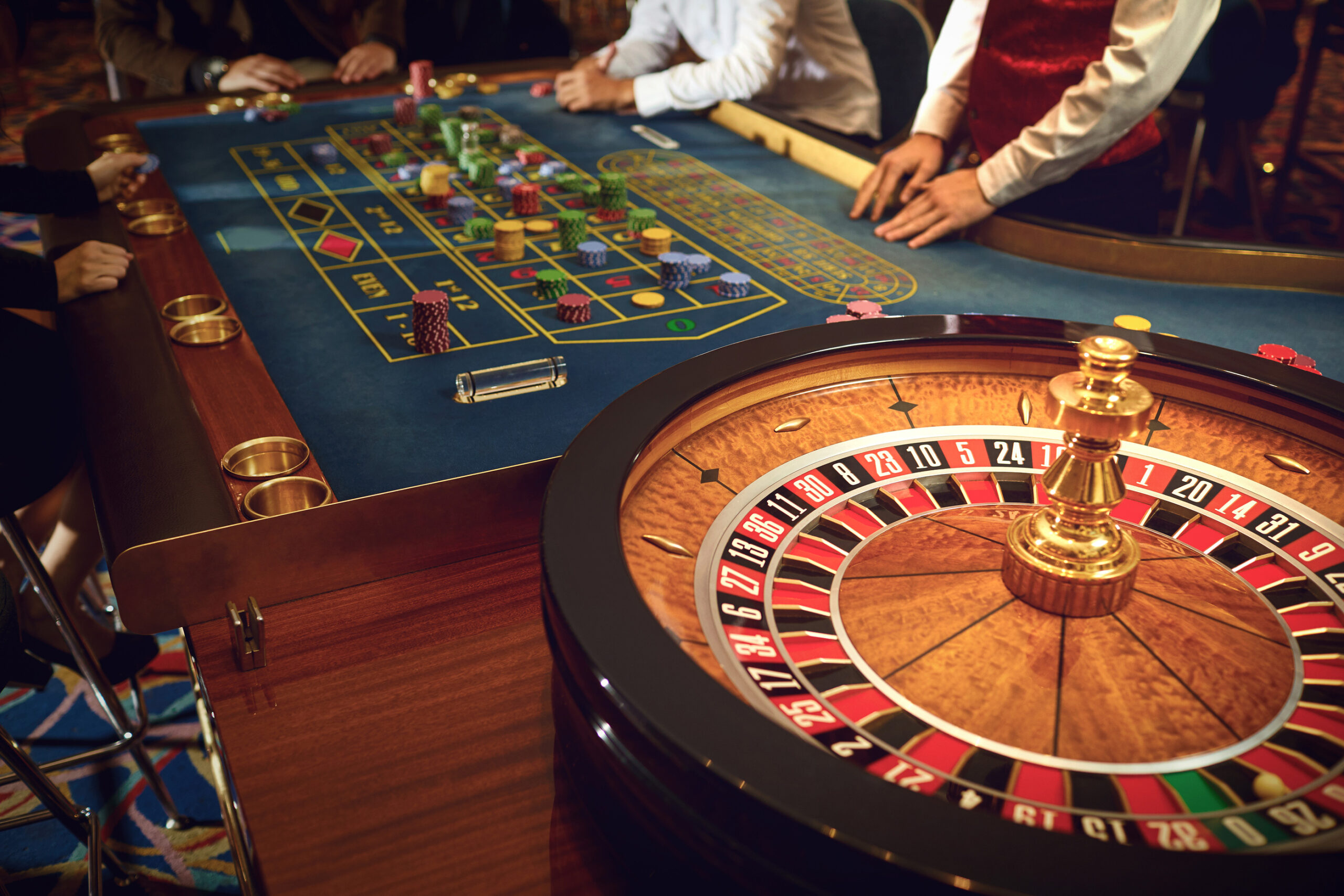
Revell, on the other hand, bet everything on one, single spin of a roulette wheel- a feat even a man like Kerry Packer never dared in a lifetime of gambling.

So what happened? He bet it all on red and won, managing to double his money on one spin, giving him roughly the equivalent of $360,000 today.

He admitted after the experience that, “… it was a mad thing to do. And I’m thinking back now about what would have happened if I lost. I’d have had nothing to go back to, nothing to wear. But I’d still have my friends, my family, and they’d always be there for me. So they gave me the security to be able to do this.”

Unlike many who win big in gambling, Ashley decided that tempting fate once was enough for him. He declined to bet a second time and cashed in his chips at the table and walked away.

As for what happened after, Revell spent a small portion of his winnings on a motorcycle trip around Europe, where he met a girl while in Holland. He states, “I took her back to England with me, we married and now we’ve got two children. You could say I have my bet to thank for finding me a wife.”

So, if you think about it, while he didn’t know it at the time, that single bet wasn’t just for his entire net worth, but he was also gambling his wife and the lives of his two children, the latter of which would have never existed had he lost.

If you liked this article, you might also enjoy our new popular podcast, The BrainFood Show (iTunes, Spotify, Google Play Music, Feed), as well as:

Expand for References

The post What was the Largest Bet Ever Made? appeared first on Today I Found Out.


from Today I Found Out
by Karl Smallwood - May 05, 2020 at 05:39PM
Article provided by the producers of one of our Favorite YouTube Channels!
-
Eurogamer.net: May 05, 2020 at 03:53PM - CD Projekt teases more Cyberpunk 2077 news coming in June

Cyberpunk 2077's revised release date of 17th September is still four months away, but developer CD Projekt has something in the works for impatient fans, and it's coming in June.

The developer's announcement, as far as it goes, appeared on Twitter earlier today, teasing the arrival of something called Night City Wire on 11th June. That's pretty much the extent of the specifics, but it seems reasonable to interpret the little TV emoji accompanying the tweet as indication that we're probably entering livestream territory here.

It has, of course, been quite some time since CD Projekt has shown anything substantially new of Cyberpunk 2077. The developer offered up a 15-minute slice of gameplay last August - itself a truncated version of a demo shown behind closed doors at Gamescom, offering a closer look at the Pacifica district of Cyberpunk 2077's Night City - so a fresh glimpse of the experience coming to Xbox One, PS4, and PC in September is long overdue.

Read more


from Eurogamer.net

Eurogamer.net: May 05, 2020 at 08:09AM - Sounds like there's a new version of Skate coming

After years grinding out in the wilderness, plans are afoot to revive EA's mothballed Skate series - for mobile phones.

That's according to pro skater Jason Dill, who told The Nine Club podcast he had been approached to appear in the game (thanks, Wccftech).

"I got a call from the EA people about 10 months ago, and they said, 'Hey, we want to talk about the Skate game'. I said, that's fine. [They] said, basically, 'We want to do a mobile version of Skate 3.' I wrote back, and I said, 'What else?' She wrote back, 'No, that's it.'"

Read more


from Eurogamer.net

Eurogamer.net: May 05, 2020 at 07:29AM - This Sekiro mod lets you play co-op and PVP with your friends

Sekiro is already an incredible single-player experience, but sometimes even battle-hardened players feel like they could do with some backup.

Enter Sekiro Online, a mod for the PC version of the game which adds both co-op and PVP features to the game (via DSOGaming). Mod author LukeYui explained they tried to make the online mode as similar as possible to the Souls series' online features, although it's obviously not quite as smooth - seeing as it started as a pet project and is still in early public beta.

Running through P2P connections rather than a central server, Sekiro Online can support up to six players, with one player hosting and the other five appearing as phantoms. Along with co-op and PVP the mod also adds the Souls series' invasions feature, which allows the player to enter an unsuspecting player's world "as a spirit of vengeance" to fight to the death. To add some balance to this, invading players and phantoms will be adjusted to the player's local level, otherwise things would get a bit unfair if an advanced player came in to repeatedly whack you. Although I guess that would be fitting for Sekiro.

Read more


from Eurogamer.net

Eurogamer.net: May 05, 2020 at 06:00AM - The lure of a good spaceport

What's the first thing that comes to mind when you think of 2001: A Space Odyssey? Is it Moonwatcher throwing that bone in the air? HAL singing to Dave Bowman while he slowly gets unplugged? Is it the Monolith standing at the base of a hotel bed?

Recently I've been thinking of another of the film's iconic sequences - Heywood Floyd's trip to the moon in the first hour. He stops off half-way on an orbiting space station, and suddenly this astronaut is chatting to his daughter by video phone, navigating a futuristic Howard Johnson's and even chatting to Leonard Rossiter on a sofa.

What I've only recently realised is that 2001's actually quite a self-contained film. An awful lot of the action - if you could call it that - takes place on the Discovery, a spaceship en route to Jupiter. The reason the film feels so expansive is partly because of the hominids at the start and partly because of the stargate at the end, sure, but much of it comes down to that trip to the space station, where we get to see a little of the wider world of the future.

Read more


from Eurogamer.net

Eurogamer.net: May 05, 2020 at 02:55AM - Here's Super Mario 64 running at 4K on PC

A fan-made port of Super Mario 64 has Nintendo's classic running at 4K resolution on PC.

We've seen plenty of retro games running with improved performance on PC via emulators before - the difference here is that this is a port, put together by fans with access to the game's source code.

Mario 64 is one of a trio of plumber classics getting a re-release for Nintendo Switch later this year - along with other Mario games old and new. Just don't expect the Switch to hit 4K like this.

Read more


from Eurogamer.net

Eurogamer.net: May 05, 2020 at 12:59AM - The neverending quest for Absolver's ultimate martial art

You've heard of the Way of the Dragon, but have you come across the Way of the Magic Right Arm? As you've probably guessed, it's a martial art were every move has to involve the right arm - effective at rattling jaws, less so at sweeping ankles. It's not, you've probably also guessed, an actual combat discipline but one of thousands dreamt up by players of Sloclap's Absolver, the unbearably stylish fighting game which lets you pick from over 120 beautifully animated kicks and punches to create a bespoke martial art, or "deck", of up to 16 moves.

Launched in 2017, Absolver's idyllic open world and RPG trappings such as looting are a little deceptive. This is a duelling simulation above all and as such, many player-created decks are works of painstaking optimisation, born of hours spent weighing up frame counts and hit ranges. There are plenty, however, that are more whimsical than competitive, and the game would be much poorer without them.

Some decks are purely about showing off, stringing together high-stakes moves like the MeiaLua, a grandiose kick which begins with you pointing your arse at your opponent's head. Others trade on creative handicaps, such as boxer decks that keep your feet firmly on the ground. There are monkish decks that seek to recreate as closely as possible the martial arts (including Kung Fu and Jeet Kune Do) from which Sloclap took inspiration. At the sillier end of the scale are decks which only use moves that spin you clockwise, and "Chad decks" - as lovingly described by r/absolver member Morklympious - which chain together meaty hits with wind-ups so exaggerated you might as well be fighting in slow motion. They're guilty pleasures for veterans looking to blow off some steam.

Read more


from Eurogamer.net

Monday, May 4, 2020

Eurogamer.net: May 04, 2020 at 08:55AM - EA Play going ahead digitally this June

It's hardly a surprise, but it seems this year's EA Play event will be taking place digitally this year, following the cancellation of most physical events due to the coronavirus outbreak.

The online event will take place on 11th June at midnight UK time, and promises "world premieres, news and more". That's all the information we have so far, and there isn't yet an exact schedule - but I imagine it will be similar in form to the livestreams seen in previous years. But filmed from home, I guess.

EA Play typically takes place slightly before E3 in Los Angeles, and allows guests to watch live interviews with developers, take games for a test drive, or meet their favourite game characters. The plan to host a digital event means EA Play joins the likes of Gamescom in temporarily moving to a fully-online format. Poor old E3, meanwhile, revised its original plan to hold an online version of the show, and it seems likely many of those announcements will take place in the four-month Summer Game Fest held by Geoff Keighley, which starts in May.

Read more


from Eurogamer.net

Eurogamer.net: May 04, 2020 at 07:55AM - The first Lord of the Rings: Gollum screenshots are here

It's been a little over a year since The Lord of the Rings: Gollum was announced, and today we're finally seeing some early glimpses of what scurrying around as Gollum will look like.

The screenshots, which were released as part of a Gamestar preview, show some of the game's environments along with player-character Gollum. Although the game is based on the Tolkien books rather than the films, Gollum does somewhat resemble the design seen in the Peter Jackson trilogy - albeit with longer hair and shinier skin. Good to know he's been moisturising.

Although there's still little information about how the mechanics will work, judging by the screenshots there's going to be a fair bit of stealth required, along with some nimble navigation of Mordor's mines and forges. As a prequel to The Lord of the Rings, it takes place before Gollum encounters Frodo, although exactly what he gets up to in this game remains a mystery. The abundance of spiders in the screenshots might suggest an encounter with Shelob.

Read more


from Eurogamer.net

Eurogamer.net: May 04, 2020 at 07:54AM - Star Wars Vader Immortal headed to PlayStation VR

Lightsaber-wielding Star Wars VR game Vader Immortal is headed to PlayStation VR.

Previously released episodically for Oculus headsets, the complete game will arrive on PlayStation's VR platform at some point this summer.

Developed as a canon story with input from Lucasfilm and written by Batman Begins scribe David S. Goyer, it sees you squaring up to ol' bucket head in person.

Read more


from Eurogamer.net

Eurogamer.net: May 04, 2020 at 07:38AM - The best gaming deals for Star Wars Day

Hang out here long enough and you've probably noticed that the Eurogamer lot are partial to a good pun under their headlines. I'm assuming, then, there's some appreciation for the play on words that is hosting Star Wars Day on May the 4th.

Star Wars and video games share a rich history, so it's no surprise to see various retailers attempt to capitalise on the festivities with their own Star Wars day deals. You can find offers on the old (Knights of the Old Republic, Jedi Knight) and the new (Star Wars Jedi: Fallen Order, Battlefront 2), plus much more in between.

I've gathered the best of the bunch below for you to peruse. You can also head to Jelly Deals where we've got a roundup of all the other Star Wars day deals, featuring Lego, box sets, collectables, merch and more.

Read more


from Eurogamer.net

Eurogamer.net: May 04, 2020 at 04:00AM - Snowrunner's another beautiful game about getting nowhere slowly

When it comes to Snowrunner, what I really want to tell you about is the back window of the starter truck. I appreciate this is not a normal sort of thing to come away from a game with, but isn't that just Snowrunner in general?

Anyway: most of the time the back window is just a back window. Through it you get a partial view of the truck interior - the dash, the seats, a guy at the wheel trying to stay in control. But then the truck jounces and rolls and lists and yaws and that window catches the light a certain way. Suddenly, the texture! The glass is not just something you look through but something you look at - it's covered with a fine layer of sprayed mud, tiny particles of the stuff, and it almost looks like someone's tried to wipe all the grot off it before moving on to better things.

Details matter in Snowrunner. They matter because, like Spintires, the origin story of this strange and wonderful series, you have time to notice the details. It's not that you're up close as such, but more that the landscape moves past you at about two miles an hour, and that's when things are going well. This is a game about being stuck right in the moment - often a moment in which you're stuck, right, in the mud. You get time to see the breeze in the trees, the speckles of the earth, and the smear on the surface of a window.

Read more


from Eurogamer.net

Eurogamer.net: May 04, 2020 - Sakura Wars review - heartfelt, over-the-top anime romp

Originally conceived back in 1996 as a way to offer an RPG franchise on the Sega Saturn, the original Sakura Wars series was a mix of visual novel, dating sim and round-based strategy combat. It follows an all-female theatre troupe based at Tokyo's Imperial Theatre, putting on shows as the Flower Troupe to keep the spirits of the populace high, while also acting as the Imperial Combat Revue, a paramilitary operation tasked with defending the capital from monsters. To do so, they use mechs called Kobu, powered by the strength of their spirit.

With its anime stylings and a cast of lovable protagonists, the franchise became a wild hit in Japan before its fate was sealed along with the Dreamcast. The west only saw the localisation of the last Sakura Wars game, Sakura Wars: So Long, My Love, its New York setting and all-new cast considered a good entry point into a series often deemed to be too Japanese.

This new Sakura Wars constitutes a soft reboot, set a decade after the events of the originals and using established gameplay but featuring a completely new cast. You take the role of Navy ensign Seijuro Kamiyama, who becomes the Flower Troupe's new captain. It's your job to help restore the Imperial Theatre to glory and keep Tokyo safe. In order to make a gaggle of women into a real team, you need to get to know them, help them overcome personal struggles and realise their true potential.

Read more


from Eurogamer.net

Sunday, May 3, 2020

A Bunch of ‘Wangers- The Nazi Unit Who Were so Awful, Even the Nazi SS Were Disgusted by Them

The SS-Sturmbrigade Dirlewanger, better known to historians as simply the Dirlewanger Brigade, holds the dubious distinction of being amongst the most reviled units of the Nazi war machine. Infamous for its brutality and the open sadism displayed by its commanding officer, a man previously imprisoned for raping a young teen girl, the unit and their actions were so detested that even many among the upper echelons of the Nazi high command itself were disgusted by them. So how did this unit come to be, why were they so particularly brutal, and why were they allowed to continue with their horrific acts that horrified pretty much everyone but themselves?

Officially the 36th Waffen Grenadier Division of the SS (or more aptly “under SS control”) were formed in 1940 as an indirect response to an order from Hitler to bolster German manpower with convicted criminals, initially those convicted of minor crimes. However, as the war went on and Nazi Germany became desperate, the ranks of these battalions became decidedly more eclectic with some, like the Dirlewanger Brigade, filling out their ranks with the worst of the worst of criminals, as well as mental institution patients.

Considered by many to be a death sentence, these units were often tasked with the most dangerous jobs the Wehrmacht could think of, such as acting as shock troops in losing battles or to march across minefields to clear them. Any of these soldiers who refused were shot dead on the spot.

When they weren’t being thrown into the meat grinder, Strafbattalions were forced at gunpoint to perform back-breaking manual labor and could expect to be executed for even minor infractions. Men who found themselves serving in Strafbattalions additionally held no rank and fought wearing plain uniforms.

The payoff, however, assuming they managed to survive, was that if they served with distinction, they could potentially have their criminal records expunged and even be given more traditional ranks and re-assigned to units that weren’t more or less suicide squads.

Within the Strafbattalions, however, one unit distinguished themselves via a level of brutality that would make even the most twisted of minds squeamish- something the upper echelons of the Nazi war machine found to be particularly beneficial for the war effort. You see, having a rabid dog at their disposal came in handy in certain situations. And, incidentally here, not totally hyperbole, it’s noteworthy that one tactic the Dirlewangers used was to release starved and abused dogs among civilians, with the dual benefit of some good family fun for the soldiers, getting to watch the dogs tear the people apart, as well as to instill the appropriate fear in the rest of a given local populace as to what would happen to them if anyone further stepped out of line.

This brings us to the commanding officer of the Dirlewanger Brigade- Oskar Dirlewanger, a close friend of Lieutenant General Gottlob Berger, one of the “twelve apostles” of Heinrich Himmler, aka the “architect of the Holocaust”.

Dirlewanger had previously served in WWI where he was wounded six times and otherwise seems to have served with distinction, rising to the rank of Lieutenant. However, after the war, one official report on the man noted he had become, to quote, “mentally unstable, violent… [an] alcoholic” and an abuser of drugs.

In his time between the world wars, he took part in various things like the suppression of the German Revolution, got his doctorate in political science and was frequently convicted of various crimes, such as embezzlement. Things got even more serious when, in 1934, he was convicted of raping a 14 year old girl, then immediately after stole a government car and promptly crashed it as he was quite drunk at the time. He was then imprisoned for a couple years, before being released. Rather than live as a law abiding citizen from there, he almost immediately was convicted of sexual assault once again.

Having friends in high places, such as Gottlob Berger, however, comes in handy, and not long after, he managed to get released and then went to fight in the Spanish Civil War under General Francisco Franco. Thanks to his service during that war, when he went back to Germany, he was reinstated and, eventually, given a group of criminals to command.

His unit was initially composed of a few dozen of these individuals, including poachers- the idea here being that their tracking and hunting skills would translate well to hunting and tracking resistance members and fleeing Jews.

Thanks to their success towards this end in the early going, the Dirlewanger Brigade grew over the course of the war to comprise of 4,000 men at its peak- a group whose numbers eventually included some of the worst of the worst of criminals, as well as men deemed mentally unstable, including asylum patients.

Dirlewanger took full advantage of his position as leader of this ethically challenged unit, engaging in acts of cruelty on an incomprehensible scale. Beyond the aforementioned rabid dog tactic, another even more horrific was gathering together very young girls, stripping them all naked, whipping them to near death, then injecting them with strychnine. After this, it was reported he and his men enjoyed, among other things, watching them convulse to death.

Another tactic was to gather groups of people and cram them into a building, then set it on fire. Any who fled the building after it was set aflame would be immediately shot.

Beyond these sorts of more elaborate methods, the ‘wangers were also known for terrorizing local civilian populaces via gang rapes, beatings, robbings, extortion, indiscriminate murder, gutting children in front of their parents, etc. etc.

Naturally, even some of the most ardent Nazi ideological supporters got a little squeamish at some of these acts, leading to frequent calls for Direlwanger’s arrest, or at the least the reassignment of the ‘wanger brigade to the front instead of overseeing civilians.

In fact, at one point SS police judge advocate Georg Morgen was so fed up he took it upon himself to issue a warrant for the arrest of Dirlewanger. Naturally, Dirlewanger appealed to Berger, who in turn appealed to Himmler on Dirlewanger’s behalf, reasoning to Himmler in a letter defending Dirlewanger’s actions, “Better to shoot two Poles too many than two too few. A savage country cannot be governed in a decent manner.”

Himmler apparently agreed and Dirlewanger was allowed to continue on and even promoted. In another case, General Heinz Guderian appealed to Hitler himself to get Dirlewanger’s unit withdrawn, reportedly with one of Himmler’s officers backing up Guderian’s assertions about the ‘wangers. Hitler, however, apparently felt the opposite about the unit and rejected the pleas. In a nutshell, the ‘wangers got results when it came to quelling uprisings, tracking down those fleeing, and instilling an extreme amount of fear among the civilians they were let lose upon.

On that note, as alluded to, given their strength was not so much in having well trained soldiers, but rather ones who seemed to lack even an ounce of empathy or moral compass, the duties of the Dirlewanger Brigade throughout most of the war were the suppression of civilian activity throughout Nazi controlled Eastern Europe, with the unit mostly operating in Poland and Belarus.

Perhaps the most infamous event of the war the the Dirlewanger Brigade took part in was the Warsaw Uprising of 1944. During what came to be known as the Wola Massacre, the unit slaughtered thousands of unarmed civilians and engaged in unthinkable acts of cruelty. For example, reports tell of Dirlewanger and his men burning hospital patients alive, gutting screaming women in front of their families and killing an entire pre-school full of children with bayonets and rifle butts. Why this instead of shooting the kids? German Army sapper Mathias Schenck describes this last event and the reasoning behind the method of killing:

After the door of the building was blown off we saw a daycare-full of small children, around 500; all with small hands in the air. Even Dirlewanger’s own people called him a butcher; he ordered to kill them all. The shots were fired, but he requested his men to save the ammo and finish them off with rifle-butts and bayonets. Blood and brain matter flowed in streams down the stairs.

The brutality of the Dirlewanger Brigade is such that we don’t even know how many people they killed during the war, with information gleaned from reports generally estimating the number at between 30,000-120,000 civilians in Belarus and thought to more definitively be around 50,000 people in Poland.

The unit itself lost a small number of men, during this period at least, as the book, Bloodlands: Europe between Hitler and Stalin somberly notes: “As it inflicted its first fifteen thousand mortal casualties, the Special Commando Dirlewanger lost only ninety-two men — many of them, no doubt, to friendly fire and alcoholic accidents. A ratio such as that was possible only when the victims were unarmed civilians.”

For anyone reading this who feels like they need a little schadenfreude to wash the taste of all that information out of their brains, towards the end of the war, the ‘wangers were forced to go up against non-civilians in the form of the Soviets… and well, let’s just say the Red Army saw to it that these bastions of humanity were held accountable for their crimes, almost completely, and extremely rapidly, wiping them out, down to just a couple hundred survivors.

That said, Dirlewanger’s Brigade’s numbers were briefly replenished by a few thousand additions to bring them back up to about 4,000 strong, but once again were soon after slaughtered by soldiers who actually knew what they were doing, with it estimated only about 700 ‘wangers in total surviving the war.

As for Oskar Dirlewanger, after his unit was decimated the second time, he promptly swapped his uniform for civilian clothing, fled, and started going by a different name. Thankfully, he was recognized by a Jewish concentration camp survivor while staying at a hunting lodge not long after. French soldiers promptly arrested him on June 1, 1945.

Now, officially, Dirlewanger died about a week later of injuries he sustained prior to being captured in southern Germany. However, this is largely thought to just be a story to protect a handful of Polish guards at the prison he was being held at. You see, these men allegedly took it upon themselves to beat Dirlewanger until he promptly died of the wounds he sustained before being arrested…

If you liked this article, you might also enjoy our new popular podcast, The BrainFood Show (iTunes, Spotify, Google Play Music, Feed), as well as:

Expand for References

The post A Bunch of ‘Wangers- The Nazi Unit Who Were so Awful, Even the Nazi SS Were Disgusted by Them appeared first on Today I Found Out.


from Today I Found Out
by Karl Smallwood - May 03, 2020 at 04:00PM
Article provided by the producers of one of our Favorite YouTube Channels!
-

Eurogamer.net: May 03, 2020 at 08:05AM - Star Wars stuff returns to Fortnite in honour of Star Wars Day

Star Wars loot has returned to Fortnite.

For a limited time only - in celebration of Star Wars Day, May the 4th - a selection of Star Wars-flavoured goodies have returned to the shop in Fortnite, including Rey, Kylo Ren, and Sith Trooper outfits, as well as a shiny new selection of lightsabers.

"Fulfill your destiny. StarWarsDay is almost here and the Rey, Kylo Ren and Sith Trooper Outfits are back in the Shop!" tweeted the official Fortnite Twitter account. "Feel like a Jedi as Lightsabers have returned for a limited time! Drop in game now and show off your skills."

Read more


from Eurogamer.net

Eurogamer.net: May 03, 2020 at 06:00AM - Pixel Ripped 1995 is a VR love letter to gaming times gone by

Although my first experiences with video games revolved around 128k machines and their lovely, rattly cassette tapes, it's the 16-bit era of gaming that I remember most fondly.

Late nights spent trying to sneak in a level or two of Super Probotector without my parents hearing. Four friends huddled around an Amiga playing Hired Guns. Trips to the shopping center where I'd stare longingly at the video game demos on display in the local branch of Dixons. These are all memories that came flooding back to me as I played through the first hour of Pixel Ripped 1995 for this week's episode of Ian's VR Corner.

You can watch me take a trip back to 1995 using the Oculus Rift S as some kind of makeshift time-travel device in the video below, where I give you my usual, nonsensical first impressions of the game.

Read more


from Eurogamer.net

Eurogamer.net: May 03, 2020 at 05:22AM - It looks like text messaging is finally coming to Google Stadia

It looks like text messaging might be on its way to Google Stadia.

As reported by 9to5Google (thanks, VG24/7), the latest update to Google's streaming platform, Stadia, includes references to a number of key social features. After trawling through the latest update to the Stadia app, version 2.16, 9to5's APK Insight team believe they've uncovered the following:

If accurate, this means Stadia players will finally be able to communicate via the Stadia app on their smart devices without having to use the system's built-in oral voice chat. And while it's unclear what "ChatMessages" pertains to - direct voice mail, or another term for text messaging perhaps? - it looks like there'll be more options for Stadia players to connect with each other.

Read more


from Eurogamer.net

Eurogamer.net: May 03, 2020 - The story of Your Sinclair

By the early 90s, the ZX Spectrum appeared hopelessly outdated. The Commodore Amiga and Atari ST were appreciably better computer alternatives, while those with a pure penchant for video games would shortly be able to get their hands on a Super Nintendo Entertainment System, if they hadn't already invested in a Sega Mega Drive. In terms of graphics and sound, all of them were ridiculously better than the Sinclair machine. I wasn't really playing on my 128k +2 Speccy much as I looked on enviously at Mega Drive screenshots of Strider and Golden Axe; but what I was still doing was consistently reading Your Sinclair each month, often to the scorn of friends and family. "Why are you still reading that?!" they would clamour. "Because," I'd reply with a tone of calculated indifference, "It's funny."

Your Sinclair began life as Your Spectrum, and it wasn't just the name that was different - practically everything inside was, too. "It was a long time ago, and Dennis Publishing was a very different company - actually called Bunch Books at the time," says Roger Munford, launch editor of Your Spectrum back in 1984. As with its peer, Sinclair User, Your Spectrum focused on many of the serious aspects of computing, with gaming taking its place among features on programming, hardware and the business uses of the Sinclair microcomputer. The aforementioned rival, not to mention Newsfield's Crash, helped instigate the change to the magazine ZX Spectrum fans know and love today. "The Spectrum was no longer the focus of all that Sinclair were doing," continues Munford. "They had launched the QL, and also that silly electric car. The title change was more hoping that Sinclair was going to be like Apple, and also to pit the magazine more clearly against EMAP, which had the clear winner in the field."

Issue One of Your Sinclair hit newsstands at the end of 1985, sporting a gritty Commando cover and a cassette on its cover, containing a demo of the isometric puzzle game, Rasputin. With Munford having departed the magazine to help launch MacUser, Kevin Cox took over the reins, and he oversaw a tense period as the material graduated towards games and entertainment, relegating much of the technical and business-like content to a handful of pages at the back. Already at Dennis publishing since the days of Your Spectrum, Teresa Maughan, nicknamed T'zer, was deputy editor on this shining new publication that was determined to evoke youth magazines of the time rather than its fellow computer games monthlies.

Read more


from Eurogamer.net

Saturday, May 2, 2020

Eurogamer.net: May 02, 2020 at 09:41AM - Destiny 2 players are glitching into the future of the Tower

Destiny 2 players have encountered a glitch that has offered a glimpse into the future of the Tower.

Bungie's shooter is currently in the middle of its 10th season, dubbed Season of the Worthy, and a storyline that involves The Almighty plummeting towards The Last City. The Almighty is a massive Cabal superweapon that was left broken and orbiting the Sun at the end of the Destiny 2 campaign. Now, after a desperate Psion Flayer set The Almighty on a collision course with Earth, players are trying to use the warmind Rasputin to destroy it.

THERE MAY BE SPOILERS AHEAD.

Read more


from Eurogamer.net

Eurogamer.net: May 02, 2020 at 02:03AM - Valve adds Rick May memorial statues to Team Fortress 2

Valve has added a tribute to Rick May, the voice of the Soldier, inside Team Fortress 2.

May, who was also the voice actor behind Star Fox's Peppy and his iconic "Do a barrel roll" line in Star Fox 64, passed away aged 79 earlier in April after contracting coronavirus. In February of this year May suffered a stroke and entered a nursing home.

Valve's understated patch notes for its Team Fortress 2 update stated: "Added a tribute to Rick May, voice of the Soldier." But players have found this tribute is fairly extensive, with the main menu given over to Soldier, and memorial statues in the maps. Additionally, players have reported that players near these statues will hear various Soldier lines.

Read more


from Eurogamer.net

Friday, May 1, 2020

Eurogamer.net: May 01, 2020 at 08:20AM - Gun Jam is basically a crossover between Doom and DDR

Last month, you may have spotted a short clip of a rhythm-FPS during your Twitter travels, which went viral after developer Dan Da Rocha decided to share the team's progress. Given it racked up over 15k likes, I think it's safe to say it struck a chord with viewers: and it's now being made into a fully-fledged game called Gun Jam.

The rhythm-FPS, which is being developed by Jaw Drop Games (known for the QUBE games), requires players to shoot on the beat - as indicated by a Dance Dance Revolution-style stream of diamonds in the centre. It's a pretty unique core mechanic, and provides the player with a clear visual for nailing the timing.

"We finally decided to reveal what we had in the making and I was properly blown away with the amazing response that followed," Da Rocha said in a press release. "The core mechanics definitely have their challenges but I'm proud of the team for pulling together and problem-solving to achieve the vision."

Read more


from Eurogamer.net

Coconut Butter Cups: A Second Look


These aren't like cocoa butter SPF dude! These are candy!

from Candy Gurus
by Matty May 01, 2020 at 08:38AM

Eurogamer.net: May 01, 2020 at 04:03AM - Fortnite and Dota 2 cancel major esports events

While real-world sports have been turning to video games for online tournaments, it seems some esports events have not been so lucky - as both the Fortnite World Cup and Dota 2's The International have been cancelled due to the coronavirus outbreak.

The Fortnite World Cup, which last year pulled in over 2.3m viewers to make it the most-watched competitive gaming event of all time (excluding China), will not take place in 2020. While all other Fortnite physical esports events will take place online, the World Cup could not take place due to the "limitations of cross region online competition".

"We don't know when a return to large, global, in-person events will be practical, but we're hopeful to be able to put on some form of Fortnite World Cup in 2021," said Epic via the Fortnite Competitive Twitter account.

Read more


from Eurogamer.net

Eurogamer.net: May 01, 2020 at 04:00AM - Five of the Best: Bikes

Five of the Best is a weekly series about the small details we rush past when we're playing but which shape a game in our memory for years to come. Details like the way a character jumps or the title screen you load into, or the potions you use and maps you refer back to. We've talked about so many in our Five of the Best series so far. But there are always more.

Five of the Best works like this. Various Eurogamer writers will share their memories in the article and then you - probably outraged we didn't include the thing you're thinking of - can share the thing you're thinking of in the comments below. Your collective memory has never failed to amaze us - don't let that stop now!

Today's Five of the Best is...

Read more


from Eurogamer.net

Thursday, April 30, 2020

How Much Caffeine Would It Take To Kill You?

Katie O/ asks: How much caffeine would someone have to drink to be fatal?

There have been numerous deaths attributed to excessive caffeine ingestion. So if you happen to be a person who loves coffee and energy drinks, you might want to know approximately what amount you should avoid drinking on a given day. So how much caffeine would it take to kill you?

Well, there are several factors that make this a tricky question to answer. For example, not everyone reacts the same way to caffeine. People also become tolerant to it and so the effects can be different from person to person. Lastly, there would be no respectable researcher who would dare perform a study on humans if the goal of that study is death to the person. Thus, as you might expect, we couldn’t find any studies that show what amount of caffeine would definitively kill your average human. But that’s not very interesting, so let’s dig a little deeper, shall we?

First, we went ahead and gathered 100 volunteers who were tired of living, along with some who we just found on the streets and figured they should have been staying quarantined, so what would happen next in our study is really on them…

But more seriously, it turns out there are less ethically questionable studies that have allowed doctors to understand what’s going on inside the body in caffeine overdoses and approximately what dose would prove fatal for the average person. So while the exact dose is almost impossible to answer for a given individual, we can say for sure a few things, like that the highest caffeine dose ever known to be ingested by someone who survived was around 100 grams.

Although that might not sound like that much, in terms of raw amount of caffeine, it should be noted that that’s the amount of caffeine in about 1,200 cups of coffee!

Lesser doses that are generally thought to put an adult at high risk of death typically range from about 5-10 grams ingested in a short period, which is still an awful lot of energy drinks and/or coffee, though there are certain diet pills that can easily get you over that amount in just a handful of pills.

Of course, people ingesting significantly lesser doses have had death attributed to caffeine overdose. That said, others survive where you’d think they wouldn’t, such as one medical report looking at the case of an unnamed one year old girl who ingested some of her mother’s diet pills. The total dose of caffeine to the one year old was approximately 3 grams.

While said baby did have significant complications, including heart issues and seizures in the immediate aftermath, she survived the incident and did not seem to suffer from any long term issues. Noteworthy here is that due to her tiny size, the caffeine concentration in her system ended up being the second highest every documented in someone who survived the event.

Yet another research paper we looked at documented the case of a 16 year old boy who ingested around 6-8 grams of caffeine and also managed to survive, despite a number of immediate medical complications as a result of the caffeine.

So basically, there are a myriad of factors at play here, but as for a definitive dose that would kill most people, it turns out when talking cups of coffee or energy drinks, it’s a huge amount in most people, with some exceptions where individuals with certain heart conditions and the like might want to avoid significantly smaller doses.

As for the average Joe, most physicians and medical bodies tend to recommend avoiding ingesting more than around 500-600 mg of caffeine per day, not necessarily because you might die per se, but more because it’s likely not going to be good for you for a variety of reasons, especially if done regularly.

For reference, the average cup of coffee has in the range of 40-150mg of caffeine. For example, a Starbucks 2x Caffeine K-cup will get you a dose of around 260 mg, compared to the normally caffeinated k-cup from the same brand which has around 130 mg. Obviously if following the recommendations, you’ll want to avoid more than 2 of the 2x caffeine k-cups per day.

For other references, 12 ounces of Jolt cola has approximately 100mg (16 oz at about 160 mg), Monster Energy at about 160 grams, 12 oz of Mountain Dew has 55mg, and Dr. Pepper has 61 mg.

So this all might have you wondering how caffeine actually manages to kill?

Caffeine is one of several naturally occurring substances known as Xanthines. Xanthines are among other things, central nervous system (CNS) stimulants. Caffeine, specifically, is in over 60 known plant species. It’s the most widely consumed psychoactive substance in the world. Depending on which study you read, approximately 80-90% of the US population consumes at least 200mg per day. In low doses, it has many benefits that can help with things like pain management, water retention, alertness, and a general feeling of wellbeing, to name a few.

As with most CNS stimulants, the higher the dose, the more profound the reaction. As you consume more caffeine, the risks begin to outweigh the benefits. A person can become jittery, anxious, begin having high blood pressure, chest pain, headaches, dehydration, and unfortunately, dependence that causes withdrawals if you don’t continue consuming it. In toxic doses, caffeine can cause extremely low blood pressures, seizures, cardiac rhythm problems, and lactic acidosis.

While there appears to be some dissension among researchers as to exactly how xanthines, like caffeine, cause the reactions they do.  What is known is that they antagonize what are known as adenosine-receptors within almost every cell in the body.

Adenosine is a chemical present in every human cell. It combines with other chemicals like phosphate to create numerous compounds that help cells work properly. Those compounds need to attach to their receptors to affect cells. There are 4 main groups of adensonine receptors within the body and their effects can fall into four categories. Generally speaking, adenosine compounds help in increasing the oxygen available to cells, protect against the damage caused by a lack of oxygen, help in initiating the body’s natural anti-inflammatory responses, and help in the creation of blood vessels.

Caffeine is similar to adenosine in chemical composition, and as such, can attach to adenosine receptors not allowing adenosine compounds to perform normally. The result is CNS and cardiac stimulation, relaxation of the smooth muscles, and a diuretic action on the kidneys that can lead to dehydration.

Thus, in high levels, caffeine can be very toxic. It will bind to adenosine receptor sites known as subtypes A1 and A2. The result is seizures. In high doses, it will also inhibit an enzyme known as phosphodiesterase, while stimulating the release of neurotransmitters involved in your fight or flight nervous system. The result is extremely fast heart rates, dilation of your blood vessels causing low blood pressures, low potassium levels that can cause lethal heart rhythms, the breakdown of sugars in your liver, and an increase in your white blood cells.

If all that doesn’t seem like it’s deadly enough, those side effects will cause their own problems. Specifically, lactic acidosis will be caused by your body’s tissues not getting enough oxygen because your blood pressure is too low. The result of your seizures, low oxygen levels within your cells, and an inevitable calcium release from an area of your cells called your endoplasmic reticulum will give you what is known as rhabdomyolysis- this is a breakdown of your muscles causing a release of your muscle fibers into your bloodstream (brown pee and clogged kidneys anyone!).

If you’re thinking “I’m never drinking that nectar from Satan again”, don’t worry, those toxic reactions won’t happen at normal consumption levels. Just, again, when you start getting in excess of 500-600 mg per day for a typical adult, you’re going to start to have a bad time in many cases. And even less for the littles.

If you liked this article, you might also enjoy our new popular podcast, The BrainFood Show (iTunes, Spotify, Google Play Music, Feed), as well as:

Bonus Fact:

Speaking of Satan, prior to being baptized in the 16th century by Pope Clement VIII, coffee had been thought by many Catholic leaders in Europe to be Satan’s drink. Whether because of its characteristic dark color and bitter taste (both of which were the antithesis of sweet wine, which was associated with the Eucharist and Christ), its physical effects, or its roots in the Muslim world, or all three, many Catholic clerics were solidly against the beverage.

As to who first brewed the first cup of Joe isn’t known, but that hasn’t stopped many a fictitious origin story from popping up, such as the commonly repeated legend that coffee was first “discovered” in the 9th century by an Ethiopian herdsman, Kaldi who noticed that one of his goats appeared to be particularly frolicsome after consuming some red coffee berries. Giving it a go himself, he soon felt more upbeat. Energized, he relayed his discovery to his neighbors and coffee consumption was born.

However it really came to be discovered as a stimulant, over time, coffee became popular throughout Ethiopia, where it was said that warriors of the Galla tribe mixed it with butter and ate it before going into battle. Eventually, by the 12th century Arab traders returning to what is now Yemen from Ethiopia brought coffee with them and learned to cultivate the plant. By this point, the beans were being transformed into a drink (qahwa or kahwah) by means of boiling.

In the 15th century, Ottoman Turks brought coffee with them when they conquered Constantinople (Kostantiniyye or al-Qustantiniyah). At this same time, the Mufti of Aden, who had been suffering with an unidentified illness and was cured after drinking coffee for the first time, touted its beneficial qualities, which contributed to its popularity throughout the Muslim world.

Also in the 15th century, the first coffee houses (Kaveh Kanes) began appearing in Mecca and Constantinople, and like today, they were used for not only drinking coffee, but socializing as well.

By the end of the 16th century, coffee was found in Venice, and by the turn of the 17th century, Catholic Church leaders were becoming suspicious of coffee and the effect it had on the local populace. Deciding it must be Satan’s drink, many local clergy beseeched the pope, asking him to prohibit its consumption.

Trying it for himself, Pope Clement VIII (1536-1605) found it agreeable, and demonstrating a gift for diplomacy, declared in 1600:

“Why, this Satan’s drink is so delicious that it would be a pity to let the infidels have exclusive use of it. We shall cheat Satan by baptizing it.”

With the pope’s blessing and its natural addictive qualities, coffee soon spread across Europe.

Expand for References

The post How Much Caffeine Would It Take To Kill You? appeared first on Today I Found Out.


from Today I Found Out
by Scott - April 30, 2020 at 11:27PM
Article provided by the producers of one of our Favorite YouTube Channels!
-

Eurogamer.net: April 30, 2020 at 09:01AM - Microsoft to show Xbox Series X games via livestream next week

Microsoft will show off the first Xbox Series X games in an Inside Xbox livestream next Thursday, 7th May at 4pm UK time.

There's no official word on what exactly we'll be seeing, but Eurogamer understands a number of third-party games will be showcased.

Obviously, fans are also looking forward to see more of flagship title Halo: Infinite, only teased until now, but also some of the many projects Microsoft's array of games studios have been quietly building and keeping under wraps.

Read more


from Eurogamer.net

Eurogamer.net: April 30, 2020 at 08:55AM - Nintendo will delay its typical E3 Direct broadcast in June

Nintendo's plans for its annual E3 broadcast have been pushed back due to complications arising from the coronavirus pandemic.

That's according to Venturebeat, which first reported on the story this afternoon, and which Eurogamer sources have also been able to corroborate.

While Nintendo has long held its presentations digitally, Eurogamer understands it has told publishers set to reveal games during its showcase that it needs more development time on its first-party games. Work is currently being held up as the famously-secretive company adapts to staff working remotely.

Read more


from Eurogamer.net

Eurogamer.net: April 30, 2020 at 06:57AM - Darkborn development put on hold, dev promises something new

Stockholm-based indie studio The Outsiders has announced its viking monster game Darkborn has been put on ice.

As explained on Twitter, the project had been in development for four years - and despite releasing a gameplay trailer in April last year, the team has decided to stop development.

"In spite of our best efforts to continue, ultimately we had to make the difficult decision to halt development on the project," The Outsiders said. "Perhaps one day we will return to it: we all hope so and genuinely appreciate the support of everyone who followed us over the years."

Read more


from Eurogamer.net

Wednesday, April 29, 2020

Eurogamer.net: April 29, 2020 at 08:45AM - Nintendo is giving away seven days of Switch Online for free

Nintendo has launched a new promotion that'll get you a free Switch Online membership for seven days.

Now, there's always been a seven day free trial of Switch Online available to new members when they first register. However, once you've used it, it's gone. This offer, though, is available to everyone who doesn't have an active membership. So, you can grab it even if you've already activated the Nintendo Switch Online free trial in the past.

Not a bad thing if you've wanted to schedule a few rounds of Super Smash Bros. Ultimate or Mario Kart 8 Deluxe with friends while in lockdown.

Read more


from Eurogamer.net

Eurogamer.net: April 29, 2020 at 08:45AM - Dying Light to get Hellraid DLC this summer

Dying Light gets a Hellraid DLC this summer, Techland has announced.

Hellraid is the on-hold first-person fantasy game pitched as a mashup of The Elder Scrolls and Dying Light, and the spiritual successor to Hexen and Witchhaven.

It was initially planned for release on PC, PlayStation 3 and Xbox 360 back in 2013, but was delayed to launch on PlayStation 4 and Xbox One in 2014. Then, in 2015, it was delayed indefinitely.

Read more


from Eurogamer.net