Showing posts with label Scott. Show all posts

Monday, May 16, 2022

Why Do We Need Oxygen and What Does It Do in the Body?

Jean D. asks: Why do we need oxygen to live?

oxygen-meterTake a deep breath. Now repeat. Do this about 16 times per minute and you usually get all the oxygen your body needs. Every wonder why you need oxygen to survive in the first place?

All life as we know it occurs because of how atoms and molecules interact with each other. All this chemistry needs to happen in a very specific way to allow our bodies to maintain themselves appropriately. Some of those processes will happen consistently- things like metabolizing the foods we eat, making large biologically important molecules (such as proteins for muscles), or moving electrolytes into and out of our cells. Other processes happen only when we need it. Contraction of our muscles for example. No matter the process, it requires energy. Your car uses a battery to get started and an alternator to keep it going. The body’s battery is a molecule called adenosine triphosphate (ATP). Oxygen is the alternator, well…. kind of.

Before we can talk about ATP and its make-up, it’s important to understand the oxygen atom and its ravenous appetite for electrons. In fact, oxygen is the second most electronegative element on the planet. The effect is so great that it tends to steal them from almost every other element.

How does this work?

In an oversimplified nutshell, atoms have a positively charged nucleus and negatively charged electrons residing at different energy levels surrounding it. This balance of positive and negative gives the atom structure, as well as a fundamental force it exerts on other atoms around it. The closer the electron is to the nucleus, the greater the “pull” of the positive charge will have on the electron. It’s the amount of “pull” the nucleus exerts on the surrounding electrons that gives an element it’s electronegativity.

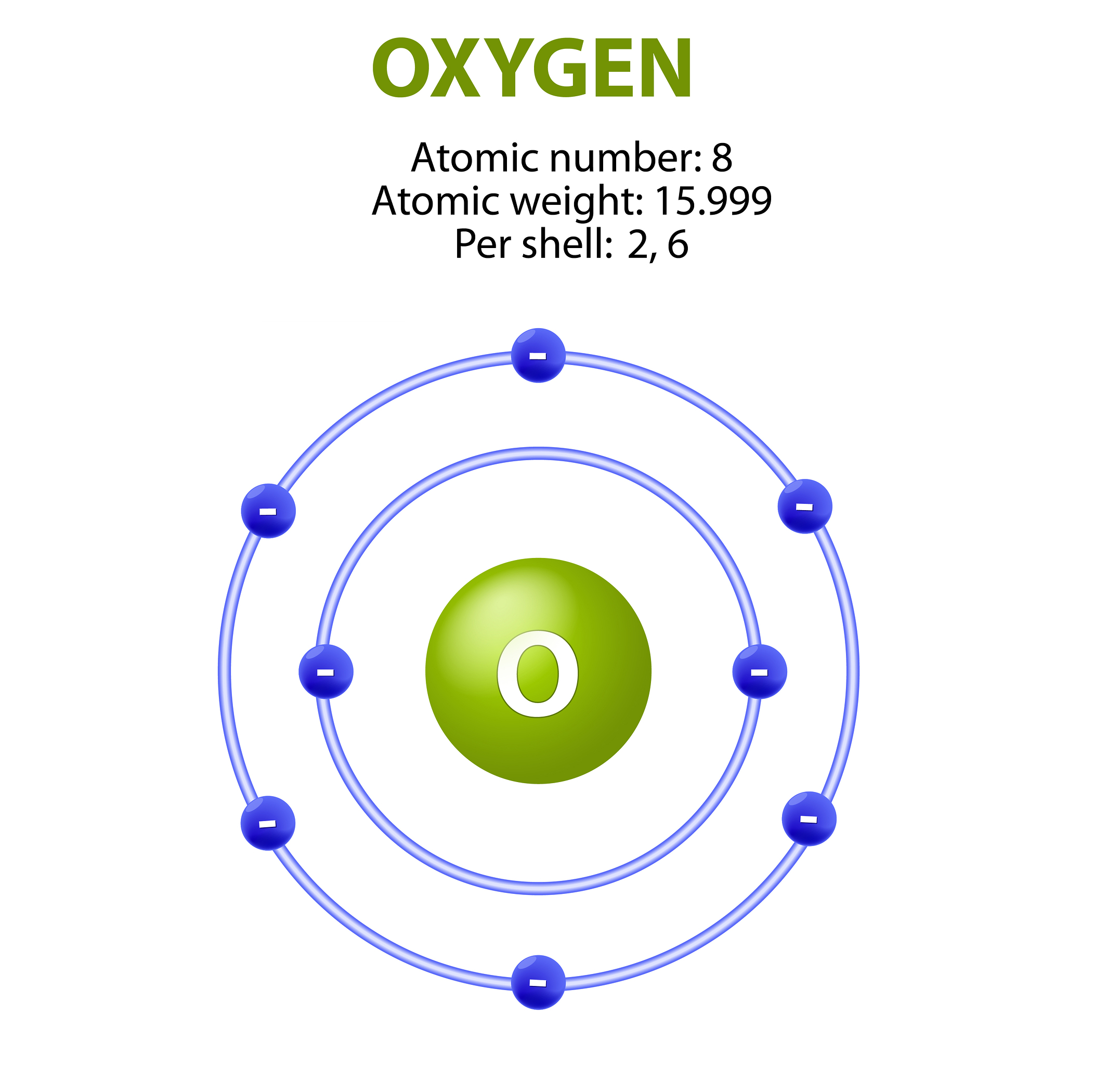
oxygen-atomThere are a few factors that make oxygen so electronegative. First, oxygen has eight protons giving off its positive force, and eight surrounding electrons residing at only two different energy levels. This closeness makes the attractive force on the outer shell (valance shell) extremely strong compared to other elements. Second, the six electrons residing in oxygen’s valence shell have only two electrons in the first energy level shielding them from the powerful pull of the nucleus. Third, oxygen’s valence shell can hold eight electrons, not six.

The net result of these three factors is that oxygen’s nucleus isn’t that far from the valence shells of the atoms surrounding it. Thus, the pull from the oxygen atom on the electrons of other atoms’ valence shells can be greater than the pull of their own nucleus. Because of this, oxygen can “steal” those electrons, thereby affecting the structure of those atoms and their associated molecules. This ability, combined with being able to add or subtract two electrons is what gives oxygen it’s extreme electronegativity.

Now, on to ATP.

Adenosine triphosphate is a molecule made up of ribose (sugar), adenine, and three phosphate groups. The phosphate part is the key. The three phosphorous groups are linked by oxygen atoms. There are also oxygen atoms connected to the sides of the phosphorous. Oxygen itself has a net negative charge- since like charges repel each other, the grouping of all that bunched up oxygen will make them want to break away from each other. Combined with its immense electronegativity, there’s a lot of potential energy stored in an ATP molecule.

To release ATP’s energy, you need to break it apart. Cells do this by reacting to enzymes. Those enzymes can break off the end phosphate group and turn it into diphosphate. Continue breaking it down and you get adenosine monophosphate. The entire process releases a lot of energy. For example, one ATP molecule will release 7.3 calories of energy (7.3 kilocalories per mole). That’s enough energy to click your computer mouse about 5 times!

Inside the cell, the release of all that energy can be used to do many things. For example, it can give ribosomes (an organelle within a cell) the ability to make proteins, or can give Golgi bodies the ability to attach carbohydrates and fats to proteins.

You can discharge the energy of ATP (like a battery) by breaking down the phosphate groups. Your cells can also recharge ATP by using energy from foods (glucose) and oxygen. In the end, not only is oxygen essential in the make-up of supplying our cells with an energy source in the form of ATP, it’s also a crucial ingredient in making that energy source. It does this thanks to a handy little organelle called the mitochondria.

Almost every cell in the body has Mitochondria within it, making ATP. The cells doing a lot of work, like the liver or red muscle cells, use a lot of energy and will have more mitochondria then the ones that don’t. For example, mitochondria make up 15-20% of liver cells.

Mitochondria make ATP through a process called oxidative phosphorylation. This process has two components- an electron transport chain, and the movement of ions across a membrane down an electrochemical gradient, known as chemiosmosis. The key ingredient in this process is ever-so electron-hungry oxygen molecule. Without it, the electrons in the chain wouldn’t move and the electron transport chain would stop working, just as if your battery stopped taking a charge.

It all begins with metabolizing sugar molecules. Inside your cells, glucose is converted to pyruvate, an acid. Unfortunately, through a process called glycolysis, the pyruvate made from glucose only releases less than 10% of the total free energy that glucose is offering. Mitochondria finish getting that energy out of glucose by using pyruvate through the previously mentioned oxidative phosphorylation. It does this so efficiently that it can make about 30 molecules of ATP for every molecule of glucose. On the other hand, glycolysis into pyruvate only makes about two molecules of ATP.

Ever run so fast your muscles don’t get enough oxygen (causing the electron transport chain to stop working) and they begin to burn? The build-up of pyruvic acid is one of the things causing the burn (also known as anaerobic metabolism).

The electron transport chain is a collection of proteins and molecules contained within the matrix of mitochondria. Electrons will travel down the chain from less electron hungry molecules, to the molecules that are more electron hungry. Most of the electrons available to this chain come from the molecules NADH (Nicotinamide adenine dinucleotide) and FADH2 (Flavin adenine dinucleotide).

This all brings us back to oxygen. At the end of this chain sits oxygen. It’s extremely electronegative nature will attract the electrons, giving them somewhere to go. Without this attraction, the electrons will stop flowing and the transport chain ceases to work. The oxygen molecules at the end of the chain will accept the electrons, combine then with protons contained within the matrix, (through the proton gradient that is the chemiosmosis we talked about) and create water (H2O).

The electron transport chain, along with regenerating NADH and FADH2 for further use, create a proton gradient allowing for chemiosmosis. The proton gradient move hydrogen down a protein channel within the membranes of mitochondria called ATP synthase. You can think of ATP synthase like the generator of a hydroelectric dam. The protons are the water and the ATP synthase is the generator creating ATP. Together, the electron transport chain and chemiosmosis, uses oxygen to create the cascade of chemistry that form ATP.

In the end, the oxygen atoms attached to ATP, combined with oxygen atoms allowing for ATP production, make it arguably the single most essential element allowing for complex life. This singular molecule providing all the necessary energy allowing us to move around and flourish.

If you liked this article, you might also enjoy our new popular podcast, The BrainFood Show (iTunes, Spotify, Google Play Music, Feed), as well as:

Expand for References

The post Why Do We Need Oxygen and What Does It Do in the Body? appeared first on Today I Found Out.


from Today I Found Out
by Scott - May 16, 2022 at 11:57PM
Article provided by the producers of one of our Favorite YouTube Channels!
-

Sunday, May 24, 2020

Why can We Make Vaccines for Some Viruses and Not Others and Why Do Most Experts Think One Will be Successful for Covid-19 Very Soon?

If you were born in the United States in 1900 you had about a 1 in 3 chance of dying from an infectious disease.  If you were one of the unlucky third, 40% of you would die before the age of 5. In fact, the top three causes of death were infectious disease at this time- namely, pneumonia and flu, tuberculosis, and diarrhea/enteritis. Fast forward to today and you’ll normally only find 1 infectious disease in the top 10 causes of death in the United States- Influenza & pneumonia at number 8.

For the curious about the full list here, it is: #1- Heart disease (647,000 deaths annually in the U.S. or 1 in 4 deaths, or about 17 million people dying of this per year world wide), #2- Cancer (about 600,000 deaths in the U.S. or, again, about 1 in 4 and an estimated 10 million deaths per year worldwide… so like, once we resolve the covid problem, can we all collectively agree to panic and globally throw extra trillions at more research for these top two? Because, just saying, just because it’s familiar doesn’t mean we should accept it… If half of us are destined to die this way, best to die trying not to.) In any event, rounding out the rest of the top 10 we have- #3- Accidents (170K people per year in the U.S.), #4- Chronic respiratory diseases (160K people), #5- Stroke (146K), #6- Alzheimer’s (121K), #7- Diabetes (83K), #8- Influenza pneumonia (55K), #9- Kidney Disease (50K), and #10- Suicide (47K).

No anti-vaccinator today is worried about their children getting things like small-pox or polio thanks to vaccines, and child mortality rates reflect that. Sadly on the other side, child mortality rates also reflect that in regions of the world where people don’t have access to such medical miracles.  For further reference here, smallpox, a disease that’s been around for over 2000 years, was completely eradicated from the wild in 1980! Before that, however, in the 20th century alone- a time when a vaccine had long existed- it still killed off an estimated half a billion people before humanity drop-kicked it in the gonads because our scientists are kind of awesome sometimes.

Given that for most of human history you could expect at least one, and very likely more, of your children to die before they reached adulthood, often from such rampant diseases, and today losing a child is relatively rare in the developed world- not to mention the many, many millions of adults who get to keep on keeping on because of vaccines- these miracles of medicine are collectively thought to be one of the greatest achievements in human history.

This might all have you wondering, if we can create vaccines for everything from Chickenpox to Tetanus, why, with the obscene amounts of money and brain power leveled at viruses like HIV, can’t we make a vaccine for these banes of human existence? And why despite such failures is there reasonable confidence that at some point in the not too distant future we’ll have a vaccine for covid-19?

To begin with, while there are other factors involved which we’ll get into, it turns out one of the biggest reasons we don’t have vaccines for everything is simply because we don’t try hard enough. In other words, it’s really, really expensive to make a vaccine, taking many years and often in excess of a billion dollars to get a single vaccine to market. And that’s talking about the ones that actually make it through the extensive processes to something successful and safe. So unless there is a major financial incentive on the other end, odds are strong even if it’s something that we could in all likelihood make a vaccine for, it just doesn’t happen in most cases. Or at least, in these non-profitable cases, which is most, it doesn’t happen unless significant funding from sources like governments and/or mass funding organizations like the Bill and Melinda Gates Foundation occurs.

On the flipside, as a testament to what humans can do and how quickly when we feel like it, we have covid-19 as the poster child, which at the time of this writing has 8 vaccines already in human trials, only about six months after the virus reared its murderous head. This is a stage of the process that normally takes 3-6 years to get to.

For reference here, the general high level process for vaccine development is, first, exploratory and pre-clinical stages, which again usually takes years to achieve something promising. Then after that, there are three phases of the clinical development stage, starting with a small group of very healthy volunteers for phase 1. In this one, beyond general safety, researchers are looking at what the lowest effective dose is (assuming there is an effective dose in a given potential vaccine), typically starting small and building up as needed.

If that works out, next up in phase two, hundreds of people are selected, this time from a bit more diverse sample than the ultra-healthy group before. Researchers are again looking at how well the vaccine is actually doing its job and if there are any major side effects popping up.

If all is good there, in phase three thousands of people get the vaccine. However, in this case significant time is needed to see if this group in real world conditions seems reasonably immune and, again, further confirmation that the vaccine is safe.

If all that didn’t seem time consuming enough, once the vaccine is shown to be both safe and effective in real world scenarios on a large sample size of people, there are regulatory review and approval processes from governments the world over. And then after that, we have the issue of ramping up the manufacturing and making sure quality control is being maintained in that process, which isn’t exactly something that can be done overnight.

Failure to take the time and spend the money to properly execute this latter stage can, and has on occasion in the past, been very deadly. Perhaps the most famous case of this occurred after the vaccine for polio was first created which, combined with less thorough regulations on such manufacturing at the time, gave rise to the tragic Cutter Incident. In this case, said company accidentally shipped out 120,000 doses of the vaccine that contained the virulent strain of polio. The result was over 40,000 children getting polio and communities where these doses were administered seeing huge upswings in infection rates beyond those inoculated. Whoopsadoodle.

And note here even after all this, there’s also a phase four trial tracking everything after all approval is done and the vaccine is being widely administered, just to make sure everything is working as intended and remaining safe.

All that said, things can be sped up significantly if certain steps are done at once, such as locating and getting prepped facilities needed to manufacture en masse while the testing phases are still being done. Normally this isn’t something a company would do given the high failure rate of prospective vaccines. They simply wait until they’ve got something proven and approval for it. But with effectively infinite funding, such as with covid-19, short cutting certain things like this is not just doable, but is happening.

The individual trial phases, however, can’t be easily compressed overall if maintaining safety. But there, again, much like in your computer processor, progress can be rapidly accelerated from years to maybe even just a year via, essentially, multithreading- ie trying basically every method scientists can think of all at the same time instead of trying one, seeing if it works out, then repeating as necessary, as is closer to the norm within individual companies because it minimizes overall development cost. But, again, throw infinite money at a problem, and that’s not an issue anymore.

So funding is a huge problem normally. But what about even when we do throw absolutely obscene amounts of money and for many decades at something like, say, HIV? Or why despite being in the top ten causes of death and people getting widely vaccinated already can’t we curb stomp the Flu? (Note here, in both of these cases, as we’ll get into shortly, there’s very good reason for optimism in the next decade or two.)

But in any event, why can viruses like these elude our best efforts at least so far? To answer that, we’re going to have to put on our science caps and talk a little bit about viruses, types of vaccines, and the nuts and bolts of how they actually work, which is all quite fascinating when you go a bit deeper than most mere mortal’s understanding. So stick with us. We won’t go full textbook on you, but hopefully the interesting details we do include you’ll find as fascinating as we do. (And just a note here, in an effort to keep this most pertinent to the topic at hand, we’ll only be discussing viruses able to infect humans.)

So to begin with, viruses, in general, are around 200 times smaller than the tiniest bacteria. They’re inert outside of a living host cell because their genomes don’t contain the necessary instructions to make the proteins they need to replicate and spread- they need a host cell to provide that for them. This is in part why there is such a debate over the issue of if we should consider viruses a life form or not. But that’s a topic for another day. For now, these intracellular parasites’ main goal is to get their genome into a host cell so it can follow N.W.A.’s advice and express itself.

Once inside, it can take advantage of your living cells’ chemical machinery to replicate and spread via messenger RNA (mRNA). Outside of a living cell, they’re much like bullets without a gun- packed with potential danger but no mechanism to become sinister.

Moving on from there, using what’s known as the Baltimore classification system, there are 7 types of human viruses, classified by the structure of their genome or their method of replication, separated by how each particular virus gets to its goal of creating the mRNA allowing it to reproduce and spin its web of woe.

The 7 types are: Single and double stranded DNA (for example all 8 types of human herpes viruses, which nearly everyone reading this has one or more of, are double stranded DNA).  Negative and positive single stranded RNA (Corona viruses are positive single stranded RNA viruses).  Double stranded RNA (Rotavirus, for example).  Single stranded RNA-retrovirus and double stranded RNA-retrovirus. (HIV is arguably the most famous of the retroviruses).

Single and double stranded refers to their genome’s helix containing single or double strands. The positive and negative “senses” refer to it’s ability to create amino acid sequences that make proteins- positive if it will and negative if it won’t. Retroviruses use an enzyme called reverse transcriptase to make DNA from RNA, opposite of the normal process, thus its name “retrovirus”.

This brings us to how our bodies keep these murderous bits of code from killing us all the time. Our immune systems come in two forms- innate and adaptive.  The innate immune system is a nonspecific way the body can recognize and kill any foreign invader.  When it comes to viruses, this system uses two main methods of detection and destruction.

So how does this work? Cells need to be able to let other cells know what they have inside them.  Like a peacock spreading their feathers, they use a class of molecules called class 1 major histocompatibility complex proteins (MHC class 1) to display bits of the proteins within them on their cell surface.  If a virus happens to be inside the cell, the MHC molecule will have fragments of the virus proteins exposed on the cell surface as well.

Your innate immune system comes with a type of cell called a cytotoxic T cell.  These little hunters circulate throughout the body looking for virus proteins bound to those MHC molecules.  They have receptors that can detect specific pathogens. If those receptors detect an infection, it releases what are known as cytotoxic factors.  These factors then kill the cell.

That said, these viruses do not go quietly into that good night.  They have evolved to fight back, and some don’t allow MHC molecules to reach a cell’s surface. These ninja-like warriors then hide from those cytotoxic t cells.  Up on their tricks, however, our innate immune system is also equipped with natural killer cells, which are totally officially called that by the way. These little storm-troopers that can actually hit what they’re aiming at roam around looking for cells who have too few MHC molecules on their surface.  Assuming a pathogen must be hidden inside, when they find one, they also release cytotoxic factors, killing the cell.  Once they contact the offending cell, they also produce what are known as cytokines, like interferon-g and tumour necrosis factor-a. These signaling proteins also help in enhancing the killer cells’ ability to destroy the invader.

Another way our innate immune system fights viruses is with interferons.  When a cell does become infected with a virus it will release interferons.  These inhibit the virus’s ability to replicate itself, while also signaling nearby cells a dastardly plot is afoot (ie there is a virus).  That signal causes the neighboring cell to increase the amount of MHC molecules on their surface.  Thus the whole process here essentially works like Karens the world over, helping let the cytotoxic T cells know where the problem lies and that it’s simply not going to stand for it.

This brings us to our adaptive immune system.  It is this system that vaccines are trying to take advantage of.

The adaptive immune system uses 2 main types of lymphocytes called B and T cells,  named T-cell because they’re created in your Thymus and B cell because of where they were first found- the Bursa of Fabricius in birds.  Working together, they produce a way to recognize any attacker (antigen), multiply themselves, mobilize, then quickly envelope and kill the virus before it can enter a cell.  Once they complete their task, they leave behind antibodies that will remain for a lifetime.  This way any further contact with that specific virus will end in the virus’s destruction.

How do they do this?

Viruses have what are known as epitopes.  These are segments of proteins (approximately 5-6 amino acids in length). When a new virus your body hasn’t seen before gets presented to a B cell (your body has around 10 billion of them), it will attach to the epitope and begin creating antibodies that will specifically bind to that particular epitope. This process is called Somatic Hypermutation. Helper T-cells then release chemicals allowing the B cell, with its perfectly formed epitope, to begin making countless copies of itself.  Some of those B cells then turn into plasma cells.  Those plasma cells then make thousands of antibodies per second and send the army throughout your body looking for any other virus with the same epitope.  When found, they surround the virus and trap it in large clumps for other cells, like macrophages, to come along and get rid of them. The remaining antibodies then slowly decrease in number but leave behind memory B cells in case the virus tries to attack again. When a virus gets coated in an antibody, it cannot infect your cells.  Therefore, you won’t get sick from any specific virus your body has already fought off.

While our innate immune system is the army we need to defend us from any type of virus, if we could artificially create our adaptive immune system’s antibodies, we’d be immune. We could win the war without ever actually getting sick from the thing. This is where vaccines come in.

As stated before, viruses come in many forms, and work differently depending on their genome.  Because of this, different types of vaccines are needed for different types of viruses.  In the general case, the vaccines all present the known virus epitopes to your B cells for recognition and antibody creation.  But key here, the known virus has already been manipulated by our beloved science superstars so that it won’t create systemic infection. Once you’ve gotten the vaccine, it takes several days for your body to build up to a maximum number of antibodies in your blood.  They will peak around 14 days after injection.  You have now won all future wars against that specific virus via a combination of mankind’s big brains and your immune system itself being kind of badass.

This brings us to the vaccines themselves. There are 4 main types of vaccines-  live-attenuated, inactivated, toxoid, and finally SRPC, which stands for subunit, recombinant, polysaccharide, and conjugate.

Live-attenuated vaccines use weakened forms of the virus causing the problem.  Because they’re the closest thing to the actual virus you can get without risking infection, they usually need only 1-2 doses to protect you for life.  Unfortunately, they will also need to be kept cold.  Thus, they can’t be used in areas where reliable refrigeration isn’t readily available.  Measles, mumps, rubella, smallpox, and chickenpox are all examples of Live-attenuated vaccines.

Inactivated vaccines use dead versions of a virus.  Unfortunately, this won’t provide you the same immune response as live-attenuated.  You might need booster shots to maintain the necessary antibodies.  Examples of this include Hepatitis A, flu, Polio, and Rabies.

SRPC vaccines are a little more specific.  Lab-junkies slice and dice the virus into specific pieces that allow our B cells to create antibodies for key parts of the virus.  The good news about this is that they can be extremely safely used on people with weakened immune systems. This is something doctors occasionally worry about with the other types. Unfortunately, they also require booster shots to maintain your protection.  Examples here include Hepatitis B, HPV, shingles, and Whooping cough.

Toxoid vaccines are something a little different.  Protecting you from bacteria, not virus, they target the toxic secretions of the bacteria and not the bacteria itself.  Examples on these ones are protecting against tetanus and diphtheria.

So now that you understand the nuts and bolts, what are some of the problems with creating these vaccines?

First, there are an obscene number of viruses and variations within a specific virus type. So even though many of these we very much could create vaccines for if we wanted, the cost associated relative to the negative impact on humanity just doesn’t justify such creation in many cases. And even when there is justification, it’s still a daunting task.

Consider the Flu. Traditionally to create a Flu vaccine, scientists take samples of the most common types of Flu virus being circulated during the previous year- usually 3-4 types (quadrivalent and trivalent flu vaccines).  Then they create a vaccine for those 3-4 types, which can be done relatively quickly thanks to extensive pre-existing knowledge and techniques via creation of previous similar vaccines and, of course, a whole lot of money thrown at the problem given the Flu is relatively deadly and quite contagious.

The problem here is that this leaves you susceptible to any of the countless other types of Flu circulating around and it’s just not practical to create and administer vaccines for all of them.  This is why the Flu is still such a burden on society and hasn’t gone the way of smallpox and, to a large extent, polio.

That said, as a brief aside, there is potentially a light at the end of this tunnel. It turns out if one can find a commonality that can be exploited in all Flu viruses and that doesn’t usually change much, or at all, from year to year and then make a vaccine exploiting that, a universal Flu vaccine could be possible. And, it turns out, one vaccine, called M-001 is currently in Phase 2 of clinical trials.  It uses peptide sequences shared by many different types of Flu to create antibodies protecting you from all types containing those epitopes.

Even if that doesn’t work out, still other methods being developed target what is called the HA stem. The H protein in Flu virus (the H part of H1N1) contains a head and a stem.  This protein gives the virus its ability to enter a cell.  Seasonal Flu vaccine will target the head of H which can mutate readily- again why new vaccines need created regularly.  Researchers have discovered, however, that the stem doesn’t usually change from year to year. As such, they’re now attempting to make vaccines which create antibodies for the stem.  If successful, this would leave you immune to the new strains that are about to take on the world. And we might finally thus rid ourselves of this troublesome virus.

Going back to the trouble with creating vaccines for everything, let’s discuss HIV, which humanity has thrown obscene amounts of money and brainpower at for decades now and, while treatments to keep it from being deadly in most cases are now extremely good, we still don’t have a vaccine to stop people from getting it in the first place.

As mentioned, traditional vaccines allow the immune system to create antibodies for specific epitopes.  Viruses like HIV, however, make these types ineffective.  The first reason is that they simply mutate too fast for your immune system’s antibodies to keep up.  Remember antibodies tend to peak around 14 days and HIV replicates in around 24 hours. It’s also prone to errors.  As such, it makes mutated copies of itself and recombines to create new strains as it goes from person to person and even within the same individual.  Thus, any antibody created will be ineffective before it even has a chance to work. The other reason HIV thwarts traditional vaccines is the virus targets the very cells your immune system uses to signal killer t-cells to the site of infection- namely CD4 T-cells.

Yet another reason HIV is such a formidable foe is that it’s a retrovirus. This means it encodes itself into the hosts DNA.  So even if your body can get rid of any circulating HIV, there is still HIV in your own DNA that can reactivate and re-start the process of infection. Thus, even with the miracle of modern HIV treatments, which can see your circulating HIV drop to levels not even detectable on HIV tests, at some point down the road these dormant viruses might reactivate and- bam, without having continued proper treatment, you’re going to have a bad time.

That said, even for viruses like this, scientists being awesome, especially when given lots of play money, every day we are getting closer and closer to an HIV vaccine.  In fact, beyond a previous mildly successful HIV vaccine (RV144) in 2009 that had a 31% protection rate after 3 years (note many would consider 60%+ to be good enough here thanks to the effects of herd immunity), there are currently two in the late stages of human clinical trials that seem much more promising given the results so far- one called Imbokodo, launched in 2017 and another, called Mosaico, launched in 2019.

But to sum up, the principal reasons we can’t create vaccines for many a virus that mocks us in their deadly simplicity, at least at present, is primarily because the scope of the problem (ie the number of viruses that can infect humans and how rapidly they can change) and the amount of effort needed to create even one successful vaccine for a specific type currently circulating, which in turn means massive sums of money and brainpower needed, which just can’t be justified in most cases where the need isn’t super pressing.

This, of course, is one of several reasons there is such optimism that a covid-19 vaccine will be successful and not take nearly as long as normal- humanity as a whole giving their governments the go-ahead to write a blank check for research, and either way companies themselves seeing the dollar signs of cashing in on the billions of people out there who’ll be going to their doctors’ in droves to get vaccinated.

Combined, this has seen sums thrown at the problem rarely leveled at any area of medical research in such a short time. And as the sage Miss Grande once very accurately noted “Whoever said money can’t solve your problems, must not have had enough money to solve ’em.”

If you liked this article, you might also enjoy our new popular podcast, The BrainFood Show (iTunes, Spotify, Google Play Music, Feed), as well as:

Expand for References

The post Why can We Make Vaccines for Some Viruses and Not Others and Why Do Most Experts Think One Will be Successful for Covid-19 Very Soon? appeared first on Today I Found Out.


from Today I Found Out
by Scott - May 24, 2020 at 02:44PM
Article provided by the producers of one of our Favorite YouTube Channels!
-

Thursday, April 30, 2020

How Much Caffeine Would It Take To Kill You?

Katie O/ asks: How much caffeine would someone have to drink to be fatal?

There have been numerous deaths attributed to excessive caffeine ingestion. So if you happen to be a person who loves coffee and energy drinks, you might want to know approximately what amount you should avoid drinking on a given day. So how much caffeine would it take to kill you?

Well, there are several factors that make this a tricky question to answer. For example, not everyone reacts the same way to caffeine. People also become tolerant to it and so the effects can be different from person to person. Lastly, there would be no respectable researcher who would dare perform a study on humans if the goal of that study is death to the person. Thus, as you might expect, we couldn’t find any studies that show what amount of caffeine would definitively kill your average human. But that’s not very interesting, so let’s dig a little deeper, shall we?

First, we went ahead and gathered 100 volunteers who were tired of living, along with some who we just found on the streets and figured they should have been staying quarantined, so what would happen next in our study is really on them…

But more seriously, it turns out there are less ethically questionable studies that have allowed doctors to understand what’s going on inside the body in caffeine overdoses and approximately what dose would prove fatal for the average person. So while the exact dose is almost impossible to answer for a given individual, we can say for sure a few things, like that the highest caffeine dose ever known to be ingested by someone who survived was around 100 grams.

Although that might not sound like that much, in terms of raw amount of caffeine, it should be noted that that’s the amount of caffeine in about 1,200 cups of coffee!

Lesser doses that are generally thought to put an adult at high risk of death typically range from about 5-10 grams ingested in a short period, which is still an awful lot of energy drinks and/or coffee, though there are certain diet pills that can easily get you over that amount in just a handful of pills.

Of course, people ingesting significantly lesser doses have had death attributed to caffeine overdose. That said, others survive where you’d think they wouldn’t, such as one medical report looking at the case of an unnamed one year old girl who ingested some of her mother’s diet pills. The total dose of caffeine to the one year old was approximately 3 grams.

While said baby did have significant complications, including heart issues and seizures in the immediate aftermath, she survived the incident and did not seem to suffer from any long term issues. Noteworthy here is that due to her tiny size, the caffeine concentration in her system ended up being the second highest every documented in someone who survived the event.

Yet another research paper we looked at documented the case of a 16 year old boy who ingested around 6-8 grams of caffeine and also managed to survive, despite a number of immediate medical complications as a result of the caffeine.

So basically, there are a myriad of factors at play here, but as for a definitive dose that would kill most people, it turns out when talking cups of coffee or energy drinks, it’s a huge amount in most people, with some exceptions where individuals with certain heart conditions and the like might want to avoid significantly smaller doses.

As for the average Joe, most physicians and medical bodies tend to recommend avoiding ingesting more than around 500-600 mg of caffeine per day, not necessarily because you might die per se, but more because it’s likely not going to be good for you for a variety of reasons, especially if done regularly.

For reference, the average cup of coffee has in the range of 40-150mg of caffeine. For example, a Starbucks 2x Caffeine K-cup will get you a dose of around 260 mg, compared to the normally caffeinated k-cup from the same brand which has around 130 mg. Obviously if following the recommendations, you’ll want to avoid more than 2 of the 2x caffeine k-cups per day.

For other references, 12 ounces of Jolt cola has approximately 100mg (16 oz at about 160 mg), Monster Energy at about 160 grams, 12 oz of Mountain Dew has 55mg, and Dr. Pepper has 61 mg.

So this all might have you wondering how caffeine actually manages to kill?

Caffeine is one of several naturally occurring substances known as Xanthines. Xanthines are among other things, central nervous system (CNS) stimulants. Caffeine, specifically, is in over 60 known plant species. It’s the most widely consumed psychoactive substance in the world. Depending on which study you read, approximately 80-90% of the US population consumes at least 200mg per day. In low doses, it has many benefits that can help with things like pain management, water retention, alertness, and a general feeling of wellbeing, to name a few.

As with most CNS stimulants, the higher the dose, the more profound the reaction. As you consume more caffeine, the risks begin to outweigh the benefits. A person can become jittery, anxious, begin having high blood pressure, chest pain, headaches, dehydration, and unfortunately, dependence that causes withdrawals if you don’t continue consuming it. In toxic doses, caffeine can cause extremely low blood pressures, seizures, cardiac rhythm problems, and lactic acidosis.

While there appears to be some dissension among researchers as to exactly how xanthines, like caffeine, cause the reactions they do.  What is known is that they antagonize what are known as adenosine-receptors within almost every cell in the body.

Adenosine is a chemical present in every human cell. It combines with other chemicals like phosphate to create numerous compounds that help cells work properly. Those compounds need to attach to their receptors to affect cells. There are 4 main groups of adensonine receptors within the body and their effects can fall into four categories. Generally speaking, adenosine compounds help in increasing the oxygen available to cells, protect against the damage caused by a lack of oxygen, help in initiating the body’s natural anti-inflammatory responses, and help in the creation of blood vessels.

Caffeine is similar to adenosine in chemical composition, and as such, can attach to adenosine receptors not allowing adenosine compounds to perform normally. The result is CNS and cardiac stimulation, relaxation of the smooth muscles, and a diuretic action on the kidneys that can lead to dehydration.

Thus, in high levels, caffeine can be very toxic. It will bind to adenosine receptor sites known as subtypes A1 and A2. The result is seizures. In high doses, it will also inhibit an enzyme known as phosphodiesterase, while stimulating the release of neurotransmitters involved in your fight or flight nervous system. The result is extremely fast heart rates, dilation of your blood vessels causing low blood pressures, low potassium levels that can cause lethal heart rhythms, the breakdown of sugars in your liver, and an increase in your white blood cells.

If all that doesn’t seem like it’s deadly enough, those side effects will cause their own problems. Specifically, lactic acidosis will be caused by your body’s tissues not getting enough oxygen because your blood pressure is too low. The result of your seizures, low oxygen levels within your cells, and an inevitable calcium release from an area of your cells called your endoplasmic reticulum will give you what is known as rhabdomyolysis- this is a breakdown of your muscles causing a release of your muscle fibers into your bloodstream (brown pee and clogged kidneys anyone!).

If you’re thinking “I’m never drinking that nectar from Satan again”, don’t worry, those toxic reactions won’t happen at normal consumption levels. Just, again, when you start getting in excess of 500-600 mg per day for a typical adult, you’re going to start to have a bad time in many cases. And even less for the littles.

If you liked this article, you might also enjoy our new popular podcast, The BrainFood Show (iTunes, Spotify, Google Play Music, Feed), as well as:

Bonus Fact:

Speaking of Satan, prior to being baptized in the 16th century by Pope Clement VIII, coffee had been thought by many Catholic leaders in Europe to be Satan’s drink. Whether because of its characteristic dark color and bitter taste (both of which were the antithesis of sweet wine, which was associated with the Eucharist and Christ), its physical effects, or its roots in the Muslim world, or all three, many Catholic clerics were solidly against the beverage.

As to who first brewed the first cup of Joe isn’t known, but that hasn’t stopped many a fictitious origin story from popping up, such as the commonly repeated legend that coffee was first “discovered” in the 9th century by an Ethiopian herdsman, Kaldi who noticed that one of his goats appeared to be particularly frolicsome after consuming some red coffee berries. Giving it a go himself, he soon felt more upbeat. Energized, he relayed his discovery to his neighbors and coffee consumption was born.

However it really came to be discovered as a stimulant, over time, coffee became popular throughout Ethiopia, where it was said that warriors of the Galla tribe mixed it with butter and ate it before going into battle. Eventually, by the 12th century Arab traders returning to what is now Yemen from Ethiopia brought coffee with them and learned to cultivate the plant. By this point, the beans were being transformed into a drink (qahwa or kahwah) by means of boiling.

In the 15th century, Ottoman Turks brought coffee with them when they conquered Constantinople (Kostantiniyye or al-Qustantiniyah). At this same time, the Mufti of Aden, who had been suffering with an unidentified illness and was cured after drinking coffee for the first time, touted its beneficial qualities, which contributed to its popularity throughout the Muslim world.

Also in the 15th century, the first coffee houses (Kaveh Kanes) began appearing in Mecca and Constantinople, and like today, they were used for not only drinking coffee, but socializing as well.

By the end of the 16th century, coffee was found in Venice, and by the turn of the 17th century, Catholic Church leaders were becoming suspicious of coffee and the effect it had on the local populace. Deciding it must be Satan’s drink, many local clergy beseeched the pope, asking him to prohibit its consumption.

Trying it for himself, Pope Clement VIII (1536-1605) found it agreeable, and demonstrating a gift for diplomacy, declared in 1600:

“Why, this Satan’s drink is so delicious that it would be a pity to let the infidels have exclusive use of it. We shall cheat Satan by baptizing it.”

With the pope’s blessing and its natural addictive qualities, coffee soon spread across Europe.

Expand for References

The post How Much Caffeine Would It Take To Kill You? appeared first on Today I Found Out.


from Today I Found Out
by Scott - April 30, 2020 at 11:27PM
Article provided by the producers of one of our Favorite YouTube Channels!
-

Thursday, March 26, 2020

Why Can’t You Mix Blood Types?

There are several different types of blood.  Contained within them are different types of cells and countless molecules that give our bodies the needed nutrients to work effectively. The two main types of cells within the blood are red and white blood cells. Red blood cells make up nearly 45% of your blood volume. White blood cells make up less than 1%. What is left over is known as blood plasma, which makes up approximately 55% of your blood volume.

As to blood types, what type you are will usually depend on the types of blood your parents have, though there can be exceptions like if you receive a bone marrow transplant from someone with a different blood type, your blood type will eventually change, among some caveats like that.

As to why there are different blood types, this isn’t fully understood, though it’s been observed that different blood types play a role in your susceptibility, or lack thereof, to certain diseases and conditions. For example, malaria seems to have been a major contributor to type O being a major thing in places like Africa where about 51% of the populace have type O blood. As to why, it turns out for various reasons type-O blood will generally mean you won’t get as sick if you get malaria.

So what are all the blood types and what’s with the whole positive and negative thing?

There are 8 main types of blood separated into 4 groups, with over 90% of people falling into one of these main groups. The groups are A, B, AB, and O. If you’re now wondering why O and not, for example, “C” to make it A B C, it turns out it originally was called “C” but was later changed to the letter “O” in some regions or the number 0 in others, in both cases to signify zero or null, for reasons we’ll get into.

In any event, these blood types are grouped together by the presence or absence of what is known as an antigen. Antigens are substances within the blood that cause our immune systems to create antibodies- essentially used to recognize invaders. These created antibodies then send anything the immune system thinks is a threat to sleep with fishes.

The specific antigens that create the different blood types are found on the surface of red blood cells and are known as type A and type B. They’re further separated by the presence of another type of antigen known as rH factor. If you have this rH antigen present, you’re considered positive, if not, you’re considered a negative-nancy and nobody likes you- we’re looking at you, Jimmy.

Someone that has type A antigens and rH factor is considered to have type A+ blood. If you have both types of antigens and no rH factor, you have type AB- blood. If you have no A or B antigens then you are type O blood, hence the whole “zero” or “null” thing mentioned before.

All of this matters because of those antibodies your immune system creates. Someone with type A blood will at some point in their earliest months or years for trigger reasons not wholly understood develop antibodies for type B, and someone with type B will have antibodies for type A. Type O has antibodies for both A and B.

This brings us around to why mixing and matching certain, but not all, blood types in a person is a very bad idea. In a nutshell, if you were to give type B blood to someone who is type A, their antibodies for type A would attack the type A red blood cells causing unwanted side effects, including in the extreme various things like kidney failure as your kidneys try to filter out all the destroyed red blood cells. And, of course, regardless of this sort of thing, as you kind of need sufficient blood to keep living, if your immune system destroys a high enough percentage of what you currently have in your body, you’re going to have trouble continuing to be just for that reason, let alone the other complications.

But it’s not always a bad thing to mix and match. For example, disregarding a bit of a caveat about atypical antibodies and the like, someone with type AB+ can actually receive blood from every other main blood type. As to why, if you’ve been following along, this is because these individuals are characterized by having BOTH A and B antigens on their red blood cells, and thus cannot have either antibody in their plasma.

For this reason, those with AB+ blood type are sometimes referred to as universal recipients because they can accept blood from anyone (again, with the caveat about those atypical antibodies). However, the downside of this is that because of the presence of BOTH antigens on type AB red blood cells, people with AB+ blood can only donate blood to others with the same type, and AB- are only able to donate to AB+ or AB- individuals, but able to receive from any of the negative blood types, again with the aforementioned caveats which we’re going to stop saying, but just realize that’s a thing because the universe hates simplicity.

However, while AB blood type individuals can only donate blood to the same type, the reverse is true of plasma donations for them. This is because, again, AB individuals have neither A or B antibodies in their plasma. Thus, they are universal plasma donors.

On the other end of the spectrum, Type O , as noted, has neither A nor B antigens on its red blood cells, but both A and B antibodies in its plasma. As a result, those with type O- may donate to a person with every blood type, but can only receive O- blood since its plasma antibodies would attack anything else.

This is why, along with the fact that only 7% of humans are O-, those of the O- persuasion are highly encourage to donate blood often, first, potentially for themselves (which is particularly handy to do regardless of blood type if you know you have a major surgery coming up- this gets around any shortage issue, as well as gets around any of those aforementioned potential compatibility caveats.)

The second reason O- individuals are encouraged to donate often is, of course, because this can benefit most everyone. This is particularly the case when in an emergency there may not be time to figure out what blood type a person is and thus if O- is on hand, that can be reasonably safely used immediately if absolutely necessary.

If you’re wondering about the full list of main blood types blood and plasma compatibilities, we have these two charts where you’ll note they are more or less inverses of one another in terms of compatibilities between donor and recipient for reasons previously explained:

Moving on to white blood cells, there are 6 main types of white blood cells. They are: Neutrophils, Eosinophils, Basophils, Bands, Monocytes, and Lymphocytes. Each type plays a different role in the kind of infection your body is trying to fight. For example, Neutrophils kill bacteria by ingesting them (called phagocytosis). Naturally, if you have a bacterial infection, the percentage of neutrophils within your blood would be elevated.

On that note, in the general case, white blood cells number approximately 4-10 thousand per microliter of blood. If that number is increased, then you probably have an infection that your body is trying to fight and you are going to drop dead any… time… now…. Go ahead, we’ll wait…

As you might expect from this, when a doctor draws your blood to find out what’s wrong with you, it’s these levels of white blood cells that will help them narrow down the cause of your problem.

The last part of blood is the aforementioned plasma. This makes up most of your blood volume and about 90% of plasma is simply water, with another 8% of plasma made up of proteins, such as Albumin which helps move molecules like calcium and medications through your blood, antibodies that help with infection, and fibrinogen and clotting factors that help with the clotting of your blood.

The other 2% of plasma contains hormones like insulin, electrolytes like sodium and potassium, and nutrients like sugars and vitamins.

And one last little tip from the paramedic author of this particular piece- how to get blood stains out of clothes.

If you spill or otherwise get blood on your clothes when that special someone takes too long to die on his own, just soak it in 1 quart warm water, 2 teaspoons of laundry detergent and 1 tablespoon of ammonia for approximately 15 minutes. Then remove all the ammonia and launder it normally. (And note: don’t dry it until the stain is completely gone.) Bam! Your clothes will be blood free and the cops will never be able to link anyone’s death to you!

If you liked this article, you might also enjoy our new popular podcast, The BrainFood Show (iTunes, Spotify, Google Play Music, Feed), as well as:

Bonus Facts:

Speaking of blood, a commonly touted idea is that de-oxygenated blood turns blue. It turns out, however, this isn’t true at all. The misconception that blood that lacks oxygen turns blue probably comes from the fact that veins appear blue and blood in the veins is typically heading back to the lungs, hence depleted of oxygen. It is also possibly from the fact that when people are suffocating or the like, their lips and complexion seem to turn blue-ish or purple.

As to why veins often appear blue in those of the fairer skinned persuasion, this simply has to do with that they are very close to the surface of skin, combined with the way light diffuses in skin of certain shades. More specifically, veins may appear blue in some people from the way subcutaneous fat absorbs low-frequency light. This permits only high frequency blue and violet wavelengths to penetrate through the skin to the vein, with the other wavelengths getting filtered off from the pigmentation of your skin. In fact, when skin is removed, such as when dissecting a cadaver, or when you’re giving that special someone what they deserve, the veins and arteries actually are a somewhat similar color.

A similar light diffusion process is happening when we see people who are suffocating and have purple lips and fingertips. In this case, the blood is so oxygen deprived that it turns an extremely dark shade of red. When the light diffuses through the skin of the lips or through your fingernails, it then often ends up looking very dark blue or purple.

In reality of course, blood is various shades of red, with the  red color primarily coming from the hemoglobin, which contains four heme groups. These heme group’s interactions with various molecules end up giving it the dark red or light red color we see, usually, with some caveats like with carbon monoxide poisoning, being lighter red when particularly oxygenated and darker red when it has less oxygen.

There are some creatures that have blue blood, for example horseshoe crabs, whose baby blue blood is actually worth around $60,000 per gallon… Why?

This is due to a chemical found in the amoebocytes of its blood. When this is exposed to a potentially dangerous foreign bacterium, it will immediately coagulate around the threat, rendering it harmless without actually destroying it. This effect is near instant and the blood can be used to detect a potential threat even if it’s diluted as much as one part in a trillion!

This effect is amazingly useful for detecting bacterial contamination in things like medicines and vaccines, or on medical equipment like needles, pacemakers, and numerous other items that are required to be sterile. In fact, no drug on the market today can be certified by the FDA unless it has been tested using this exact method (known as the Limulus amebocyte lysate test, in homage to the species of the crab- Limulus polyphemus). It’s by far the best way scientists are aware of for detecting whether a batch of medicine or vaccine has been compromised or not. As such, the blood of these crabs is worth a small fortune, selling for around $60,000 per gallon.

If you’re wondering how this blood is harvested, the crabs (over a half a million per year) are carefully picked up when they visit the shore for breeding purposes and taken in cooled trucks to certified labs where around 30% of their blood is drained, after which they’re returned to the sea. The blood cells are then separated using centrifugation. Next, the isolated cells are placed in distilled water where they will eventually burst, releasing the valuable chemical inside. After being purified, it is then freeze-dried and stored to be used for testing.

Approximately 85%-97% of the crabs harvested for this purpose survive and go on their merry way after, with the crab’s blood levels returning to normal in under a week.

Even with the relatively good survival rates, all of this may sound harsh. But there is one type of animal besides humans that, at the least, is glad this property of horseshoe crab blood was discovered in 1956 by Dr. Frederik Bang- namely, the rabbit.  Before the horseshoe crab blood method (LAL) of detecting microbial contaminants, a much less accurate and time consuming system involving testing on live rabbits was used. (In this rabbit pyrogen test, the rabbits were injected with a sample of the substance to be tested.)

The post Why Can’t You Mix Blood Types? appeared first on Today I Found Out.


from Today I Found Out
by Scott - March 26, 2020 at 05:45PM
Article provided by the producers of one of our Favorite YouTube Channels!
-

Thursday, February 6, 2020

Do Drunk People Really Survive Car Crashes More?

Brexstacular asks: Why don’t drunk drivers get injured very often in wrecks?

There are seemingly never ending news stories involving the mug shot of a drunk driver mostly unharmed after getting in an accident. Meanwhile, their victims are left fighting for their lives, or worse, already dead.  The perception from this is that somehow being drunk will protect you from sustaining injuries in the event of a car crash or some other trauma.  As to why, the commonly held idea is that the more relaxed you are in your drunken stupor, the less likely you will be to get injured.  As to why, the general idea often put forth is that you’ll bend and contort into whatever shape the accident puts you in without fighting it.  Stiffening up prevents your ability to fold like a pretzel and makes all your inner bits tense. Thus, you snap like a twig, injuring yourself more readily and severely.  But is any of this actually true? Are drunk drivers actually less likely to be injured than their vastly more responsible compatriots?

It turns out there are indeed many studies on the topic that show you have a greater chance of survival from trauma should alcohol be in your system.  That said, other studies show overall mortality can be as much as 2-fold higher if you have alcohol on board.  So, which is correct and is the whole floppy drunk thing actually protecting you?

To begin with, let us look at the whole Floppsy the drunk thing.  All the nerve cells in your central nervous system can be either excited or inhibited by neurotransmitters.  The more excited, the quicker and stronger your muscles will react.  Glutamate is an excitatory neurotransmitter.  Thus, it gives your brain and spinal cord the ability to send electrical signals at high rates of speed.  Alcohol inhibits glutamates’ ability to do this by reducing ion flow through glutamate receptors.  It can do this with blood alcohol levels as low as 0.03. The more alcohol you consume, the harder it is for you to control those muscles because glutamate can no longer transmit as readily.  The result makes you walk like Gumby in an earthquake.

So now let’s look at Floppsy in a car wreck. When you get into such an accident, there are three collisions- the car hitting something; you hitting the inside of the car; and your organs hitting the inside of your body.  So as the floppy-drunk hypothesis goes, if you’re sober as a catholic priest on Sunday, you’ll tense up, reducing the absorption capacity of your body to take the punch and making your rubber band like tendons and the like tighter and more likely to snap as a result; compare that to your inebriated counterpart who takes the path of least resistance, turning their arms and legs into a newly acquired air-bag and fully taking advantage of your stretchy inner bits doing their thing.  On the surface, this all seems reasonable enough.

Unfortunately, due to the decrease in your muscles tension, the argument can be made the impact of your body with the car will be a greater force than if your arms or legs were tensed and able to direct that force in a more controlled way.  On that note, in the journal article Does alcohol intoxication protect patients from severe injury and reduce hospital mortality? published in ‘The American Surgeon’ in Dec. of 2013, researchers found those with positive blood alcohol levels actually had an increased risk of sustaining head, facial, chest and abdominal injuries.  Those injuries are obviously much more prone to killing you then the arm or leg fractures, torn tendons, and the like sustained from stiffened limbs.

From this and other such studies, while the research to date is unfortunately far from definitive, the idea that you’re more likely to survive a car accident because you become as floppy as your grandpa before Viagra is generally considered somewhat suspect- or at the least currently falling solidly under the category of “more research needed”.

That said, there really is a growing body of evidence showing a large amount of alcohol in your system will give you a better chance of survival in a traumatic event. (Though, also drastically increases your chances of getting in that traumatic event in the first place, not just in cars, but doing anything- “Hold my beer” being a meme for a reason.)

Further indicating that being flopsy isn’t the root cause is that it turns out the benefit here does require you make it through your alcohol-fueled traumatic event and reach medical aid.

Whether drunk or not, unsurprisingly, should you remain alive long enough to see the hospital, chances are, you’ll survive the initial assault on your system. For everyone, the complications after, from how the body reacts to your injury, will now be your greatest enemy to whether you survive beyond.  And it is this that is thought to be where the real benefit comes from- how alcohol affects these bodily reactions.

On that note, in Jan. of 2010, researches publishing in the Journal of American Medical Association, ‘Motor Vehicle Crashes: The Association of Alcohol Consumption with the Type and Severity of Injuries and Outcomes’, found that those whose injuries were the most severe had a significantly better survival rate compared to those who didn’t if they had high levels of alcohol in their system. On top of that, even though drunk people were more likely to get severe head trauma and septic complications (infections), they nevertheless had better survival rates despite this.

Backing up this idea, in 2012 at The University of Illinois at Chicago, researcher and injury epidemiologist Lee Friedman found alcohol decreased mortality for all types of traumatic injuries-  fractures, open wounds, and internal injuries to name a few.  The only type of trauma not seeing a benefit was burn patients.  This makes sense given the immunosuppressant effects of alcohol and the known, deadly complication of infection in burn patients.

Dr. Friedman also showed the benefits increased the higher the blood alcohol concentration was, reducing mortality up to 50% in some cases.  Unfortunately, as he points out, no one definitively knows why this is the case. There just aren’t currently many studies looking at the physiologic mechanisms involved in alcohol’s protective effects once the body is injured.

Nonetheless, in an attempt to solve the mystery, Dr. Friedman took a stab at explaining why alcohol might help in these cases.  In his 2014 study, ‘Complications Associated with Blood Alcohol Concentration Following Injury’, he hypothesized the protective benefits came from how alcohol affects the many types of complications following injury, specifically reducing the chances of having said complications in the first place.

Looking at the data, of those who were covered in the study who died, 43.2% had at least one complication.  However, among the inebriated, instances of complications were indeed decreased. For example, the tipsy individuals saw a decrease in cardiac complications by 23.5%, and renal function complications by 30%. Friedman states “The current analysis shows there were reductions in medical complications dominating the cardiovascular system and kidneys, which provides clues to solving this interesting and potentially life-saving puzzle”.

Throwing a wrench in things, however, is a 2011 study ‘Alcohol Exposure and Outcomes in Trauma Patients’.  Published in the European Journal of Trauma and Emergency Surgery, these researchers found mortality was almost two-fold higher in trauma patients who had alcohol in their system.  Further, victims of penetrating trauma were more likely to be admitted with no vital signs if they had alcohol in their system compared to those who didn’t.  They also found those who were alcohol positive were more likely to be admitted with low blood pressure (hypotension) and a lower GCS, (a measure of mentation known as the Glascow Coma Scale). They surmised this may increase mortality.

As to why, they point out “Alcohol alters hemodynamic, metabolic, and inflammatory homeostasis after hemorrhage, blunts the catecholamine surge after injury, and reduces the electrical threshold for ventricular arrhythmias…immunosuppressive effects from alcohol increase the risk of secondary infections….”  In English, basically you’ll bleed more if you get cut when tipsy because the body’s ability to constrict its blood vessels and clot off is reduced.  The chance of your heart going into deadly rhythms is increased.  Should you get an infection, your body’s ability to fight it will be diminished.

The authors do point out, however, there’s a discordance in the studies resulting in inconsistent findings in the literature.  They also state their study greatly contributes to the continued controversy over the issue and will of course mandate further study to reach any level of definitiveness.

Very important to point out here is that when looking at these various studies, part of the controversy and seemingly inconsistent data is that wildly different results often depend on what type of trauma the researchers are studying- burns vs gun shots vs motor vehicle accidents, etc.  This, of course, shouldn’t come as a big surprise as there’s no such thing as a cure-all, and thus it’s not surprising alcohol might be beneficial in some types of injuries, while not in others. It’s just the question of whether you’ll be safer in, say, a car accident, or not if drunk isn’t yet fully clear when all factors are considered including deaths directly after the initial impact.

That said, while not for every traumatic situation, there is convincing evidence mortality in certain types of patients can be reduced with the addition of some good old-fashioned moonshine.

Take traumatic brain injuries (TBI) for example. There are quite a few studies, and reviews, showing alcohol will have a protective affect should you have one. When you get a TBI your body’s fight or flight nervous system (sympathetic) releases a surge of neurotransmitters like norepinephrine and epinephrine. It also ends up with high levels of excitatory neurotransmitters like glutamate and aspirate.  The release of these cause a cascade of chemistry leading to neuron cell death.  Calcium influx causes mitochondrial death. Mitochondria produces adenosine triphosphate, which is needed to give cells their ability to function.  Sodium influx is also increased causing the cell to swell and die.

To prevent this, if you just blocked the receptor sites allowing these chemicals to weave their web of woe, you can help in the complications from them and your neurons live to fight another day.  One pathway is to block a receptor known as N-methyl-D-aspartate (NMDA).  Remember blocking glutamate makes you all floppy when your drunk?  NMDA is a type of glutamate receptor.  Block it and you’re floppy, and you get to save some brain cells from a TBI.

Alcohol is also associated with marked decreases in epinephrine and norepinephrine release.  So, alcohol will decrease the surge of sympathetic neurotransmitters while not allowing the ones that are there, like glutamate, to work, giving you a greater chance of saving those precious brain cells should you have a TBI.

For what it’s worth, animal studies on rats in 2013 also seem to confirm this data, showing that neuron cell death was decreased after a TBI if alcohol was present in the rats’ bloodstream. Thus, while your chances of getting a TBI are greatly increased when you’re drunk, funny enough, you’ll have a better chance of survival when you get one.

In the end, while we can’t say for sure if alcohol will protect you from injury or death in an accident, contrary to popular belief, while more data is definitely needed to be definitive about it, it does not appear that being floppy is the reason for the protection. There is, however, a growing body of evidence it will help in certain types of injuries that may occur in such an accident, potentially paving the way for a new and effective way to help treat certain traumatic injuries once things are a bit more definitive. Of course, the more you drink, the more likely you are to be injured in the first place. So maybe don’t drink and drive.

If you liked this article, you might also enjoy our new popular podcast, The BrainFood Show (iTunes, Spotify, Google Play Music, Feed), as well as:

Expand for References
The post Do Drunk People Really Survive Car Crashes More? appeared first on Today I Found Out.


from Today I Found Out
by Scott - February 06, 2020 at 08:41PM
Article provided by the producers of one of our Favorite YouTube Channels!
-

Saturday, December 21, 2019

Why Do We Have Moles All Over Our Bodies and What Do They Do?

L.I.A.L asks: Why do we have moles all over our body and what do they do?

Moles, in general, are simply an abnormal grouping of cells called melanocytes. Melanocytes are the cells responsible for giving your skin its pigment. They reside in the basal layer of your skin, and overall, have a surprisingly uniform distribution. Their density will vary depending on the part of the body they reside in. For example, there are around 900 melanocytes per square mm on your back, and around 1500 per square mm around your genitals. During fetal development, their progression stops at the palms of your hands and soles of your feet.

They don’t just reside in your skin however, they’re also found in the cochlea of your ear, the iris of your eye, and part of your brain stem called your mesencephalon.

When melanocytes group together it’s called a nest. These nests will show up as a mole. While it isn’t fully understood why moles develop, it’s known that most begin during fetal development.

If you are born with a mole, its termed congenital. About 1 in 100 people are born with congenital moles, and they’ll vary greatly in size and shape, depending on the person. Should your mole present itself after your born, it’s called an acquired mole.

Acquired moles are so common that many researchers argue they shouldn’t even be referred to as an abnormality. Almost everyone has at least one and most people with light skin have between 10-40. No one has definitively shown why someone will acquire a mole, but there are risk factors, such as increased exposure to UV light and many genetic causes, including mutations to certain types of genes. These types are usually round, symmetrical and have the same color throughout (usually brown, tan, black, or red). Almost all are smaller than a pencil eraser.

Both congenital and acquired moles are considered typical, and dermatologists generally note you shouldn’t worry about them. Simply check them over time, noting their size, shape, and color as you age. If they do change significantly, it could be a sign of melanoma (cancer of your melanocytes), and thus such changes should be checked out by a professional.

The higher number of moles you have, the greater your chance of getting melanoma. That seems common sense, because the more you have, the greater chance one of them will start dividing at an uncontrolled rate.

That brings us to atypical moles. Also known as dysplastic nevus or Clark nevus, they’re usually larger than a pencil eraser, tend to have shapes that aren’t round, and will show more than one color, usually with mixed shades of brown, red and pink.

There are three main types of atypical moles, and they can also be, either inherited or sporadically acquired. Since many melanomas are mutated from atypical moles, should you have these, check them occasionally.

There’s some confusion among doctors as to how often you should check them, because studies have consistently shown that about half of atypical moles will change over the course of 89 months and aren’t a problem at all. The exact chance of having one of yours turn into something more sinister is still only about 1 in 200,000.

Of course, while the risk is extremely low, since we are talking about cancer, if you’re worried about it, get checked!

The three main types of atypical moles are: Spitz nevus, Melanocytic nevus, and the dreaded Melanoma.

Melanocytic nevus are basically just moles that are classified as benign tumors. (note: they’re named the same thing as typically acquired moles, but it seems the literature separates them out because they tend to be larger, appear later in life and have a somewhat specific cause.)

The exact mechanisms that make the grouping of melanocytes so large they become tumors isn’t fully known. It’s thought one ingredient might be from a type of growth factor (fibroblast) released by a skin cell (keratinocyte) after a traumatic event- something like a second-degree burn, a severe sunburn or any exposure to UV light, or disease processes like toxic epidermal necrolysis, and epidermolysis bullosa.

Even though men and women have the same rates of development, there does appear to be some involvement with sex hormones. It’s known that pregnant women tend to have theirs darken or enlarge. They’ve also been shown to have receptors for two sex hormones (androgens and estrogens). Since Melanocytic nevus responds to these hormones, it’s thought the receptors are the reason.

This brings us to Spitz nevus. These little malformations are so similar to melanoma, most dermatologists can’t distinguish them from their cancerous-counterparts. Nearly all are dome-like and pink. Some, however, do have a red, black or brown appearance and have been known to bleed or ooze. They normally occur in the first 20 years of life.

Now to cancer. Melanoma on average kills one American every hour. In fact, the vast majority of people who die from skin cancer are those with melanoma. Melanoma cases are growing at an alarming rate. For women before the age of 44, it’s increased annually by 6.1% and overall melanoma rates have doubled in the US from 1982 to 2011.

UV exposure is thought to be one of the biggest contributors to the increase. In fact, the use of a tanning bed before the age of 30 will increase your risk of getting melanoma by 75%! But even just with the sun, if you like baking like a cake, stop doing that! No one wants leathery skin at 40 or a deadly disease, so use sunscreen and for those trying to darken up, instead learn to accept you for you. As ever, it’s not about the color of your skin, but the content of your character. Dead bodies don’t have much character.

The two main ways to get melanoma are genetic, or as stated previously, one of the moles you have turns against you and becomes cancerous. The overall risk of melanoma, if your white, is about 1 in 150. The chance of a typical mole turning into melanoma is 1 in 200,000. Your risk can reach as high as 100% if you have a condition called Familial Atypical Multiple Mole Melanoma Syndrome (FAMMM).

FAMMM is a problem in which someone has over 50 moles (usually many more), some are atypical, and have a blood relative who has had melanoma. If you’re freckled with moles like zits on a teenager, you might want to make sure you have a good dermatologist and become best friends with them.

As with all types of moles, the exact mechanism behind melanoma, or FAMMM, isn’t exactly known. What has been shown is those with melanoma have gene mutations, specifically, changes to genes CDK2NA, CDK4, and CMM1. Interestingly, 3 mutated genes, PTEN, BRAF, and MCR1 are associated with melanoma but not with people who simply have sporadic atypical moles.

Some people who acquire melanoma from atypical moles will also have mutations to tumor suppressing genes. No matter what genes are involved, every study shows that exposure to UV light will greatly increase your chance of having atypical moles turn into melanoma.

In the end, almost every light-skinned person on the planet has moles. The vast majority of people will never have to worry about anything ominous with them. No matter the type, if you’re at all worried about it, get it checked by a dermatologist. The 5-year survival rate for melanoma is 98% if caught before it spreads to your lymph nodes. Past that point, it decreases dramatically to around 18%!

So keep tabs on your blemishes. If nothing else, it may give you an excuse to ask for someone to stare at you naked. You know, for your own health. The effort put forth could then lead to a carnal reduction in the stress you had about them in the first place.

If you liked this article, you might also enjoy our new popular podcast, The BrainFood Show (iTunes, Spotify, Google Play Music, Feed), as well as:

Bonus Facts:

  • Melanin has two types of pigments and are essential in determining your hair color. Eumelanin (dark brown and black) and pheomelanin (yellow, red, and light brown). Along with melanin, the pigments involved in determining your skin color are; hemoglobin (red), hemosiderin (brown), carotene (yellow, orange, or red), and bilin (yellow).
  • The density of melanocytes on the palms of your hands and the soles of your feet is 5-fold less than other parts of your body. This is why even dark-complexioned people will have lighter palms and soles.
Expand for References

The post Why Do We Have Moles All Over Our Bodies and What Do They Do? appeared first on Today I Found Out.


from Today I Found Out
by Scott - December 21, 2019 at 12:10AM
Article provided by the producers of one of our Favorite YouTube Channels!
-