Showing posts with label Kent Cubbage. Show all posts

Friday, June 24, 2022

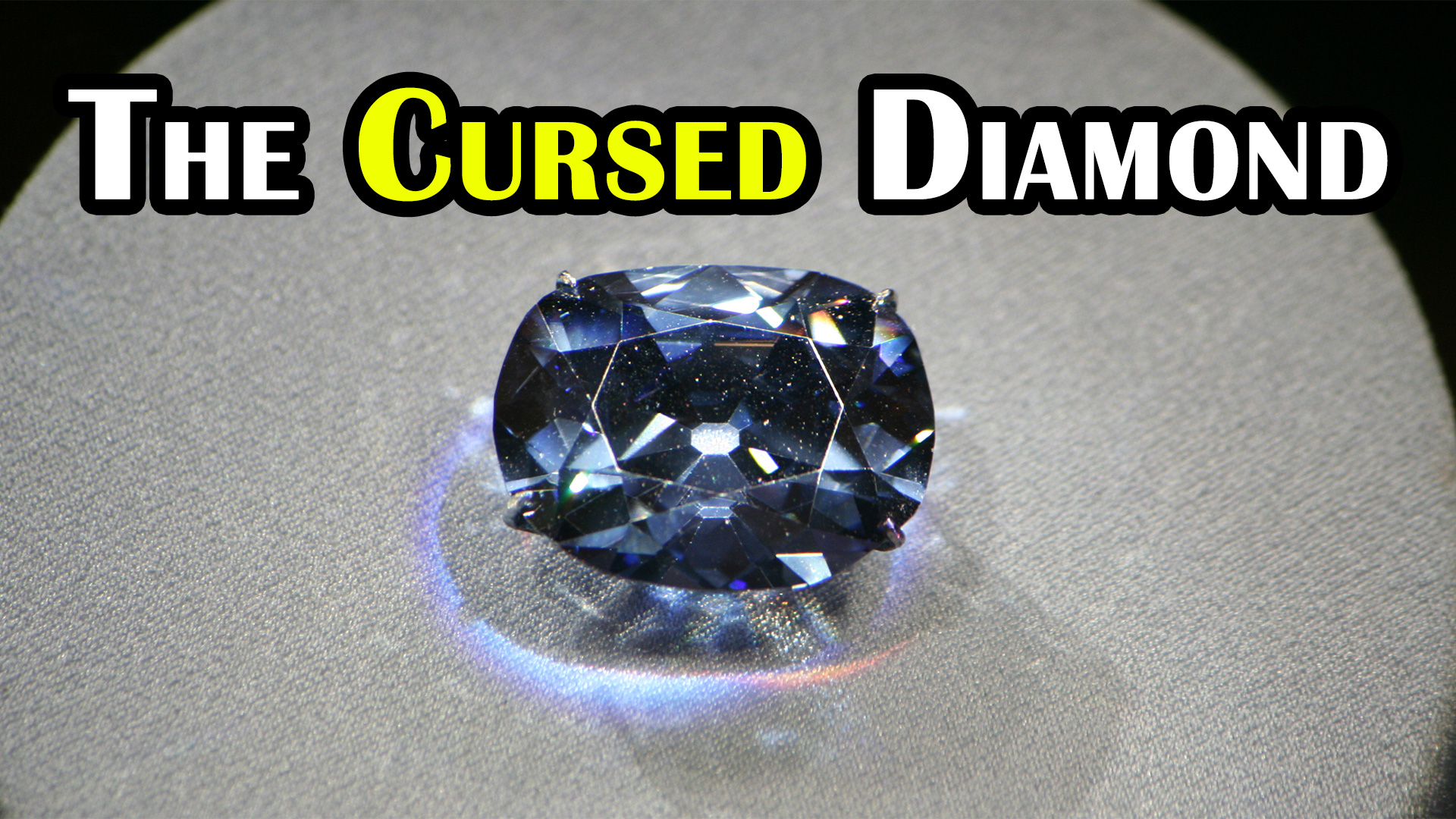
The Curse of the Hope Diamond

The Hope Diamond’s story begins over a billion years ago, when carbon under immense pressure formed the larger diamond from which the Hope Diamond would spring. Not only was the mother stone large, but it was given a rare blue color due to the presence of high amounts of the element boron within the carbon.

The diamond’s story in human hands, as well as the origins of the alleged curse that goes with it, has murky beginnings that date back to the 1600s. French gem merchant Jean-Baptiste Tavernier acquired the stone around the 1660s while in India. It is thought to have been originally mined from the Kollur mine in the Gunter district of Andhra Pradesh. Who originally owned the gem is unknown. Tavernier is believed to have possibly acquired the diamond through theft. Unconfirmed accounts stated that the original form of the Hope Diamond was as stolen from a statue of Sita, the goddess wife of Rama, who was the seventh Avatar of Vishnu. Thus, setting the curse in motion. Whether or not it was Tavernier or someone else who allegedly plucked the stone from the statue is lost to history.

What was confirmed is that Tavernier came back to Paris with the precursor to the Hope Diamond, a loosely triangular stone of an astounding 115 carats. This became known as the “Tavernier Blue.” He subsequently sold the diamond to Louis XIV. The details of the sale vary, and may have involved several other gems as well. Louis XIV had the stone recut, asking the court gem master to “make him a piece to remember.” Work on the stone took two years. This yielded a 67-carat stone known thereafter as the Blue Diamond of the Crown of France, or simply, the “French Blue.”

Louis XIV’s great-grandson, Louis XV, had the piece affixed to a more complex pendant, but it fell into disuse after his death. Eventually the stone was owned by Louis XVI, and was thought to have been worn by his wife, Marie Antoinette. Reports cast doubt on this, as the stone’s pendant was supposedly reserved for the King, but the events to come nonetheless launched the notion of the curse.

The French Revolution was set in motion, and Louis XVI and family were put in prison during the “Reign of Terror.” While they were imprisoned, thieves broke into the Royal Storehouse and made off with the Crown Jewels. Some would later be recovered, but the French Blue was not. Louis XVI and Marie Antoinette were killed by guillotine in 1793, severing the necks from which many of the Crown Jewels once hung.

The French Blue was likely smuggled to London on the heels of being stolen in France, and remained at large for some time. In this period the Hope Diamond was thought to be cut from it. This was confirmed in 2008, when a leaden model of the French Blue was rediscovered in the archives of the National Museum of History in Paris. Details from the leaden model matched those from the Hope Diamond perfectly. It was also discovered that the French Blue had also been roughly recut along the way, and that this work on the stone visibly changed its character.

It was in 1812 that the earliest date of the existence of the Hope Diamond, as cut from the French Blue, was confirmed. London diamond merchant Daniel Eliason described the stone as a “massive blue stone of 45.54 carats.” In the ensuing years, until 1830, the gem was thought to have been owned by George IV of the U.K. No records of his ownership exist in the Royal Archives at Windsor, but the consensus is that he owned it. It may have been sold to cover his debts. In any case, next up in the chain of ownership was London banker Thomas Hope, who acquired the diamond for either $65,000 or $90,000, depending on reports. The gem appeared in a published catalog of Hope’s gem collection, and it was then that it became known as the “Hope Diamond.”

When Hope died in 1839, his heirs fought an extended legal battle over the stone. Henry Thomas Pope, his nephew, eventually inherited it. He displayed it in the Great Exhibition of London in 1851 and the Exposition Universelle in Paris in 1855. His wife Anne Adele inherited the gem when Hope died in 1862, and it bounced around among new owners for several more decades, many of which had marriage and financial troubles and had to sell the stone to cover debts. This burnished the story of the curse.

At some point in the early 1900s the Hope Diamond made its way from the U.K. to New York with Simon Frankel, a famous diamond dealer. But Frankel’s business fell on hard times. He referred to the stone as the “hoodoo diamond.” He then sold the diamond for $400,000, about $11 million dollars today, through an intermediary to Sultan Abdulhamid of the Ottoman Empire. He, too, ran into financial problems, and his reign faltered, causing him to sell the stone.

In 1914 it fell into the hands of familiar name in the jewelry world – Pierre Cartier. Cartier would in turn woo Washington, D.C. socialite Evalyn Walsh McLean and her husband, Edward Beale McLean – heir to The Washington Post and Cincinnati Enquirer fortune – to buy the Hope Diamond from him.  Cartier tried several times to get Mrs. McLean to buy the diamond, and she eventually did purchase it from him, but only after Cartier had it reset to her liking. The sale was the subject of an article in the New York Times in which the newspaper claimed that the McLeans had tried to back out of the deal after learning about the curse. Other accounts claim that the McLeans had fabricated the story of their fear of the curse to increase the value of their purchase.

Mrs. McLean’s eccentric ways and how they manifested themselves with the diamond became the stuff of legend. She would wear the diamond around her neck around town, and even around the neck of her Great Dane, Mike. Guests at the McLeans’ parties would be treated to “find the stone” games, as Mrs. McLean would hide it on their property and challenge guests to locate it. McLean even hired a former Secret Service man to provide security during these events. Another story tells of Mrs. McLean hosting guests at her house one evening and asking somebody to turn the record player on – one of the Gramophone models with the enormous horn. Upon being told the record player wasn’t working properly, Mrs. McLean remembered that she put the diamond in the horn.

Mrs. McLean called on another well-known woman who lived near her in the wealthy playground of Aiken, South Carolina, named Eulalie Salley. She asked Mrs. Salley, a suffragist and incidentally the first woman in South Carolina to be granted a real estate license, if she would like to come over to see the Hope Diamond. Mrs. Salley jumped at the chance. After arriving at the McLean’s home, Mrs. Salley was surprised to be led to Mrs. McLean’s bedroom, against the mores of the day. Mrs. McLean reached in her stocking drawer, pulled out a stocking, and out fell the Hope Diamond. Incredulous, Mrs. Salley stated “Mrs. McLean, you’re keeping the most famous gemstone in the world in your underpants? To which Mrs. McLean allegedly replied, “My Dear, at my age, who is going to look there?”

Mrs. McLean was friends with President Warren G. Harding. They had a mutual friend named Gaston Means, who was a former Bureau of Investigation officer. When Charles Lindbergh’s son was kidnapped, Mr. Means told Mrs. McLean that he knew where the baby was being held. In exchange for $100,000 from Ms. McLean, he claimed that he could get the baby back, and in turn Mrs. McLean and he would be heroes. She was to find out it was a cruel hoax. Means made off with the money – the kidnapped baby was already dead.

And so went so much of Mrs. McLean’s life after buying the Hope Diamond. In addition to the Lindbergh baby fiasco, two of the McLeans’ children died young, Mr. McLean was committed to an asylum in his 40s, and the diamond had to be sold upon her death to cover her estate’s debts. Hope Diamond Curse aficionados naturally attribute all of this to the diamond.

The trustees of her estate sold the stone to Harry Winston, a diamond merchant in New York. In fact, he bought all of McLeans’ jewelry. Winston displayed the Hope Diamond during a tour of the United States with his extensive jewel collection. He also had the Hope Diamond’s bottom facet redone to increase the gem’s sparkle.

Years later, the Smithsonian talked Winston into donating the stone to their proposed gem collection. And on November 10, 1958, Winston agreed. But he did not have security transport the stone, nor did he personally hand deliver it. Winston sent the Hope Diamond through the U.S. Mail as you would any package, without any fanfare or even mentioning it to the postal service. Simply popped it in a box and mailed it off.

The stone arrived as planned, but the mailman who delivered it, James Todd, had his leg crushed in an accident not long after, the last significant event in the alleged curse.

Winston never believed in the curse. And he lived a long healthy life with no undue bad luck apparent during his lifetime.

The Diamond has been the centerpiece of the Smithsonian’s gem collection, greatly increasing attendance and thrilling guests for decades since. It is said to be insured for $250 million. You can still see it there today. Seemingly curse free.

If you liked this article, you might also enjoy our new popular podcast, The BrainFood Show (iTunes, Spotify, Google Play Music, Feed), as well as:

Expand for References

https://www.nationalgeographic.com/history/archaeology/curse-of-the-mummy/ (retrieved August 26, 2020).

https://bleacherreport.com/articles/375113-top-mlb-superstitions-and-rituals (retrieved August 26, 2020).

Bull Cooper, Emily L. 2005. Eulalie. The Aiken Partnership Of The University Of South Carolina Educational Foundation; 2nd Edition, 163 pp.

Gregory, J. 2011. The Hope Diamond: Evalyn Walsh McLean and the Captivating Mystery of the World’s Most Alluring Jewel. Turner, 96 pp.

Kurin, R. 2006. The Legendary History of a Cursed Gem. Smithsonian Books, 400 pp.

The post The Curse of the Hope Diamond appeared first on Today I Found Out.


from Today I Found Out
by Kent Cubbage - June 24, 2022 at 12:16AM
Article provided by the producers of one of our Favorite YouTube Channels!
-

Tuesday, October 20, 2020

Why Don’t You Just Keep Growing Taller?

Childhood development is largely defined by vertical growth. For generations, parents have kept a story pole or even marked a door jamb with their kid’s height every birthday, or perhaps even several times per year. Whatever your height may be, and whatever height you’d like to be, one thing is certain: we can lose weight, we can dye our hair, and we can have drastic cosmetic surgery, but as adults most all of us are powerless to grow any taller. To understand how tall each of us ultimately becomes and why we stop growing, we must first understand the biology of how we grow.

We humans start out as one tiny cell. Sperm meets egg, and we become a zygote. The zygote then forms new cells at a fever pitch. One cell becomes two, two become four, then eight, sixteen, thirty-two, and on into the billions and even trillions of cells as we transition from an embryo to a fetus. But the newborn is ultimately not a giant mass of similar cells. Along the way we develop complex, specialized tissues, organs, and organ systems. Among these are your bones, and your greater skeletal system.

As the embryo forms organ systems in its later stages, the template of a skeleton is laid down. Yet it does not form solid bones at the outset. Instead, it forms a template for the skeleton made out of cartilage. Cells known as osteoblasts then migrate to these areas and perform a process known as ossification, or the laying down of calcified bone in place of the cartilage. After nine months the fetus is ready for its close up, and birth arrives.

Growth of flat or “intramembranous” bones in the body, such as the bones in the skull, ossify in their own special way. Their contribution to height is of minimal consequence.  And as we become larger human beings as we age, our long bones will grow in thickness to support the additional weight. As this happens, the insides of bones will actually be torn down in a process known as resorption, by cells known as osteoclasts. At the same time, new bone tissue is added to the exterior of the bone. Think of it as bricks being removed on the inside while being laid down on the outside. This is literally called bone remodeling. If this were to not happen, our bones would be dreadfully thick and heavy, making movement much more difficult. Referring to a friend as “big boned” would be accurate in that case.

To achieve significant growth in height to get us spiking a volleyball, the long bones must grow in length. These include the humerus in the arm, the radius and ulna in the forearm, the femur in the upper leg, and the tibia and fibula in the lower leg. To achieve this growth, we need our old friend cartilage to start the process. The ends of long bones have a cartilage disc known as an epiphyseal disc, or more simply, a growth plate.

The grown plate is made of a type of cartilage that migrates towards the shaft of the bone at is multiplies. This cartilage then becomes ossified by our old friends the osteoblasts, and in turn, the bone has grown longitudinally. Thus, the growth plate is essentially a factory to make the bones longer. It gets its marching orders from the pituitary gland. The pituitary gland is also known as the master gland, because it produces hormones that tell so much of the body what to do and not do. In this case, the main pituitary hormone acting in bone growth is called, big surprise, growth hormone, or GH for short.

As long as GH is being produced, the growth plates will continue to produce new bone and the person will grow taller. This is especially in play during puberty, when the pituitary is pumping out GH at breakneck pace. But there becomes a tipping point as puberty rambles on. As we advance through that years-long process, we don’t look like giant children – though many of us continue to act like it. No, we also mature physically. This is called the “complete growth effect.” Other pituitary hormones, thyroid hormones, pancreatic hormones, and so forth, act in concert to make us not only taller, but physically mature.

Here is where trade-offs begin to occur. Levels of sex hormones also begin to increase as puberty continues. Two among these, estrogen and testosterone, cause the growth plates in our bones to ossify and fuse. Estrogen has a strong effect on growth plate fusion, resulting in women being generally shorter than men. When the growth plates are fused, which can be seen plainly on an X-ray, it’s game over for growing taller. Our cartilage-to-bone factory has been mothballed, and we stop gaining height. This usually occurs in the late teens, but can stretch until the mid-20s depending on the individual.  So, the sex hormones that were maturing and waking up our happy tissues, have now locked in our height.

However, issues with the growth plates can arise along the way. As we’ve discussed, the amount of GH plays a pivotal role in the growth of long bones. Under normal circumstances, the amount of GH produced stays within normal ranges throughout our youth, and tapers off as we reach adulthood. But we can produce too much of it, known as hyper-secretion, before the growth plates fuse. The body can grow literally too fast, with maturation lagging behind. This is called gigantism. If too little GH is produced, or hypo-secreted, the individual will remain short, which can lead to the condition known as dwarfism.

Too much GH can be produced after the growth plates fuse. In this situation, other cartilage in the body will respond to the excess GH and grow abnormally. This leads to distorted facial features with longer hands and feet, and is known as acromegaly. Young athletes using anabolic steroids to gain muscle and enhance performance can induce premature fusion of the growth plates and permanently stunt growth. Youngsters who break the end of a long bone can damage the growth plate. In these cases, the bone must be set with extra care to avoid problems with future bone growth. If the damage is extensive and the bone not set perfectly, that arm or leg can end up being shorter than the other.

And some parents, concerned about their child’s lack of growth, often ask a physician to prescribe GH. Under a doctor’s supervision, the hormone can be effective for the child. But while some additional gain in height may occur, it is rarely a panacea, and side effects can mitigate the growth benefits. Without the other hormones involved in the complete growth effect present in proportionally higher amounts, or even if they are actually present in proportionally higher amounts, maturation of other tissues and organs can be negatively affected. These complications can start a cascade of other health and psychological problems for the child.

Though cases are rare, GH deficiency in adults is possible, and a doctor might prescribe it. In recent years, GH has been rumored to have anti-aging effects. Many aging men are taking GH in hopes of adding years to their lives and muscle to their bodies. Instead of sitting in a pool with giant Cocoons and the likes of Don Ameche and Jessica Tandy, these men think they can reverse the aging process by what’s in the syringe. GH is a controlled substance, but can be obtained on the black market. While some studies have shown that lean muscle mass can be increased in adults who take GH, side effects such as carpal tunnel syndrome, fluid retention, joint pain and breast enlargement have been observed.

Hormone therapy aside, genetics play a huge role in determining out height. And it’s not a simple equation. One might think that there’s one gene on one chromosome that determines if we end up 4’10” or 6’10” tall. This is hardly the case. The scientific literature now shows that there are dozens of genes that play a role in how tall we become, known as a polygenic trait, and nearly 700 variations in those genes, known as alleles. Which of these genes and what variations an individual receives from his or her parents will have an additive effect on height. This results in the characteristic bell curve for average height in the human population, with most being between about 65 and 71 inches tall.

Nonetheless, average height can vary widely from country to country and even within sub-populations of countries. The Netherlands usually checks in as the country with the tallest population on average. Some Scandinavian and Slavic countries are also on the tall side. Indonesia and several countries in southeast Asia and western South America have relatively short populations. Some African countries have regional populations that are well above average height, and have been mobbed by college basketball recruiters for decades.

It should be noted that good nutrition and solid overall health throughout our childhood can also play some environmental role in how tall we become.  Ultimately, though, like so many aspects of the human experience, we are at the mercy of heredity. Simply stated, if one or both of your parents are taller than most, all else being approximately equal, you’re likely to be taller than most. Our only physical guarantee as adults is growing outward if we don’t control our habits, rather than any guarantee of growing upward. So, for now, if you want to add a few inches to your height, you’ll have to buy taller shoes.

If you liked this article, you might also enjoy our new popular podcast, The BrainFood Show (iTunes, Spotify, Google Play Music, Feed), as well as:

Expand for References

Why many women want to be with tall men. Psychology Today online. June 15, 2013. Accessed August 8, 2020.

Stulp, G., Buunk, A. P., Verhulst, S., & Pollet, T. V. (2013). Tall claims? Sense and nonsense about the importance of height of US presidents. The Leadership Quarterly, 24(1), 159-171. doi: 10.1016/j.leaqua.2012.09.002
Stulp, G., Buunk, A. P., & Pollet, T. V. (2013). Women want taller men more than men want shorter women. Personality and Individual Differences. doi: 10.1016/j.paid.2012.12.019
https://ift.tt/3hm4gGz (accessed August 8, 2020).

Herlihy, B. 2018. The human body in health and illness. 6th ed. Elsevier.

Mader, S. and M. Windelspecht. 2018. Essentials of Biology. 5th ed. McGraw Hill.

The post Why Don’t You Just Keep Growing Taller? appeared first on Today I Found Out.


from Today I Found Out
by Kent Cubbage - October 20, 2020 at 05:24PM
Article provided by the producers of one of our Favorite YouTube Channels!
-

Monday, August 3, 2020

The Nazi Interrogator Who Killed Them With Kindness

Hitler. Himmler. Goering. Goebbels. Even the most casual student of history knows this roster of infamous Nazis that were responsible for some of the greatest evils the world has ever known. Of the millions that were killed by German hands during World War II, countless thousands were prisoners of war. Often massive numbers of prisoners were killed at a time in acts of retaliation for the killing of German soldiers. POWs and even civilians were routinely turned over to the Gestapo for interrogation, never to be seen again, whether or not they divulged any useful information or not. POWs would do most anything to avoid ending up in Gestapo hands. Hogan’s Heroes provided a less-than-realistic depiction of life in a POW camp. There were few bumbling, indifferent Germans like Sergeant Schultz keeping guard in the Stalag prison system.

Over the decades, the image of the sadistic Nazi interrogator has become commonplace. A bright light in the prisoner’s eye while he’s sitting in a lone chair in the middle of a stark room – the threat or even meting out of torture always just a second away. However, violent means of Nazi interrogation were often unsuccessful. Many prisoners would endure sickening treatment but still only state basic information like name, rank and serial number, or give bogus information to their captors.

But one notable German man, who one prisoner would note could get a confession of infidelity from a nun, employed very different means of interrogation, often with much more success than with the point of a bayonet- killing them with kindness. His name was Hanns Scharff – the kind-hearted Nazi interrogator.

Scharff was born in 1907 in East Prussia, now part of Poland. His father, Hans Hermann Scharff, was a highly decorated soldier in the East Prussian Army who was killed during The Great War. This gave the son a great sense of pride about his dad. Scharff’s mother was from a family that ran one of Germany’s largest textile mills, located near Leipzig, and the elder Scharff worked there prior to WWI. The younger Scharff was raised in the family villa adjacent to the textile complex. He attended school in Leipzig and studied art intensively, which would lay the groundwork for his post-WWII life.

Scharff learned the ropes of the textile business, including marketing and exporting of the businesses’ wares, and quickly moved up the company ranks. He shipped off to the company’s offices in Johannesburg, South Africa, which was supposed to last for a year, but was promoted to Director of the Overseas Division of the textile company. Scharff remained there for nearly ten years, during which time he met and married Margaret Stokes, a South African British woman whose father, Captain Claud Stokes, was a squadron leader in the Royal Flying Corps.

The family would fall victim to very bad timing. In the summer of 1939, they were on vacation in Greiz, Germany, when WWII broke out. Unable to travel, the family was stuck there. Scharff found work in Berlin, but was drafted into the German military in 1939. Thus, began his odyssey to avoid being shipped off to the Eastern Front, where he was slated to be sent. Scharff’s wife was indignant and hysterical about his orders, not only from a spouse’s standpoint, but because Scharff was fluent in English. Frau Scharff believed it was a tremendous waste of his skill to not at least work as a German/English interpreter. She was able to make her way to a German General’s office to plead her case. It’s unclear whether or not she employed the tactics of Forest Gump’s mother to get the General to change his mind, but whatever she did, she was convincing, and he sent a telegram to Scharff’s Panzer division ordering them to send him to the Twelfth Interpreter’s Company in Wiesbaden. The telegram arrived the morning he was to leave for the Eastern Front.

But he was not out of the woods yet. Upon arriving on the train in Wiesbaden, Scharff asked the military police where his unit was located. Unfamiliar with the unit, they ordered him to report to another unit that was headed to the Eastern Front. In desperation, Scharff contacted a high-ranking German officer who had known his father, whom he had told his son to call if he was in trouble and needed an ace-in-the-hole. The friend ordered the new Panzer unit to release him to the proper unit. At that point, he had twice avoided what would probably have been certain death in Russia.

From here, Scharff was trained in British military organization and customs, but he soon became bored with his duties. He told one of his superiors that he was dissatisfied with manufacturing holes in paper and estimated the cost of each hole at five pfennigs. This irritated his general, but nonetheless he sent him to the Luftwaffe interrogation center in Oberursel, one of few granted this privilege, to act as an interpreter for the interrogators. This was the turning point in Scharff’s contribution to interrogation history.

The center was where all Allied airmen captured on the Western Front were taken for interrogation. Scharff was stuck in a lower-level position, but when two of his superiors were killed in a plane crash, he was promoted to head of the United States Army Air Force Fighter Section. It was then that he was transferred to the Luftwaffe from the Army, though at the same rank. He quickly became soured on harsh interrogation techniques. Although these violent methods were largely off of the books, and an official list of less drastic techniques was published, they were still the order of the day. He had witnessed these intense and violent episodes and decided that he’d do things differently.

And so it was that Scharff would use the role of “Good Cop” to achieve his goals. Scharff first gained the trust and confidence of the captives, plying the captives with long walks in the woods, his wife’s baked delicacies, casual conversations, good medical care, and even letting one POW fly a plane. Beyond all these little kindnesses, he would sell himself as their biggest advocate with his superiors. He was the one who could keep them from the Gestapo, but only if they worked with him and played ball. No Nazi dentist would dig into their gums and ask them, “is it safe?”

His methodology was as follows: get to know the POW, and then allow him to talk without coercion. Along the way, Scharff pretended to know everything beforehand, but stated that his superiors insisted that the information come from the captive. Then he would either confirm that he knew the information or discontinue the conversation. This eventually became known as the Scharff Method, and it was highly successful. POWs often offered up vital intelligence on their own through his trickery. No brutality, no torture…no raising of voices. No use of the Gestapo.

Maybe the most classic example was Scharff suggesting to a POW that a chemical shortage caused American tracer bullets to leave white smoke instead of red. The airman replied that this was not the case – they were white to indicate low ammunition. Naturally, this was extremely useful information for the German forces.

Through his methods, Scharff was able to put together extensive dossiers on American pilots, especially the higher-ranking ones. This included information about their hometowns and families, their press clippings, and even information about common American and British pilot behavior when off duty. As such, he was able to more easily bamboozle POWs. He was also allowed to wear street clothes, which led captives to believe he was much higher ranking than he actually was.

During the remainder of the war, Scharff interrogated all manner of famous, high ranking pilots. This included Lt. Col. Francis Gabreski, who was the top American fighter ace in Europe in WWII. Scharff even had Gabreski’s picture on the wall in his office, and was thrilled to meet him. However, even Scharff’s techniques could not pry information from Gabreski. He was one of the few POWs who did not provide useful information during interrogation from Scharff.

This is noteworthy as it’s estimated he interrogated around 500 POWs, with only a couple dozen or so providing no useable intelligence to him.

Further showing how friendly he was able to get with all these prisoners, most of the men he interrogated would go on to happily sign his guest book before being transferred.

As you might expect from his extreme success and rather unusual methods for the day, Scharff’s public profile greatly increased after the war. Like German rocket pioneer Werner Von Braun, he was useful to the United States, and because he was not an insidious Nazi, he wasn’t tried at Nuremburg, nor did he have to escape to South America. In 1948, he was asked to come to the United States to interrogate Martin J. Monti, who defected to Germany in 1944. He was also asked to testify during Monti’s trial.

The U.S. Air Force also adopted several aspects of his methods. More recently, after controversy over “enhanced interrogation techniques” in the War on Terror and the uproar over alleged torture at Abu Ghraib prison, President Obama launched the FBI’s High Value Interrogation Group. It spent millions studying and presumably utilizing Scharff’s methods. Scharff also continued his friendship with the aforementioned Lt. Col. Gabreski after the war. The two reenacted an interrogation in 1983 at a reunion of Stalag Luft III POWs in Chicago.

On that note, Scharff eventually settled in the United States and became an American citizen. The rest of his life’s work has likely affected many more Americans than his interrogations. Scharff had studied art in his younger days, and developed his craft into a successful business. He had a gift for mosaic-based art and furniture, and found instant success with this endeavor in New York. He eventually brought the business to Los Angeles. His daughter-in-law, Monika Scharff, joined him and became his business partner for the new “Scharff and Scharff” company. It is still in operation today. Among their well-known works are the large mosaics of the Cinderella story in the Cinderella Castle at Walt Disney World in Orlando, Florida. Others include mosaic entry ramps at Epcot Center, mosaics at several colleges and in hotels, homes, stores and churches around the globe.

Scharff passed away in 1992. His story lives on in a print. Some of his memoirs were published in a 1950 article in Argosy Magazine. In 1978 military writer Raymond Toliver collaborated with Scharff to publish the book, The Interrogator: the Story of Hanns Scharff, which was re-published with a different company in 1997. It was a mixture of Scharff’s memoirs and Toliver’s supporting biographical work.

Scharff’s legacy in interrogation continues to grow to this day. Scharff’s tactics have been studied at length by Par Anders Granhag, who is a professor of psychology at Sweden’s University of Gothenburg. Granhag is considered the leading authority on Scharff and his techniques. As for Scharff’s extreme success, Granhag states that Scharff was able to manipulate and contradict the POWs assumptions about interrogation which, in turn, circumvented their counter-interrogation training. Thus, the deception and new level of comfort made them ripe for the taking.

If you liked this article, you might also enjoy our new popular podcast, The BrainFood Show (iTunes, Spotify, Google Play Music, Feed), as well as:

Expand for References

The post The Nazi Interrogator Who Killed Them With Kindness appeared first on Today I Found Out.


from Today I Found Out
by Kent Cubbage - August 03, 2020 at 12:00AM
Article provided by the producers of one of our Favorite YouTube Channels!
-