
Tuesday, January 31, 2023

The Curious Case of the People With Split Brains

In late 1961, Drs. Philip Vogel and Joseph Bogen, neurosurgeons at the California College of Medicine in Los Angeles, were preparing to carry out a radical new procedure. The patients under their care suffered from severe epilepsy, which despite their doctors’ best efforts had resisted all attempts at conventional treatment.  One such patient, a 48-year-old former paratrooper identified in medical records as W.J, had suffered a head injury during a combat jump in WWII and soon began experiencing frequent blackouts and convulsions, with one particularly severe episode in 1953 lasting three full days. Vogel and Bogen suspected that these seizures were amplified by rogue neural signals spreading from one side of the brain to the other, and hoped that their severity might be reduced by interrupting communication between the two. This procedure, known as a corpus callosotomy, involved severing the corpus callosum, the bundle of white matter that bridges the two hemispheres and allows signals to cross from one to the other.

Vogel and Bogen had every reason to believe the procedure would work, as experimental corpus callosotomies performed on cats and monkeys had produced few observable side effects. Psychologist Karl Lashley had even speculated that the corpus callosum served no greater purpose than to “keep the hemispheres from sagging.” And indeed, upon waking from their surgeries the epileptic patients seemed entirely normal, with one even quipping that he had a “splitting headache.” But as they recovered, it soon became apparent that something wasn’t quite right. The patients began to favour the right side of their bodies in everyday activities, and seemed oblivious to any stimulation coming from the left side. For example, if they bumped their left arm they would not notice, and if an object was placed in their left hand they would deny its existence. Intrigued by this strange behaviour, in 1962 psychologists Roger Sperry and his graduate student Michael Gazzaniga of the California Institute of Technology began a series of groundbreaking experiments to find out just what was going on inside the split-brain patients’ heads. What they discovered would change our understanding of the human brain forever.

It has long been known that the brain’s functions are not evenly distributed, with each hemisphere specializing in different tasks. For example, in 1861 French physician Paul Broca discovered that damage to a specific region of the left frontal lobe – a region now known as Broca’s Area – resulted in various forms of aphasia – the inability to speak or understand words. This and other observations lead to the left hemisphere being recognized as the primary language centre of the brain. But until the experiments of Sperry and Gazzaniga, neurologists did not truly understand the full extent of this specialization. The split-brain patients provided a golden opportunity to study hemispheric specialization, for the surgery had essentially left them with two, nearly-independent brains. Contrary to Karl Lashley’s dismissive appraisal, the corpus callosum is in fact a highly sophisticated and essential part of the brain, containing some 200 million neural fibres capable of transmitting one billion bits of information per second. This is vital to normal functioning of the brain, for due to a quirk of vertebrate evolution our nervous systems are contralateral, meaning that each hemisphere receives information largely from the opposite side of the body. For example, the optic nerves, which convey visual information from our eyes to our occipital lobes, cross over at a junction called the optic chiasm, meaning that information from the right eye is transmitted to the left hemisphere and vice-versa. Ordinarily this counter-intuitive arrangement works just fine as the information is immediately transmitted to the correct hemisphere via the corpus callosum. But in split-brain patients this channel of communication no longer exists, meaning that information transmitted to a particular hemisphere stays in that hemisphere. And this is where things start to get weird.

Sperry and Gazzaniga probed the patients’ hemispheres individually by stimulating the opposite side of the body – for example, by presenting an image to the right eye to stimulate the left hemisphere. In one early experiment, they flashed a series of lights across the patients’ field of view. When asked to report when they had seen a light, the patients only reported seeing lights flashing on the right. But when asked to point whenever they saw a light, they successfully reported seeing lights on both sides. Next, Sperry and Gazzaniga projected the word HEART such that the letters HE appeared in the patient’s left-hand field of vision and ART in their right-hand field of vision. When asked to report what they saw, the patients verbally responded “ART”; but when asked to point to the word they saw using their left hand, they pointed to HE. Similarly, if an object was placed in the patient’s right hand, they were easily able to name it, though when asked to point to an image of the same object using their right hand,  were unable to do so. When the sides were reversed, the patients could easily point to the object, but, much to their confusion, were unable to name it. This and similar experiments indicated that language processing abilities are almost entirely localized in the left hemisphere, while the right hemisphere specializes in visual perception tasks such as recognizing faces and emotions and spotting differences between objects. This verbal-perceptual divide is even baked in from birth, with most infants favouring the left side of their mouths when smiling and the right side when babbling.

But as is often the case in biology, Sperry and Gazzaniga soon discovered that things weren’t quite so clear-cut, and that the right hemisphere was a far more capable communicator than previously believed. For example, one patient, when presented with a picture of his girlfriend in his left eye, was unable to speak her name, but was able to spell it out using Scrabble tiles. Sperry and Gazzaniga also found that while the left hemisphere excels at making straightforward word associations, the right hemisphere is better at recognizing subtler relationships and insinuations. For example, when the left hemisphere was presented with the word foot, it was better at picking out a related term like heel from a list of words. But when the right hemisphere was presented with two additional words, cry and glass, it more easily picked out the connecting word – in this case, cut.

But as strange as these discrepancies are, the experience of living with a split brain can sometimes be even more bizarre, with patients feeling as though they literally have two separate brains – brains which are often at odds with one another. For example, patients have reported doing up their shirt buttons with one hand only to have the other hand spontaneously unbutton them, or placing items in a shopping cart with one hand only for the other to place them back on the shelf. Many patients are even able to copy two different images using each of their hands, though given the right hemisphere’s greater spacial reasoning capabilities, the left hand is generally superior at this task than the right. In rare cases this phenomenon can even take the form of “alien hand syndrome,” in which a patient’s hand appears to have a mind of its own and sometimes attempts to strangle its owner or others. This is also sometimes known as “Dr. Strangelove Syndrome” after Peter Sellers’ character in the 1964 Stanley Kubrick film who exhibits similar symptoms. Unfortunately there is no cure for the condition other than keeping the offending hand occupied with other tasks and restraining it at night to prevent injuries.

In such cases of independent limb movement, the offending limb is almost always the left one. This reflects what is perhaps Sperry and Gazzaniga’s greatest discovery: the executive dominance of the left hemisphere. Their and later experiments revealed that much of the right hemisphere’s reasoning and decision-making processes are entirely unconscious and must be mediated and interpreted by the dominant left hemisphere for us to become aware of them. When the connection between the hemispheres is severed, this mediation and interpretation function is lost, hence why the left-hand limbs – controlled by the right hemisphere – are able to act without their owner’s conscious knowledge. This effect also applies to logical reasoning. For example, when one split-brain patient was shown a picture of a chicken foot in their right-hand visual field and a snowy field in their left-hand visual field and asked to choose the closest association from a list of words, they paired a chicken with the chicken foot and a shovel with the snowy field. However, when asked to rationalize why they had chosen the shovel, the patient responded “to clean out the chicken coop.” This indicated that the image presented to the left hemisphere – the chicken coop – had overridden that presented to the right hemisphere in the patient’s mind.

This extreme divide between the functions, capabilities, and even the “personalities” of the two hemispheres stunned the psychology community, and lead Roger Sperry to conclude in 1974 that:

“…[each hemisphere is] indeed a conscious system in its own right, perceiving, thinking, remembering, reasoning, willing, and emoting, all at a characteristically human level, and … both the left and the right hemisphere may be conscious simultaneously in different, even in mutually conflicting, mental experiences that run along in parallel.”

Sperry and Gazzaniga’s experiments revolutionized our understanding of how the brain organizes different perceptual and conceptual tasks, and for this work Sperry, along with David Hubel and Torsten Wiesel, were awarded the 1981 Nobel Prize for Medicine and Physiology. Sperry continued to study split-brain patients until his death in 1994, while Gazzaniga still pursues this line of research to this day.

If all this talk of hemispheric specialization sounds a bit familiar, it may be due to the popular belief that people are predominantly “left” or “right-brained” depending on their particular cognitive strengths. The reasoning goes that since the left hemisphere specializes in language and logical reasoning and the right hemisphere in visual and spacial reasoning, those with a mathematical or scientific bent are predominantly “left-brained” while those with a more creative, artistic temperament are “right-brained.” But just like the notion that we only use 10% of our brains, the whole “left-brained”/“right-brained” dichotomy is nothing but a load of bunkum. Numerous studies using functional MRI have shown that both sides of the brain are used more or less equally regardless of the cognitive task being performed. And this makes sense, as supposedly “left-brain” fields like mathematics and science are also profoundly creative activities, while supposedly “right-brain” activities like art often require a great deal of analytical precision. So, sorry, but all those online quizzes promising to reveal your cognitive style are about as scientific as a horoscope.

As for the split-brain patients themselves, the vast majority reported a significant reduction in the frequency and severity of their seizures. While this improvement came at the cost of living with a pair of often uncooperative brains, most eventually learned to cope with this strange existence in a variety of fascinating ways. Sperry and Gazzaniga even observed one of these adaptations, which they called “cross-cuing,” in one of their experiments. This experiment involved flashing either a red or green light in the patient’s left-hand visual field and asking them to report which colour they had seen. If the patient answered correctly more than half the time – as would be expected if they were just guessing – this would indicate that the right hemisphere had at least some spoken language ability. Strangely, when the experimenters allowed the patient to make a second guess, their scores improved dramatically. After a while, Sperry and Gazzaniga realized that when the patient’s right hemisphere saw one colour but heard the patient say the other, it unconsciously caused the patient to frown. The patient’s left hemisphere then detected this frown and deduced that it had guessed wrong. In this manner, split-brain patients are able to use subtle physical cues to allow their right and left hemispheres to communicate to a limited extent. Studies of children born without a corpus callosum also indicate that the hemispheres also communicate via other means, meaning that split-brained patients’ brains may not be as disconnected as we once thought. To paraphrase Jeff Goldblum in Jurassic Park: the brain, uh, finds a way.

If you liked this article, you might also enjoy our new popular podcast, The BrainFood Show (iTunes, Spotify, Google Play Music, Feed), as well as:

Expand for References


Myers, David, Psychology, Worth Publishers, NY, 2004


Experiment Module: What Split Brains Tell Us About Language, McGill University, https://thebrain.mcgill.ca/flash/capsules/experience_bleu06.html


Gazzaniga, Michael, The Split Brain in Man, Scientific American 217(2), 1967, https://people.psych.ucsb.edu/gazzaniga/michael/PDF/The%20Split%20Brain%20in%20Man.pdf


Metcalfe, Janet; Funnell, Margaret & Gazzaniga, Michael, Right-Hemisphere Memory Superiority: Studies of a Split-Brain Patient, University of California Davis, May 1995, http://www.columbia.edu/cu/psychology/metcalfe/PDFs/Metcalfe%20Funnell%20et%20al%201995.pdf


No, You’re Not Left-Brained or Right-Brained, Psychology Today, February 15, 2018, https://www.psychologytoday.com/ca/blog/consciousness-self-organization-and-neuroscience/201802/no-you-re-not-left-brained-or-right

The post The Curious Case of the People With Split Brains appeared first on Today I Found Out.


from Today I Found Out
by Gilles Messier - January 31, 2023 at 09:04AM
Article provided by the producers of one of our Favorite YouTube Channels!
-

Force Z and the Death of the Battleship

On April 6, 1945, the Imperial Japan launched Operation Ten-Go, a desperate last-ditch naval attack against the Allied fleet supporting the invasion of Okinawa. Supported by the light cruiser Yahagi and eight destroyers, the charge was led by the pride of the Imperial Japanese Navy, the mighty battleship Yamato. A quarter-kilometre long, displacing 65,000 tons, and armed with no fewer than nine 46-centimetre guns firing one-and-a-half-ton shells, Yamato was the largest and most powerful battleship ever built and considered by Japanese high command to be a nigh-unstoppable weapon. But the glorious last ride of the Imperial Navy was not to be; before the task force could even reach Okinawa, it was set upon by over 400 warplanes launched from American aircraft carriers. Less than five hours after first contact, Yahagi, four destroyers, and even the mighty Yamato had been sent to the bottom. More than 4,000 Japanese sailors died in the engagement, for the loss of only 12 U.S. airmen. It was Japan’s last major naval operation of the war, and marked the end of an era. The battleship, once the last word in naval firepower, no longer ruled the seas. In retrospect, the Japanese should have seen this coming, for they themselves had taught the British Royal Navy this same lesson nearly four years before. This is the tragic story of the sinking of Force Z.

After the First World War, the British Empire reached its greatest extent, encompassing more than 26% of the world’s land area and 23% of its population. However, by the 1930s what had long been Britain’s greatest strength was fast becoming its greatest liability. The Empire’s far-flung colonies could only be protected and held together by the Royal Navy, and with post-war budget cuts and the onset of the Great Depression even this mighty force found itself stretched dangerously thin. This made Britain’s overseas territories tempting targets for other up-and-coming imperial powers – including the Empire of Japan. Following their stunning victory over the Russian Empire in the 1904-1905 Russo-Japanese War, the Japanese had come to see themselves as the natural masters of Asia and had pursued a policy of aggressive territorial expansion known euphemistically as the “Greater East Asia Co-Prosperity Sphere”. In 1910 the Japan annexed the Korean Peninsula, while in 1931 Japanese troops annexed the Chinese province of Manchuria and established the puppet state of Manchukuo. This was followed by a full-scale invasion of southern China in July 1937, while in September 1940 the Japanese captured the French colony of Indochina – today Vietnam, Cambodia, and Laos.

The latter development particularly rattled the British, for it placed Japanese forces within easy striking distance of Hong Kong, British Malaya, and the Dutch East Indies – colonies rich in the rubber, tin, and oil the Japanese needed to feed their imperial war machine. Anticipating such an invasion, in 1919 the British had established a large naval base at Singapore and developed the so-called “Singapore Strategy” to deter Japanese aggression. This strategy, developed from a series of war plans over 20 years, was to be carried out in three phases. At the onset of a Japanese attack, the British garrison would man and defend “Fortress Singapore”, holding out while the British Home fleet sailed for the Far East via the Mediterranean, Suez Canal, and Ceylon – today Sri Lanka. On arrival, the fleet would retake Hong Kong and relieve Singapore before sailing on to blockade the Japanese Home Islands. Since the Royal Navy was still the most powerful naval force in the world, the British were confident the Japanese would not risk a direct confrontation and would quickly capitulate. The Singapore Strategy became the cornerstone of British defence strategy in the Far East, its effectiveness considered so assured that, as Royal Navy Captain Stephen Roskill wrote in 1937:

“…the concept of the ‘Main Fleet to Singapore’ had, perhaps through constant repetition, assumed something of the inviolability of Holy Writ”.

But while the Singapore Strategy was impressive on paper, a combination of poor planning, budgetary limitations, political interference, and plain hubris led the British to make a series of major strategic blunders. For example, planners believed that the monsoon season would prevent Japanese forces from crossing the Gulf of Thailand from Indochina to Malaya until at least February 1942. Consequently, most of the aircraft defending the peninsula were diverted for service in the Middle East and Russia. Racist attitudes towards the Japanese also led the British to underestimate the capability of their armed forces, leaving Singapore, Hong Kong, and Malaya poorly garrisoned. As we shall see, this was to have disastrous consequences for the British Empire in the Far East.

There was also another major complicating factor: Nazi Germany. On September 3, 1939, the same day Britain declared war on Germany, the German navy launched a campaign of unrestricted submarine and surface warfare against British and Allied merchant shipping, hoping to starve the island nation into submission. Suddenly, nearly the entire Royal Navy was called upon to counter the Nazi threat, leaving few ships available to defend the Far East. In desperation, Britain called upon the U.S. Navy to contribute ships from its Pacific Fleet, based at Pearl Harbour in Hawaii. But the United States, which was still officially neutral in the conflict, was hesitant to deploy its ships in defence of British colonial interests, and decided instead to focus its efforts on the Atlantic theatre once it entered the war. The British therefore developed a strategy of replacement, whereby American ships deployed into the Atlantic would free up British ships for deployment to the Far East. The full build-up of this Eastern Squadron was to be completed within 80 days after the entry of Japan and the United States into the war, which was anticipated to occur sometime in late 1941 or early 1942.

Thankfully, U.S. President Franklin Roosevelt chose not to wait until the United States had officially entered the war to intervene in the Atlantic, meaning that by August 1941 there was sufficient U.S. Naval presence in the Atlantic for an Eastern Squadron to be deployed ahead of the anticipated Japanese invasion. The question now became: which ships to send? While Prime Minister Winston Churchill favoured sending the most advanced King George V-class battleships, First Sea Lord Sir Dudley Pound and Admiral of the Home Fleet Sir John Tovey disagreed, arguing that the class’s design made it unsuitable for operations in tropical climates. They also wished to keep the more powerful vessels in home waters to counter the German warships Tirpitz, Scharnhorst, and Gneisenau. In the end, however, circumstances decided the matter, for there were only six capital ships in a fit enough state to reach the Far East before the spring of 1942: the King George V-Class battleship HMS Prince of Wales, the Renown-class battlecruiser HMS Repulse, and the four Revenge-class battleships  HMS Revenge, Resolution, Royal Sovereign, and Ramillies.

HMS Prince of Wales was the Royal Navy’s newest and most advanced battleship. Launched in May 1939, she was still being fitted out when on May 24, 1940 she was called out to face the German battleship Bismarck. With workmen from the Vickers engineering firm still aboard scrambling to get her radar and gun-laying systems online, she steamed into the Battle of the Denmark Strait, receiving seven direct hits including a 15 shell that ricocheted through her compass platform killing everyone except the Captain and a signalman. But she gave as good as she got, and managed to land two crippling hits that contributed to the Bismarck’s eventual destruction three days later. After being repaired, in August 1940 Prince Of Wales carried Prime Minister Churchill across the Atlantic to a secret conference with President Roosevelt, then in September was assigned to Force H, escorting supply convoys to the Mediterranean island of Malta.

HMS Repulse, on the other hand, was a much older ship. Launched in January 1916, she participated in the 1917 Battle of Heligoland Bight – her only action of the First World War – and in the 1930s escorted merchant ships during the Spanish Civil War. Due to lessons learned during the war her armour and guns were upgraded in 1918 and again in 1934 and 1940. She was scheduled to receive a further upgrade to her antiaircraft batteries, but her assignment to the Far East task force resulted in this plan being abandoned, leaving Repulse vulnerable to air attack.

The Revenge-class battleships were even older, having been launched between 1913 and 1914. Considered obsolete and no match for the latest Imperial Japanese Navy vessels, the battleships were instead assigned to the 3rd Battle Squadron based in Ceylon, arriving in September 1941.

Meanwhile, Prince of Wales, Repulse, and the escorting destroyers HMS Electra, Express, and Hesperus were organized into Force G, under the command of Admiral Sir Thomas Phillips. Prime Minister Churchill and his naval advisors continued to argue over the composition of the squadron, so in the end a compromise solution was reached. Force G was ordered to sail for Cape Town, South Africa, where it would anchor and await instructions. The Admiralty would then review the strategic situation and decide whether to send the ships on to Singapore or retain them for use in home waters. Repulse, which had just finished escorting a supply convoy around the Cape of Good Hope, was ordered to Ceylon to rendezvous with the rest of the force. While Churchill had recommended the force be escorted by an aircraft carrier, the only available ship, HMS Indomitable, had run aground in Jamaica and would not be ready to sail until November. So, with time of the essence, Force G set off for Singapore without air cover, sailing from Greenock in Scotland on October 25, 1941. Though a far cry from the massive fleet called for by the original Singapore Strategy, Churchill was confident that the “smallest number of the best ships” would be more than enough to deter the Japanese.

Force G arrived in Cape Town on November 16. Admiral Phillips expected to remain in South Africa for at least seven days, a week of social events and media coverage having been planned for propaganda and morale-boosting purposes. But before the Prince of Wales even reached Cape Town, Phillips received orders to depart as soon as possible and rendezvous with Repulse in Ceylon. The anticipated review of Force G’s mission was, in fact, a ruse meant to deceive Winston Churchill; the Admiralty had already committed to carrying out the Singapore Strategy in full.

Meanwhile, Repulse was in Durban, South Africa, preparing to sail to Ceylon. There, her crew received a disturbing portent of things to come as South African Prime Minister Jan Smuts came aboard and delivered an address. While no official record of this speech survives, Able Seaman Ted Matthews later recalled the sobering tone:

“From the onset he shattered our conceptions of the Japanese military stating in clear terms that if hostilities erupted we weren’t going to be confronted by a race of inferiors. To the contrary he felt the Japs weren’t in the least concerned by the possibility of conflict with Britain. He also made it clear despite what we’d been told in the past that they possessed a fully modern airforce. Though the one comment that’s never left me were the fatalistic words he feared many of us wouldn’t be returning from this mission and he’d pray for our safety during the troubled times ahead. None of us could possibly have imagined the accuracy of this prophecy.”

Prince of Wales and her escorts remained in Cape Town for only two days, departing on the afternoon of November 18. On November 29, Force G reached Ceylon, where it was joined by Repulse and the destroyers HMS Encounter and HMS Jupiter. Hesperus had already departed before the force reached Cape Town. Admiral Phillips disembarked and flew on to Singapore and the Philippines to meet with Allied commanders, while the fleet sailed on without him, finally reaching Singapore on December 2. On arrival, the destroyers Encounter and Jupiter were found to be suffering from mechanical faults and were replaced by the First World War-vintage destroyers HMAS Vampire and HMS Tenedos. Prince of Wales then entered the dry dock at the Singapore naval base and underwent a thorough cleaning of her hull and boilers.

Then, less than a week later, the long-expected attack finally came.

The Japanese surprise attack on Pearl Harbour on the morning of December 7, 1941 was merely the opening move in a massive, coordinated series of invasions all across Southeast Asia. Indeed, even before the Imperial Navy’s aircraft had even reached Hawaii, Japanese troops landed in Malaya, Hong Kong, the Dutch East Indies, the Philippines, Guam, and Wake Island. As these locations were across the International Date Line from Hawaii, the attacks were recorded as taking place on December 8. That same day, Japanese aircraft based in Indochina bombed Singapore. Force G – now redesigned Force Z – fired at the attacking aircraft while sitting at anchor, but made and received no hits. Once news of the attack reached Britain, Admiral Phillips was ordered to weigh anchor and intercept Japanese invasion convoys steaming across the Gulf of Thailand. Phillips hesitated, for the only Allied aircraft available to protect the fleet were the 10 slow and outdated Brewster Buffalo fighters of No. 453 Squadron RAAF stationed at Sembawang. Admiral Tovey’s misgivings about the ship had also proven correct: the hot, humid climate of Singapore had rendered Prince of Wales’s gun control radars inoperative and degraded her anti-aircraft ammunition, while the ship’s lack of air conditioning had led to increased crew fatigue. Nonetheless, Phillips elected to proceed, believing that Japanese aircraft could not operate so far from land and that Prince of Wales was all but impervious to aerial attack. After all, at that point no capital ship had ever been sunk by aircraft on the open sea. It was a gamble which was to cost him dearly.

Force Z departed Singapore at 17:00 hours on December 8 and sailed north to intercept Japanese forces landing at Khota Bahru on the northeast coast of Malaya. The following day at around 14:00, they were spotted by the Japanese submarine I-65, which shadowed the squadron for 5 hours, reporting their positions. This report soon reached the headquarters of the Japanese Navy’s 22nd Air Flotilla, which had just arrived at airfields in Indochina. At the time, 22nd’s aircraft were loading up with bombs for an attack on Singapore, but upon receiving news of Force Z’s sailing they immediately switched over to torpedoes. However, by the time the aircraft were ready, the sun was beginning to set, and the attack was postponed until the following morning. Meanwhile the Japanese 2nd Fleet was dispatched south from Indochina to intercept Force Z. While the two fleets never spotted each other, just before sunset Force Z was spotted by three seaplanes launched by Japanese convoy escorts. Realizing he had lost the element of surprise, Phillips abandoned his attack on Khota Bharu and turned back towards Singapore.

Just before 1:00 the following morning, Phillips received a radio message indicating that Japanese troops were landing at Kuantan on the east coast of Malaya. At around 7:00 hours Force Z reached the area and Prince of Wales launched a reconnaissance aircraft to investigate. When neither it nor the destroyer Express found anything, Phillips carried on towards Singapore. Little did he know, however, that he had been spotted by the submarine I-58, and that 34 Mitsubishi G3M “Nell” torpedo bombers and 51 G4M “Betty” high-level bombers of the 22nd Air Flotilla were on their way to intercept him.

The first ship the bombers spotted was not, however, the Prince of Wales or the Repulse, but the destroyer Tenedos, which had sailed for Singapore the day before refuel and was now 300 kilometres south of Force Z. Mistaking the destroyer for a battleship, at 10:00 the aircraft dropped several armour piercing bombs on the ship before realizing their mistake and breaking off. Minutes later a Japanese scout aircraft spotted Force Z and called in the rest of the bomber force on its position. The attack had begun.

The first wave of eight bombers attacked around 11:15, focusing exclusively on Repulse. The old battlecruiser proved surprisingly nimble, however, and managed to dodge most of the bombs, suffering only one minor hit to her seaplane hangar. In return, her anti-aircraft gunners damaged five of the attacking aircraft. The next wave arrived at 11:40, dropping eight torpedoes at the two ships. Only one struck home, hitting Prince of Wales’s outer port propeller shaft. The shaft, rotating at full speed, twisted and ripped through the bulkheads, sending 2,400 tons of water pouring into the ship’s engineering compartments. The explosion set off a chain of failures, jamming the ship’s steering, shorting out her electric generators, knocking out her bilge pumps, and preventing her electrically-driven antiaircraft guns from being trained. Fatally crippled, Prince of Wales steamed helplessly northwards and was struck by four more torpedoes and one bomb. Around 13:00, Phillips gave the order to abandon ship.

Meanwhile, Repulse fought on, successfully dodging 19 torpedoes and shooting down three aircraft. At 12:23, however, she, too, was struck by four torpedoes. The ship listed 65 degrees to port, hung on for several moments, then rolled over and sank. Less than an hour later at 13:18, Prince of Wales, pride of the Royal Navy, also capsized and slipped beneath the waves. From start to finish, the attack had taken little more than two hours.

Electra, Vampire, and Express moved in to rescue the survivors. In all, 840 British sailors lost their lives that day – 327 aboard Prince of Wales and 513 aboard Repulse, which had capsized before the order to abandon ship could be given. Of the senior officers, Admiral Phillips and Captain John Leach of the Prince of Wales chose to go down with their ship, while Captain William Tennant of the Repulse was among the survivors. Ironically, while it was Admiral Phillips’s brash decision to sail from Singapore which placed Force Z in the path of the Japanese bombers, it was his caution which sealed the squadron’s fate, for throughout the operation Phillips maintained complete radio silence so as not to give up his position. Indeed, it was not until an hour into the Japanese attack that the first radio signal was sent calling for air support. By this time, however, it was far too late, the aircraft of No. 453 Squadron arriving on the scene just as the Prince of Wales went under. As the squadron’s commander, Flight Lieutenant Tim Vigors later lamented:

“I reckon this must have been the last battle in which the Navy reckoned they could get along without the RAF. A pretty damned costly way of learning. Phillips had known that he was being shadowed the night before, and also at dawn that day. He did not call for air support. He was attacked and still did not call for help.”

Back in Britain, Prime Minister Churchill was woken in the middle of the night by news of the sinking, later writing:

“In all the war, I never received a more direct shock… As I turned over and twisted in bed the full horror of the news sank in upon me. There were no British or American ships in the Indian Ocean or the Pacific except the American survivors of Pearl Harbor, who were hastening back to California. Across this vast expanse of waters, Japan was supreme, and we everywhere were weak and naked.”

But the worst was yet to come. Hong Kong fell on December 25 after 17 days of fighting. In Malaya, invading Japanese troops moved with terrifying speed, aided by excellent British-built roads, the inexperience and disorganization of the defending garrison, and an deceptively simple piece of technology: the bicycle – and for more on that, please check out our previous video How Bicycles Caused the Downfall of the British Empire. By January 31, 1942, the defending Commonwealth troops had been pushed off the peninsula and retreated to the island of Singapore, blowing up the Johore causeway behind them. The 85,000-strong garrison fought on for another two weeks, finally surrendering on February 15. Some 140,000 British, Australian, New Zealand, and Indian troops marched into Japanese captivity – the single greatest defeat in British military history. Within months the Japanese Empire controlled a huge swath of Asia and the Pacific stretching from northern Manchuria to the Solomon Islands. It would not be until the Battle of Midway in June 1942 that the tide finally turned and the Allies began the long, bloody island-hopping campaign that would take them from the island of Guadalcanal to Japan’s very doorstep.

By that time, however, the Allies had learned the hard lesson taught them by the tragic loss of Repulse and Prince of Wales. Never again would an allied capital ship operate without a protective screen of aircraft. For as the sinking of the Yamato proved beyond a doubt, the age of the battleship was over. The seas now belonged to the aeroplane.

If you liked this article, you might also enjoy our new popular podcast, The BrainFood Show (iTunes, Spotify, Google Play Music, Feed), as well as:

Expand for References

Keegan, John (ed.), World War II: a Visual Encyclopedia, PRC Publishing Ltd, 1999


Klemen, L, “Seventy Minutes Before Pearl Harbor” – The Landing at Kota Bahru, Malaya, on December 7, 1941, The Netherlands East Indies 1941-1942, https://warfare.gq/dutcheastindies/kota_bharu.html


Garzke et al, Death of a Battleship: The Loss of HMS Prince of Wales, December 10, 1941, https://ift.tt/NTes5yE


Sinking of the HMS Repulse, History of Diving Museum, https://ift.tt/mVSnOUy

The post Force Z and the Death of the Battleship appeared first on Today I Found Out.


from Today I Found Out
by Gilles Messier - January 31, 2023 at 09:02AM
Article provided by the producers of one of our Favorite YouTube Channels!
-
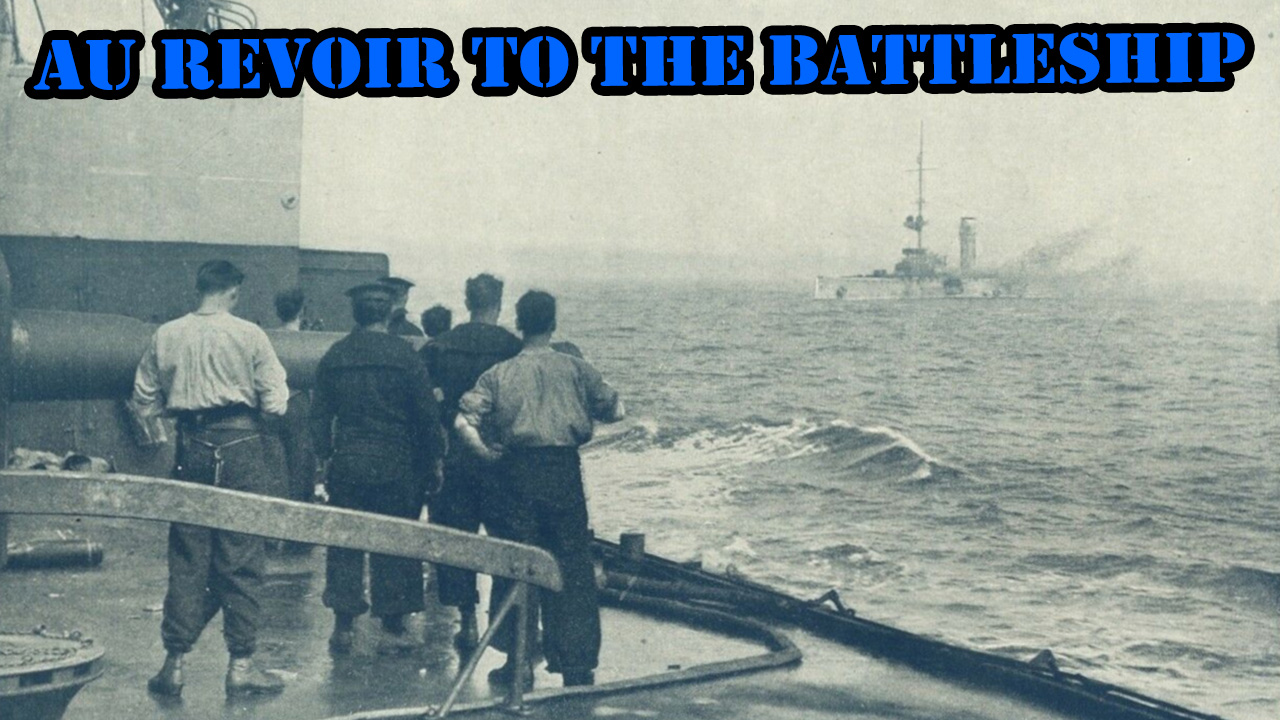
Review: Kitty Takitos de maiz sabor Criollo


These rolled-up snacks were shaped much like Takis, though they chose a name closer to Taquitos. ...

from Taquitos.net Snack Reviews
by January 31, 2023 at 09:32AM

Friday, January 27, 2023

What’s Up With the Very Real ‘Doomsday Clock’?

On January 23, 2020, the Bulletin of the Atomic Scientists, a non-profit research and education organization based in Chicago, moved the hands on its Doomsday Clock forward to 100 seconds to midnight – the closest in its 74-year history. According the Bulletin, this change reflects the growing threat posed by climate change, nuclear proliferation, and misinformation, and the increasing unwillingness of world leaders to respond to said threats. But just what is the Doomsday Clock, anyway? Where did it come from, how its it updated, and what can it tell us about the ever-changing risk of global catastrophe in the 20th and 21st Centuries?

The Doomsday Clock traces its origins back to 1945 and the aftermath of the atomic bombings of Hiroshima and Nagasaki. In that year, a group of Chicago scientists who had worked on the Manhattan Project, including metallurgist Hyman Goldsmith and biophysicist Eugene Rabinowitch, founded the Bulletin of the Atomic Scientists of Chicago, a monthly newsletter aimed at keeping the public informed of the emerging danger of nuclear weapons. Two years later, when Rabinowitch and Goldsmith decided to expand the newsletter into a proper magazine, they asked artist Martyl Langsdorf, wife of physicist and Bulletin member Alexander Langsdorf, to design the cover. At first Martyl considered drawing a giant letter “U” to represent Uranium, but after listening to conversations between other Bulletin scientists, she realized that essence of the publication was not nuclear weapons themselves but the dire risk of global catastrophe they posed. Thus, according to the Bulletin’s website:

“She drew the hands of a clock ticking down to midnight. Like the countdown to an atomic bomb explosion, it suggested the destruction that awaited if no one took action to stop it.”

The Doomsday Clock debuted on the cover of the June 1947 issue of the Bulletin, with the hands set at seven minutes to midnight. Though this position originally had no particular meaning – Martyl admitting that she placed the hands for “aesthetic reasons” – it would nonetheless form the baseline for all future adjustments. The decision whether to move the hands – and how far – is made every January based on changes in technology and geopolitics over the previous year. Originally this decision was made by founding editor Eugene Rabinowitch himself, but after his death in 1973 the responsibility passed to the Bulletin’s Science and Security Board in consultation with its Board of Sponsors, which currently includes 13 Nobel laureates.

In the 74 years since its creation, the Doomsday Clock has been changed 24 times. The first change was made in 1949 in response to the Soviet Union detonating its first atomic bomb, an event which drastically changed the climate of the Cold War and lead the bulletin to move the clock to three minutes to midnight. Other events which pushed the clock closer to midnight include France and China developing nuclear weapons in the early 1960s, the escalation of the Vietnam War in 1968, and President Ronald Reagan pulling out of disarmament talks in 1980; while events which pulled back the clock include the world’s scientists collaborating during the 1957-58 International Geophysical Year, the United States and Soviet Union signing the Partial Test Ban Treaty in 1963, and the fall of the Berlin Wall in 1989. Prior to 2020, the closest the clock has come to midnight is 2 minutes in 1953, when the United States and the Soviet Union tested their first thermonuclear weapons within six months of each other, while the furthest it has been is 17 minutes following the collapse of the Soviet Union in 1991. Strangely, the 1962 Cuban Missile Crisis – the closest the world has ever come to all-out nuclear war – had no effect on the clock, as the crisis was resolved long before the Bulletin could meet to discuss it. Furthermore, the crisis resulted in major global policy changes – such as the creation of the famous Moscow-Washington Hotline – which made the world a significantly safer place.

Due to its simplicity and visceral immediacy, the Doomsday Clock quickly became an icon and an enduring symbol of the Cold War, inspiring countless works of popular art such the Iron Maiden song “Two Minutes to Midnight” and the Alan Moore graphic novel Watchmen. And as the times have changed, so too has the Doomsday Clock. In 2007, designer Michael Beirut updated the Clock’s design to give it a more contemporary feel, while in 2009, when the Bulletin retired its print edition and became a digital-only publication, the Clock also made the transition, and now appears as a regularly-updated logo on the Bulletin’s website. In 2016 the Bulletin also commissioned a physical Doomsday Clock to hang in the lobby its Chicago office, which attracts thousands of tourists every year.

Other changes have been more fundamental. While the Clock has long been associated with the threat of nuclear war, in more recent years the Bulletin has kept its eye on more current and emerging threats to civilization, including climate change, biotechnology, cyberwarfare, and even artificial intelligence. Indeed, the Bulletin’s rationale for moving the Clock to 100 seconds to midnight in 2020 – the closest in its entire history – was as follows:

“Humanity continues to face two simultaneous existential dangers—nuclear war and climate change—that are compounded by a threat multiplier, cyber-enabled information warfare, that undercuts society’s ability to respond. The international security situation is dire, not just because these threats exist, but because world leaders have allowed the international political infrastructure for managing them to erode.”

Nonetheless, the threat of nuclear war continues to factor heavily into the Clock’s setting, as evidenced by its being set forward to 5 minutes in 2007 following nuclear weapons tests in North Korea and the resumption Uranium enrichment in Iran.

Yet despite the Doomsday Clock’s iconic status, it has faced considerable criticism over the years, with many questioning the validity of the Bulletin’s process for setting its hands and even the clock’s very value as an indicator of global risk. Much of this criticism has centred on the clock’s representation of risk, which some like Anders Sandberg of the Future of Humanity Institute at Oxford University view as inherently flawed. According to Sandberg, the various risk factors measured by the Clock are fundamentally different and thus cannot be easily compared. They are also all manmade, meaning that:

“…the normal forms of probability estimate are not just inadequate, they are actively misleading. [The Clock is] not an exact measure and it’s also combining several things. It was perhaps much easier when they started, when it was just nuclear war, but since then we have gained other existential risks.”

But even when applied to nuclear warfare alone, says Sandberg, the Clock’s very design makes it less than useful as an indicator of risk, as its inexorable “countdown” model implies that global catastrophe is inevitable rather than something we can actively avoid. Furthermore, Sandberg argues that the clock’s fundamental mission – to remind humanity of how close it is to disasters-  may in fact be counterproductive, stating:

“You can’t live your life at 3 minutes to midnight.”

This view is shared by Katherine Pandora, a history of science researcher at the University of Oklahoma, who argues:

“Having authorities state that an emergency is at hand is an effective way to gain someone’s attention and have them primed to take immediate action, which is the logic behind the clock’s minutes-to-midnight gambit. Asking successive generations of people to sustain a constant sense of emergency is a contradiction in terms. The unintended effects of this directive can impede a successful resolution of the issue at hand and undermine the working relationship between experts and nonexperts. I don’t think that using apocalyptic rhetoric helps us to do the hard work of discussing difficult and complicated issues in a democracy.”

Nonetheless, Pandora praises the efforts of the Bulletin of the Atomic Scientists to keep the public informed about emerging global threats, stating:

“It is the prodigious amount of research and analysis that ground the conclusions in the reports that the Bulletin of the Atomic Scientists issues that are the real tools for mobilizing discussion among all of us on critical issues.”

The Doomsday Clock has also received criticism from right-wing commentators, who accuse it of being, in the words of journalist John Merline, “little more than a Liberal angst meter.” These critics argue that despite founding editor Eugene Rabinowitz’s assertion that:

“The Bulletin’s clock is not a gauge to register the ups and downs of the international power struggle; it is intended to reflect basic changes in the level of continuous danger in which mankind lives in the nuclear age.”

… the clock’s movements are motivated merely by political ideology, moving closer to midnight during Republican administrations and farther away during Democratic ones. However, a cursory look at the clock’s history reveals this to be untrue, as the clock was backed off significantly under Richard Nixon, Ronald Reagan, and George H.W. Bush, and moved forward under Harry Truman, Lyndon Johnson, Bill Clinton, and Barack Obama. Other right-wing criticism has centred on the Bulletin’s 2017 Doomsday Clock statement in which it argued:

“Information monocultures, fake news, and the hacking and release of politically sensitive emails may have had an illegitimate impact on the US presidential election, threatening the fabric of democracy.”

This has led commenters to accuse the Bulletin of equating “fake news” with nuclear warfare as an existential risk to civilizations.

But most criticisms, whether liberal or conservative, appear to miss the fundamental point of the Doomsday Clock. As the Bulletin states on its website:

The Doomsday Clock is not a forecasting tool, and we are not predicting the future. Rather, we study events that have already occurred and existing trends. Our Science and Security Board tracks numbers and statistics—looking, for example, at the number and kinds of nuclear weapons in the world, the parts per million of carbon dioxide in the atmosphere, the degree of acidity in our oceans, and the rate of sea level rise. The board also takes account of leaders’ and citizens’ efforts to reduce dangers, and efforts by institutions—whether of governments, markets, or civil society organizations—to follow through on negotiated agreements.

The Bulletin is a bit like a doctor making a diagnosis. We look at data, as physicians look at lab tests and x-rays, and also take harder-to-quantify factors into account, as physicians do when talking with patients and family members. We consider as many symptoms, measurements, and circumstances as we can. Then we come to a judgment that sums up what could happen if leaders and citizens don’t take action to treat the conditions.

The Bulletin acknowledges that at its heart, the Doomsday Clock is – and has always been – a symbol, an easily digestible representation of global risk intended to spark discussion and spur action. And in response to accusations of political partisanship, the Bulletin offers a sobering reminder:

“Ensuring the survival of our societies and the human species is not a political agenda. Cooperating with other countries to achieve control of extremely dangerous technologies should not involve partisan politics. If scientists involved with the Bulletin are critical of current policies on nuclear weapons and climate change, it is because those policies increase the possibility of self-destruction.”

If you liked this article, you might also enjoy our new popular podcast, The BrainFood Show (iTunes, Spotify, Google Play Music, Feed), as well as:

Expand for References

 What is the Doomsday Clock? Bulletin of the Atomic Scientists, https://thebulletin.org/doomsday-clock/

Mecklin, John, This is Your COVID Wake-Up Call: It is 100 Seconds to Midnight, Bulletin of the Atomic Scientists, https://thebulletin.org/doomsday-clock/current-time/


Doomsday Clock Moves Closest to Midnight in its 73-Year History, ABC News, January 23, 2020, https://www.abc.net.au/news/2020-01-24/doomsday-clock-moves-closest-to-midnight-in-73-year-history/11896294


Huffstutter, P.J, Doomsday Clock Moving Closer to Midnight? The Spokesman-Review, October 16, https://news.google.com/newspapers?nid=1314&dat=20061016&id=tGdWAAAAIBAJ&pg=5932,54244942006

Criss, Doug, Running the “Doomsday Clock” is a Full-Time Job. Really, CNN, January 26, 2018, https://www.cnn.com/2018/01/26/world/doomsday-clock-scientists-trnd/index.html


Benedict, Kennette, Science, Art, and the Legacy of Martyl, Bulletin of the Atomic Scientists, April 9, 2013, https://thebulletin.org/2013/04/science-art-and-the-legacy-of-martyl

Ukman, Jason, Doomsday Clock Ticks Closer to Midnight, The Washington Post, January 10, 2012, https://ift.tt/vhAmx72

Barasch, Alex, What the Doomsday Clock Doesn’t Tell Us, Slate, January 26, 2018, https://slate.com/technology/2018/01/what-the-doomsday-clock-doesnt-tell-us.html

Ghose, Tia, Is the Doomsday Clock Still Relevant? Live Science, 2016, https://www.livescience.com/53801-doomsday-clock-relevance.html


Hopper, Tristin, Why the Doomsday Clock is an Idiotic Indicator the World’s Media Should Ignore, National Post, January 25, 2018, https://nationalpost.com/news/world/why-the-doomsday-clock-is-an-idiotic-indicator-the-worlds-media-should-ignore


Merline, John, The Famed ‘Doomsday Clock” is Little More Than a Liberal Angst Meter, January 25, 2019, https://www.investors.com/politics/commentary/the-doomsday-clock-measures-liberal-angst-not-global-risk/

The post What’s Up With the Very Real ‘Doomsday Clock’? appeared first on Today I Found Out.


from Today I Found Out
by Gilles Messier - January 27, 2023 at 12:13PM
Article provided by the producers of one of our Favorite YouTube Channels!
-

Thursday, January 26, 2023

Review: Trader Joe's Maple Pancake Flavored Puffs


These snacks looked kind of like the legendary Shearer's Caramel Corn Puffs, with a soft of caramel-like color and knotty shapes, though a bit thicker. ...

from Taquitos.net Snack Reviews
by January 26, 2023 at 10:02AM

Death by Blue Peacock Britain’s Bizarre and Deadly Cold War “Rainbow Codes”

In the world of modern weaponry, a good name can go a long way when it comes to the intimidation factor. Names like “Hellfire”, “Sidewinder”, “Stinger”, and “Javelin” convey menace and devastating firepower, making it abundantly clear that you wouldn’t want to be on the receiving end of these weapons. But what if you were confronted by a weapon named “Blue Peacock, or “Green Bamboo,” or “Orange Poodle”? While such oddly-named weapons with such names might seem more likely to make the enemy die of laughter, these are in fact real codenames used by the British Military during the early days of the Cold War. And though they may seem outwardly laughable, these names served a deadly serious purpose. This is the strange tale of the Rainbow Codes.

In military security, codenames serve to obscure the purpose of an operation, person, or piece of equipment while providing an easy-to-remember designation for everyday use. Therefore, for maximum security, a codename should be completely random and have nothing to do with what it is protecting. However, one group that doesn’t seem to have gotten the memo are the Nazis. Throughout the Second World War, German military administrators, seemingly unable to help themselves, indulged in the unfortunate habit of bestowing secret weapons and operations with meaningful, symbolic names, often drawn from Germanic mythology. Consequently, Allied intelligence agencies were often able to work out the meaning of codenames from context alone.

For example, early in the War, the German Luftwaffe and British Royal Air Force were engaged in a shadowy arms race known as the “Battle of the Beams.”  In September 1940, as part of the larger campaign now commonly known as the “Blitz”, the Luftwaffe began round-the-clock strategic bombardment of London and other major English cities in the hopes of forcing Britain to sue for peace. While bombing at night made the German bombers less vulnerable to British fighter aircraft and antiaircraft guns, it also made it much harder for them to find their targets. Consequently, the Germans developed an electronic navigation aid known as Knickebein [“kuh-nick-uh-bye-n”] or “crooked leg”. The system used a pair of transmitters based in mainland Europe to project a pair of overlapping radio beams over the intended target. If the bomber pilot flew straight along the beam, he heard a continuous tone; if he strayed to the left or to the right, he head a string of Morse code letters. Knickebein was used successfully for several months until the British learned of its existence and developed countermeasures to jam the system – whereupon the Germans switched to a more sophisticated system known as X-Gerät, [“Gerr-ate”], which used multiple beams that intersected over the target. This, too, proved highly effective at first, and was largely responsible for the success of the November 14, 1940 raid that devastated the city of Coventry. Eventually, however, the British worked out how X-Gerät worked and once again succeeded in jamming the signal.

Wary that the Germans would try again, R.V. Jones, Britain’s Assistant Director of Scientific Intelligence, set out to identify the next electronic navigation system and develop countermeasures before the Germans could even field the new device. Combing through German Enigma messages – which British codebreakers had recently cracked – Jones discovered references to a mysterious device codenamed “Wotan.” Consulting with an expert on German culture, Jones discovered that “Wotan” or “Odin” was the one-eyed king of the Gods in Norse and Germanic mythology. Knowing of the German’s love of meaningful codenames, Jones deduced that “Wotan” was likely a single-beam navigation system. He turned out to be correct: Wotan, also known as Y-Gerät, worked by transmitting a signal from a ground station to a receiver aboard the bomber aircraft, which then transmitted its own signal back. In this manner, the position of the aircraft could be accurately determined. Armed with this educated guess, Jones sent out aircraft equipped with radio receivers to track down the beams. Unfortunately for the Germans, their choice of  45 MegaHertz for Y-Gerät turned out to be a poor one, for it just so happened to match the transmitting frequency of the dormant pre-war BBC television transmitter at Alexandra Palace. Using this transmitter, Jones was able to send false, distorted signals back to the German bombers, causing them to drift off-course and drop their bombs over empty countryside. When the Germans eventually discovered the jamming, they abandoned the radio navigation concept entirely – a defeat brought about in part by a poorly-chosen codename.

Later, in August 1944, German navy Sub-Lieutenant Hans-Joachim Förster, commanding the Type VII U-boat U-408, achieved a remarkable feat by sinking two warships and two merchant ships in the English Channel in the span of five days. Though Allied submarine hunters scoured the area mercilessly, strangely none were able to detect U-408, and none of the 92 depth charges they dropped came anywhere close to the submarine. Shortly thereafter, other ships began reporting encounters with similarly undetectable “phantom U-boats”, baffling Allied military analysts. Soon, however, interrogations of captured U-boat crewmen revealed that the Germans had begun experimentally covering U-boats with a strange coating composed of thick rubber tiles covered in small dimples. At first, the purpose of this coating eluded Allied scientists, who theorized that it offered protection against depth charges or greater underwater speed – similar in principle to the dimples on a golf ball. However, experiments quickly discredited both theories. It wasn’t until prisoner interrogations and decrypted Enigma intercepts revealed the name of the coating – Alberich [“Ahl-burr-rick”] – that the Allies realized its true purpose. In Norse and Germanic folklore, Alberich is the magical king of the Dwarves who possesses the ability to become invisible. The Allies thus deduced that the coating was intended to absorb sound waves and make U-boats invisible to ASDIC, an early form of sonar. However, only a handful of U-boats were ever fitted with Alberich – too few and too late to have any significant impact on the course of the war.

This is not to say that the Allies weren’t above employing meaningful codenames for their own amusement. For example, in 1943, British Intelligence launched Operation Mincemeat, an elaborate deception meant to divert German troops away from Operation Husky – the planned Allied invasion of Sicily. The operation involved dressing up a dead body as a fictitious military officer, packing its briefcase and pockets with fake documents, and dumping it off the coast of  neutral Spain. It was hoped that the documents – which indicated that the Allies would land in Greece, not Sicily – would eventually find their way into German hands. Though the mastermind of the operation, Lieutenant Commander Ewen Montagu, was offered a selection of randomly-generated codenames, he chose “Mincemeat” largely so he could announce the success of the operation with the thematically appropriate message “Mincemeat Swallowed Whole” – and for more on this strangest of deceptions, please check out our previous video The Bizarre World War II Plan to Score a Major Victory for the Allies.

Having learned a valuable lesson from the Germans, at the end of the war the British Ministry of Supply developed a foolproof scheme for generating truly random codenames, known as the Rainbow Codes. The system worked by pairing a random colour with a random noun, creating easy-to-remember codenames that were by design completely unrelated to the project they were meant to conceal. While effective, the system resulted in some truly bizarre and decidedly un-intimidating combinations, such as “Green Cheese” – a nuclear-tipped anti-ship missile; “Orange Poodle” – an early-warning radar; and “Yellow Duckling” – an infrared-based submarine detector. Others were slightly more intimidating, such as “Black Knight” – a rocket test vehicle; “Blue Steel” – a nuclear air-launched standoff missile; and “Red Rapier” – an air-launched cruise missile. Occasionally, these random combinations actually resulted in meaningful names, such as “Black Maria” – slang for a police van; “Red Duster” – a nickname for the Red Ensign, the flag flown by British merchant ships; “Blue Danube,” “Blue Moon”, “Blue Streak”, and “Yellow Sun.” And in case you are wondering, these codenames refer to, respectively: an aircraft Identification Friend or Foe or IFF device; an antiaircraft missile; a nuclear warhead; two intercontinental ballistic missiles; and a nuclear weapon casing, meant to house the “Green Grass” and “Red Snow” warheads.

But the weapon with perhaps the most deceptive Rainbow Code name was “Blue Peacock”, also known as “Blue Bunny” or “Brown Bunny.” Despite the cuddly image conjured by those names, Blue Peacock was truly horrific in concept. Essentially a nuclear land mine, the weapon consisted of a ten-kiloton “Blue Danube” warhead meant to be buried along the European border with the Soviet Union. In the event of a Soviet invasion of Western Europe, the mines would be detonated by remote control, obliterating large numbers of Soviet troops and heavily irradiating the border, rendering it impassable to further waves of invaders. To protect the warhead against the elements, it was housed in a 7-ton steel casing, internally pressurized to prevent water from leaking inside and fitted with anti-tampering switches that would detonate the weapon if it was moved. However, the design suffered from one major flaw: in the winter, the weapon could potentially get so cold that its detonating mechanism would be rendered inoperative. Several conventional solutions were suggested, such as wrapping the weapon in insulating blankets, but one proposal was so out of the box that it has gone down in history as one of the most bizarre and outlandish plans in the history of warfare. The plan called for – and we can’t make this stuff up – live chickens to be placed inside the weapon’s protective case and provided with a supply of food, water, and air. This would keep the chickens alive for about a week, during which time their body heat would keep the detonating mechanism at a functional temperature. Thankfully for PETA members everywhere, this bonkers plan was never implemented; indeed, the whole Blue Peacock project soon eventually abandoned as it was realized that intentionally nuking an allied nation’s territory was perhaps taking things a bit too far. Being top-secret, all records of Blue Peacock were sealed in the archives and the whole scheme forgotten until April 1, 2004, when the documents were finally declassified. Given the date, the media naturally assumed that the whole “Chicken Powered Bomb” proposal was some sort of elaborate practical joke, forcing Tom O’Leary, head of education and interpretation at the National Archives, to appear before the press and solemnly assure them that:

“It does seem like an April fool but it most certainly is not. The Civil Service does not do jokes.”

The Rainbow Codes system was used until 1958, when the Ministry of Supply was broken up and its duties divided between the War Office, the Air Ministry, and the civilian Ministry of Aviation. In its place, the various services adopted an alphanumeric code system consisting of two random letters paired with three random digits – such as the WE.177 series of air-dropped tactical nuclear bombs. But while such codes arguably do an even better job of concealing their true purpose, one has to admit they lack the quaint charm of the Rainbow Codes, a relic of a more innocent time when one could officially name a world-ending nuclear weapon “Brown Bunny” and still keep a straight face.

If you liked this article, you might also enjoy our new popular podcast, The BrainFood Show (iTunes, Spotify, Google Play Music, Feed), as well as:

Expand for References

Johnson, Brian, The Secret War, The Anchor Press, Ltd, Tiptree, England, 1978


“Stealth” U-Boats, Deutsches U-Boot Museum, http://dubm.de/en/stealth-u-boats/


U-Boat U-480: the Hunt for Nazi Germany’s Rubber Stealth Submarine, YouTube, www.youtube.com/watch?v=qMByX0xKILg


The Real Meaning of the Words: a Pedantic Glossary of British Nuclear Weapons, https://web.archive.org/web/20120314120957/http://www.mcis.soton.ac.uk/Site_Files/pdf/nuclear_history/glossary.pdf


Gibson, Christopher, United Kingdom Aerospace and Weapons Projects, https://web.archive.org/web/20121024123107/http://www.skomer.u-net.com/projects/start.htm


Cold War Bomb Warmed by Chickens, BBC News, April 1, 2004, http://news.bbc.co.uk/2/hi/uk_news/3588465.stm


Edwards, Rob, British Army Planned Nuclear Landmines, New Scientist, July 16, 2003, https://ift.tt/tW6kZir


The post Death by Blue Peacock Britain’s Bizarre and Deadly Cold War “Rainbow Codes” appeared first on Today I Found Out.


from Today I Found Out
by Gilles Messier - January 26, 2023 at 09:04AM
Article provided by the producers of one of our Favorite YouTube Channels!
-
Tuesday, January 24, 2023

Review: Muddy Bites Waffle Cone Snacks Milk Chocolate


These snacks were shaped like mini ice cream sugar cones, or really like the broken-off bottoms of the kind of cones that have chocolate inside the base. ...

from Taquitos.net Snack Reviews
by January 24, 2023 at 09:15AM

Friday, January 20, 2023

Review: Andes Creme de Menthe Thins


The chocolate mints from Andes are one of those snacks that are just so good that we tend to compare all sort of chocolate mint snacks to them, and we've even reviewed some of the brand's spinoff candies — cookies and a full-size candy bar -- but we never actually reviewed the original. ...

from Taquitos.net Snack Reviews
by January 20, 2023 at 06:57PM

Tuesday, January 17, 2023

Thursday, January 5, 2023

What Person Has Murdered the Most People Directly By Their Own Hand, And Who Has Saved the Most Lives?

While many a historic leader can be credited with sometimes even millions of deaths via their orders, with perhaps the poster children of this in modern times being the likes of Hitler and Stalin, these individuals themselves only killed in a somewhat abstract way- not by their own hand directly. Which brings us to the topic of the day- who killed the most people directly by their own hand? And, on the more positive side of things, what bastion of awesome saved the most lives directly by their own hand?

As for the negative side of this lively coin, one could argue that Brigadier General Paul Tibbets and Major General Charles Sweeny (or their respective bombardiers, Colonel Thomas Ferebee and Captain Kermit Beahan) hold the record here with their respective bombings of Hiroshima and Nagasaki, killing somewhere in the vicinity of 70,000-140,000 people in the former, and 60,000-80,000 in the latter.  However, arguably a more darkly impressive spree of mass murder, and fitting slightly more firmly in the “directly by their own hand” classification would be the man who is, according to Guinness World Records, the “Most Prolific Executioner” of all time- Stalin’s own Vasili Blokhin.

Born to a Russian peasant family in 1895, as a young man Vasili quickly earned a reputation for “chernaya rabota”, or “black work”, while serving in the Tsarist army during World War I- gaining recognition from Stalin himself for his covert assassinations, torture, and executions. Blokhin quickly rose through the ranks of Russia’s secret police at the time—the NKVD—eventually becoming the head of the Kommandatura department, members of which were all approved by Stalin and took orders directly from him, carrying out black work missions specific to furthering Stalin’s cause.

Among other things in this role, Blokhin oversaw many mass executions and executed several high-profile individuals himself, including Mikhail Tukachevsky, Marshal of the Soviet Union, and two of the former NKVD chiefs under whom he had previously served.

But Blokhin’s most infamous deed was performed at the bloody Katyn Massacre. In 1939, just over two weeks after Germany invaded Poland, Soviet forces entered the eastern side of Poland. Though they didn’t officially declare war, they captured over 20,000 Polish officers and detained them in Soviet prison camps.

But what to do with them? Well, Stalin being Stalin, on March 5, 1940, Stalin ordered the executions of all Polish officers being held…

This brings us to why Vasili Blokhin is arguably the biggest direct mass murdered in human history. Helping out in killing off these 20,000 or so officers, over a twenty-eight day period, Vasili personally performed over 7000 of these Polish executions at Katyn, averaging killing almost 300 people a night by his own hand…

On this note, usually, the executions would take place from dusk til dawn, with Blokhin working nearly uninterrupted each night. As to how he managed so many murders in such a short span by his own hand, the system setup was extremely efficient. The executions would go like this: after signing identification papers, officers were led with their arms bound into a small room that was equipped with soundproofed walls, a drain, and a hose. Forced to their knees, a single shot was delivered to the back of the prisoners’ heads, killing them instantly. Their bodies would then be dragged through a second door away, the room would be hosed down, and the next prisoner would be brought in.

As for what he used for this, Blokhin favoured the 7.65 mm Walther PPK pistol. For Blokhin, it didn’t have as much of a kickback as other guns, which meant less pain in his wrist after performing hundreds of executions every night. The pistols also rarely misfired, which meant the victims could be killed with one shot nearly every time someone pulled the trigger.

This gun was also favored for these executions because the pistols were the make carried by German officers. Thus, in the event that the mass graves were discovered, the bodies would contain bullets from a German-style pistol and the Soviets could deny responsibility for the deaths.

Going back to Vasili, on April 27, 1940, Blokhin was awarded with the Order of the Red Banner for carrying out this amazingly bloody organized mass killing. The Order was traditionally given to military personnel who displayed “exceptional courage, self-denial, and valour during combat”. That said, given the Soviets didn’t exactly want to advertise what Vasili had done, he was given the Order secretly.

On that note, in 1941, Stalin found himself in an alliance with the Polish government after the Germans invaded Russia. At this point, he released hundreds of thousands of Poles from prison camps, and was pressed on several occasions to account for the many thousands of missing POWs. Stalin pled ignorance on this, but in 1943 the truth began to emerge with the discovery of the mass graves at Katyn. As was the plan from the beginning if discovered, the Soviet government denied all responsibility and blamed the Germans. It wasn’t until 1990 and Mikhail Gorbachev’s institution of openness that the truth was revealed through a series of documents highlighting the country’s role in the massacre.

As for the man himself, Blokhin didn’t live to see his deeds publicly recognized. Following Stalin’s death in 1953, he was forced to retire. During the deStalinization campaign that followed, Blokhin was stripped of his rank and turned to alcoholism. A combination of drink and insanity reportedly led to his death in 1955, the cause of which is officially listed as suicide. If true, and not simply suicided, this means he can add his own life to his record murder tally.

As for that tally, along with the approximately 7000 prisoners of war Blokhin personally executed at Katyn, he is reportedly directly responsible for the deaths of many thousands of other people in prison camps during the Second World War, aptly earning him that title of “Most Prolific Executioner” in the Guinness Book of World Records and, as far as we can find, caveats about pushing a button to drop a nuke aside, also the human in history who has the notorious distinction of killing the most people directly by his own hand.

So what about the other side of this coin? The person who has directly saved the most lives? Once again various arguments could be made about world leaders, such as Teddy Roosevelt who, among other things, negotiated the end of the Russo-Japanese War, earning him the Nobel Peace Prize, and then followed this up more significantly by preventing what would end up being WWI, at least for several years.

On this one, in 1905 tensions were mounting between the somewhat allied France and Britain, with Germany on the other side, thanks to the First Moroccan crisis. In a nutshell, this was on its face an issue of which European power should hold sway over Morocco. But more deeply, this was about Germany getting a little nervous over Britain and France buddying up to one another during the crisis, French expansion of influence, and how this all shifted power in Europe.

As tensions rose, Germany attempted to get an official position from the U.S. and Roosevelt, but the general contention at this time in the U.S. was that the country should stay out of the conflict. So Roosevelt stayed more or less neutral publicly.

Eventually Germany considered simply going to war with France, but were concerned that the British would ally with the French in retaliation. In part thanks to Roosevelt’s previous good work helping to mediate the Russo-Japanese War conflict resolution (which, again, earned him the Nobel Peace Prize), Roosevelt was turned to to help convince France to agree to the conference between the different countries in this conflict (13 in total attended).

After securing a promise from Germany that it would back the Roosevelt’s decisions during the conference- at this time, Germany was under the impression Roosevelt would favor them, rather than be neutral- Roosevelt agreed to help and was able to convince France to attend.

This was a key point because the conference almost devolved completely at one point, at the same time France was beginning to march troops towards the German border, with Germany in turn mobilizing its own forces in response.

But once Roosevelt joined in the conference, after securing Frances’ attendance, he then put forward a proposal to resolve the conflict, which heavily favored France. Naturally, Germany rejected it.  However, with little support outside of Austria-Hungary, and the U.S. not backing them as they’d thought, along with their previous promise to Roosevelt to back the U.S.’ decisions, Germany finally gave in.

Ultimately the conference had a peaceful ending, with France’s position more or less winning out, though there were a few face saving provisions thrown the German’s way.

Without Roosevelt helping to convince the French to attend the conference and his work in it, or had the conference broken off, the conflict would have likely escalated to war, which given many of the treatise that led to the escalation of WWI and the two sides involved here, this may well have seen some version of WWI happen almost a decade sooner than it eventually did.

Granted, given that many millions ultimately died anyway when the war did eventually kick off about a decade later, one could argue that Roosevelt did not save millions by his efforts in this peace conference, but simply delayed some people’s deaths who ultimately fought in WWI and were old enough in 1905 to have fought in that one too, had it come to be.

Other arguments for the individual who saved the most lives directly could be made about various scientists, particularly in the medical end of things, such as Jonas Salk and his polio vaccine, among countless other scientists and inventors out there who have saved millions of lives by their direct actions.

A perhaps more obscure individual who has saved millions to date is one James Harrison of Australia- the man with the golden arm. As to how he’s saved so many, Harrison’s blood contains an antibody called Rho(D) Immune Globulin that is used to treat Rhesus disease, a severe form of anemia where antibodies in a pregnant woman’s blood destroy her baby’s blood cells.

James Harrison may never have discovered this quirk in his bloody if it were not for the fact that when he was 13 in 1949, Harrison had major chest surgery. The surgery required transfusions of almost three-and-a-half gallons of blood. During the three months he spent recovering in the hospital, grateful for the donated blood that had saved his life, he pledged to start donating his own as soon as he was legally old enough as a way to pay back the kindness of the strangers who donated the blood he used. (At the time, one needed to be 18 to donate blood.)

In 1954, when Harrison turned 18 and started giving blood, it was quickly discovered that his blood contained a rare, very valuable lifesaving antibody that could be used to treat Rhesus disease.

At that time, Rhesus disease was killing tens of thousands of babies per year (around 10,000 annually in the U.S. alone), as well as causing major birth defects such as brain damage. Most people (about 85%) have a special protein in their blood cells called the Rh factor, which makes them Rh positive (positive blood type); the remainder, who lack Rh factor, are called Rh negative (and have a negative blood type).

Women who’ve been pregnant may remember the Rh blood test, which screens to detect any incompatibility. As to why this is important, as noted by the National Heart, Lung, and Blood Institute, “If [mother] is Rh-negative and . . . baby is Rh-positive, [mother’s] body will react to the baby’s blood as a foreign substance. [Mother’s] body will create antibodies (proteins) against the baby’s Rh-positive blood . . . . Rh incompatibility is more likely to cause problems in second or later pregnancies [when] Rh antibodies can cross the placenta and attack the baby’s red blood cells . . . lead[ing] to hemolytic anemia in the baby.”

Luckily, if an incompatibility is found early on, there is a prenatal treatment (Rh immune globulin) that will prevent any problems before they start. This works by introducing antibodies that will attach to Rh-positive red blood cells.  This effectively makes it so the mother’s immune system won’t detect and then try to destroy them.

Going back to Harrison, when the discovery was made about Harrison’s blood, he agreed to undergo extensive tests and experiments that eventually led to the development of a vaccine called Anti-D. Harrison said he was eager to help but some precautions were taken in case something happened to him during the testing. “They insured me for a million dollars so I knew my wife Barbara would be taken care of. I wasn’t scared. I was glad to help,” Harrison said in a 2010 interview.

Besides letting himself be used as a guinea-pig in the development of the Anti-D vaccine,  Harrison has donated an extreme amount of plasma. Plasma can be given every two to three weeks, unlike whole blood, which is only recommended to be donated every six weeks. This allowed Harrison to donate 1,173 times in the around six decades he did it, only stopping in 2018 because Australian policy does not allow people over 81 to donate.

In all, it is estimated Harrison has helped save about 2-2.5 million people so far through his actions. Among that number, his own daughter, Tracey, had to have the Anti-D injection after the birth of her son.

But all of these individuals, while their direct actions may have saved even upwards of millions cannot compete with yet another individual who bears the name Vasili, in this case one Vasili Arkhipov, the man who quite literally saved the world.

For reference here, when he did this, there were approximately 3.2 billion people on Earth, a rather large percentage of which arguably would have perished without his actions, and humanity and Earth forever changed after.

So how did Vasili save the world?

In 1962, the U.S. and the Soviet Union were on the brink of possible mutual destruction- the world as a whole was facing a possible nuclear winter and all the devastation that would come with it. The Cold War had been escalated to “tepid” and was close to becoming hot with the failure of the Bay of Pigs in 1961 and the ensuing Cuban Missile Crisis.

In May 1962, Soviet President Nikita Khrushchev and Cuban President Fidel Castro reached a “secret” agreement that allowed the Soviets to start building missile sites in Cuba, including stocking them with nuclear missiles- 42 of them.

It should be noted here that the U.S. at this time had nuclear missiles in Turkey and Italy that could hit Moscow within 16 minutes of being launched.  On the flip-side, the Soviets had plenty of nukes pointed at and perfectly capable of destroying the U.S.’ allies throughout Europe.  However, the Soviets did not have nearly the capability to destroy targets in the U.S. itself.  Certainly, they had enough nukes to destroy all the major cities in the U.S. and more, but they were lacking in reliable intercontinental ballistic missiles to adequately function as a “mutual destruction” deterrent.  Indeed, there were some among the U.S. brass that felt the loss of allies throughout Europe and the lesser direct causalities from long range nukes that managed hit their targets in the U.S. were acceptable losses given the payoff would be the annihilation of the Soviet Union and the end of that threat to the United States.  So if the Soviet Union had nukes in Cuba, that tipped the balance in the Cold War back to near even, rather than in the U.S.’s favor as before.

In the fall of 1962, the United States sent a US U-2 aircraft to fly over Cuba to attempt to confirm the rumors that they had heard about the Soviet missile sites in Cuba.  On October 14th, 1962, the U-2 arrived back with pictures of these missiles sites. A day later, the pictures were presented to President Kennedy. Tensions rose and alarms were sounded. And, thus, on October 15th, 1962 the 13-day ordeal that became known as the Cuban Missile Crisis began.

This brings us to the man of the hour Vasili Arkhipov.

Arkhipov was born on January 30th, 1926 to a poor, peasant family near Moscow in the town of Staraya Kupavna. At the age of 16, he began his education at the Pacific Higher Naval School. Vasili saw his first military action as a minesweeper in the Pacific Theater at the tail end of World War II.  In 1947, he graduated from the Caspian Higher Naval School and served on submarines in the Soviet Black Sea, Northern, and Baltic fleets. In 1961, Vasili got his first taste of crisis management in an incident that, while extremely momentous, wasn’t even close to what he’d help with later.

This first incident happened when Vasili was appointed deputy commander of the new K-19 sub (known today as “the Widowmaker” thanks to the 2002 movie K-19: The Widowmaker, but in its day nicknamed by the Russians “Hiroshima”). This sub was one of the first Soviet nuclear submarines, which was also equipped with a nuclear ballistic missile. On July 4th, 1961, as the sub was conducting exercises near Greenland, a major leak was discovered in the radiant cooling system.  Since no backup cooling system was installed pre-sail, the reactor on the sub was in real danger of a nuclear meltdown.  In order to prevent a nuclear accident unlike any the world had ever seen before, the captain of the sub sent workers into high-radiation areas to build a cooling system on the spot. Every member of the sub did what they could to prevent disaster, including Vasili, lending his engineering expertise to help contain the overheating reactor.  The crew succeeded, but not before these workers and many on the crew developed radiation sickness. Every worker that was sent as first responders into the high-radiation areas died within days.  Due to this, a mutiny nearly erupted on board the K-19 sub. Vasili backed his captain in continuing the work and was, eventually, awarded a medal for his bravery in a time of crisis and loyalty to the Soviet Union. All of this was a precursor to the day Vasili Arkhipov saved the world.

After his time on the K-19 sub, Vasili was made second in command on the B-59, one of four attack submarines that was ordered to travel to Cuba on October 1st, 1962. The sub contained 22 torpedoes, one of which was nuclear, holding approximately the same yield as the bomb that was dropped on Hiroshima.  The captains of each of the four subs were given permission to fire their nuclear torpedoes at their own discretion, so long as they had the backing of the political officer on board. Unknown to the crew of the B-59, the United States began their naval blockade of Cuba on October 24th and informed the Soviets that they would be dropping practice depth charges (think warning shots) to force subs to surface and be identified.

Moscow could not communicate this information to the B-59 due to it being too deep underwater to receive radio transmissions.

And so it was that on October 27th, 1962, US destroyers and the aircraft carrier USS Randolph located the sub, trapped it, and began dropping depth charges to force it to surface. The sub’s crew, which had been traveling for nearly 4 weeks with very little communication with Moscow, was very tired and not aware of the circumstances. The sub’s captain, Valentin Savitsky, believed that nuclear war had already broken out between the Soviet Union and the US and wanted to fire the nuclear torpedo. The political officer concurred. All that was normally needed to launch.

Fortunately, particularly given the heightened tensions at the time, in this case, one other person had veto power over firing besides the captain and the political officer- the second in command Vasili Arkhipov.  You see, Vasili, despite being second in command on the B-59, was the leader of the fleet of the four Soviet subs sent.  Had Vasili not been present, nuclear war would have likely happened as both the captain and the political officer wanted to launch the nuclear torpedo and would otherwise have been able to.

However, Vasili vehemently disagreed, arguing that since no orders had come from Moscow for many days, such a drastic action was ill-advised and the sub should surface to contact Moscow to assess the situation. A heated argument broke out- legend, probably false- says punches were thrown.  Eventually, though, Vasili won the day (his reputation as a hero in the K-19 mutiny reportedly helped in the debate) and the sub surfaced. Upon surfacing, they were met by their American enemies and instructed to head back to Russia.  They obliged, (additionally, they began to have mechanical issues on board the sub) and headed east. Nuclear war was averted. Vasili Arkhipov was a hero… again.

When the sub arrived back in Russia, the crew of the B-59 were met with trepidation, however. After all, they had pretty much surrendered to the Americans. Said one Russian admiral to the submariners, “‘It would have been better if you’d gone down with your ship.”

Despite the not-so-hero’s welcome he originally received from the Soviets upon his return, Vasili continued serving in the Soviet Navy and ultimately in 1975 was promoted to rear admiral. Later, he would become the head of the Kirov Naval Academy. He retired in the mid-1980s, and passed away in 1999 at the age of 73 as the result of complications due to radiation poisoning from back aboard the K-19.

Despite few in the wider world having heard of him or ever giving him credit, at least one person recognized the significance of what Vasili had done that 27th of October, 1962- his wife, Olga, Vasili, who always recognized him as the man who saved the world, stating,

“The man who prevented a nuclear war was a Russian submariner. His name was Vasili Arkhipov. I was proud and I am proud of my husband, always.”

The post What Person Has Murdered the Most People Directly By Their Own Hand, And Who Has Saved the Most Lives? appeared first on Today I Found Out.


from Today I Found Out
by Alexis DeStout - January 05, 2023 at 04:14PM
Article provided by the producers of one of our Favorite YouTube Channels!
-