Tuesday, December 6, 2022

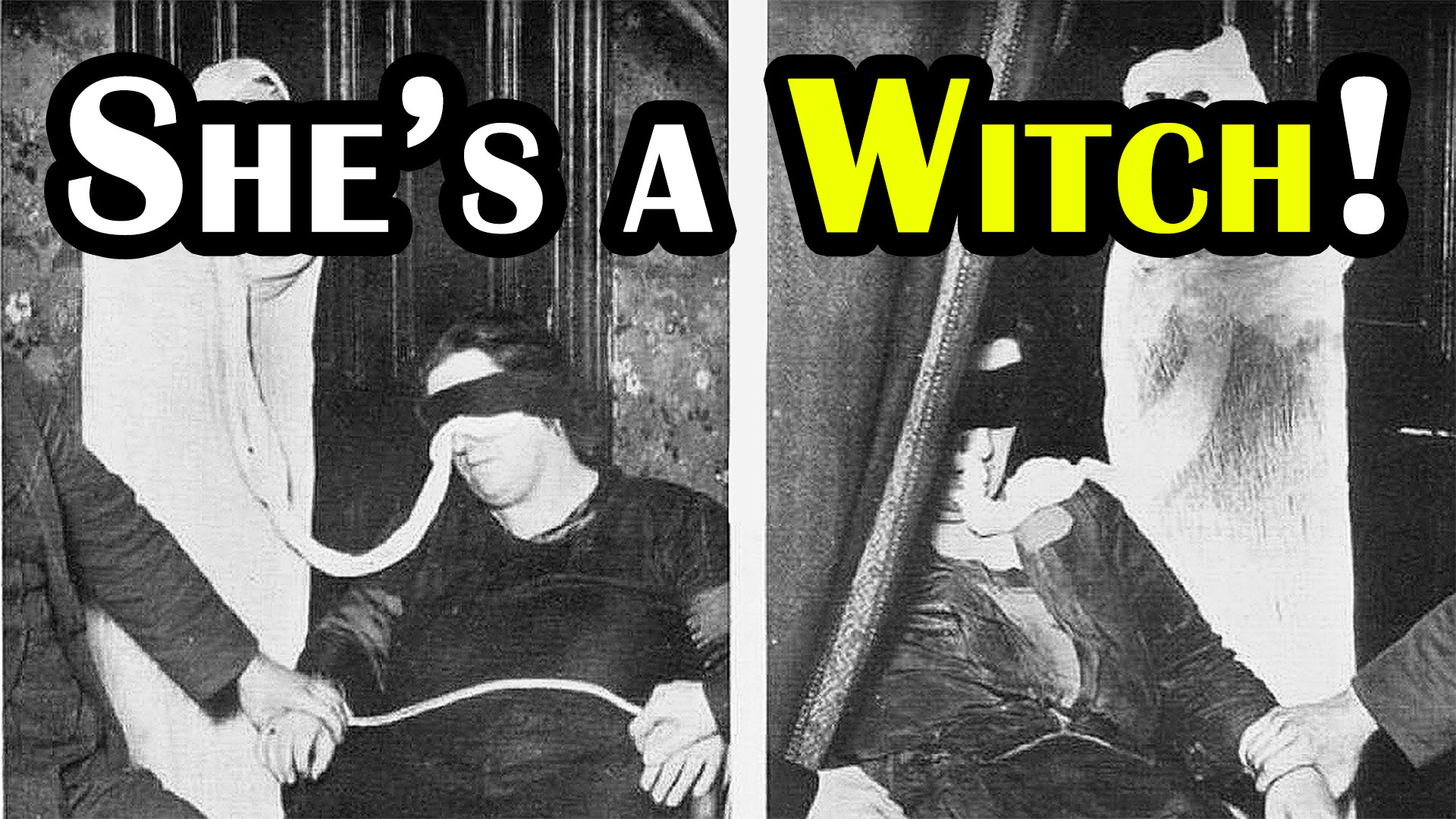
The Curious Case of the Last Witch in Britain

In the late 16th and early 17th Centuries, Europe found itself gripped by witch mania. After centuries of denying the existence of witchcraft, Church leaders incredibly came to believe that misfortunes such as plagues and crop failures were causes not by God’s will but rather individuals acting in league with the Devil. The resulting hysteria, stoked by the political turmoil of the Protestant Reformation and European Wars of Religion, resulted in thousands of people – most of them women – being arrested, tortured, tried,  and executed for witchcraft. In Britain alone, between 1560 and 1700 513 people were put on trial for witchcraft, with 112 being convicted and executed. These convictions were based on a series of Witchcraft Acts passed by Parliament, the first being introduced in 1542 under King Henry VIII and the last in 1604 by King James I, himself a noted demonologist and witch-hunting enthusiast. But by the end of the 17th Century the hysteria had mostly died down, with the last execution for witchcraft taking place in Devon in 1685 and the last conviction in Leicester in 1717. In 1735, Parliament passed the last of the Witchcraft Acts, which rather than making witchcraft itself a crime, made it unlawful to:

“…pretend to exercise or use any kind of Witchcraft, Sorcery, Inchantment [sic], or Conjuration, or undertake to tell Fortunes, or pretend, from his or her Skill or Knowledge in any occult or crafty Science, to discover where or in what manner any Goods or Chattels, supposed to have been stolen or lost, may be found…”

This Act effectively brought the era of witch hunting in Britain to a close. However, like many outdated pieces of legislation, the Witchcraft Act of 1735 remained on the books for more than 200 years, obscure and forgotten, until 1941, when, in the dark depths of the Second World War, it suddenly reemerged into the public consciousness. This is the strange tale of Helen Duncan, the last person in the UK to be jailed for witchcraft.

Victoria Helen McCrae was born on November 25, 1897 in Callander, Scotland to Archibald McFarlane, a roof slater, and Isabella Rattray. From an early age Helen proved to be a strange and difficult child, her habit of getting into fistfights earning her the nickname “Hellish Nell”. She also became known for falling into hysterical trances, uttering prophecies, and claiming to see and hear spirits, much to the dismay of her strict Presbyterian parents. At age 16, Helen became pregnant out of wedlock and was forced to leave her family home. She moved to Dundee, where she worked for a time at a jute mill. In 1914, following the outbreak of the Great War she applied for munitions work, but was diagnosed with tuberculosis and sent to a sanatorium to recover. Upon release she worked at a bleach factory and as an auxiliary at the Dundee Royal Infirmary, where in 1916 she met and married Henry Duncan, a cabinetmaker who had been invalided from the Front with rheumatic fever.

Life for the young couple was grim. Over the next 10 years Helen would become pregnant 12 times, from which only 6 children would survive. Henry soon became too ill to work, leaving Helen, racked with hypertension, diabetes, kidney trouble, and stomach pains, to provide for the family. But a potential solution to their problems soon emerged. Henry spent much of his time at home reading books on spiritualism, and eventually he convinced his wife to put her natural psychic abilities to the test. And so, in 1926, Helen Duncan set up shop as a spiritualist medium.

While individuals claiming the ability to speak to the dead have existed for all of human history, the modern spiritualist movement is a much more recent phenomenon, tracing its origins only as far back as 1848. In March of that year, two teenage sisters, Margaret and Kate Fox of Hydesville, New York State, claimed to be able to communicate with spirits via faint rapping sounds, heard in response to tapping or snapping their fingers. Connecting these rappings with letters of the alphabet, the Fox Sisters identified the spirit as belonging to one Charles B. Rosna, a travelling peddler who had been murdered by the house’s previous owner and hidden in the cellar. While a search of the cellar revealed no human remains, Margaret and Kate’s older sister, Leah, recognized the commercial potential of the girl’s abilities and became their manager, taking them on a nationwide tour financed by showman P.T. Barnum. Their act was a sensation, kickstarting a worldwide craze for psychic performances and seances. Famous mediums like Daniel Douglas Home [note: pronounced Hume] became wealthy superstars, while private seances became all the rage in parlours around the world. While in 1888 the Fox Sisters admitted that their abilities were a fraud – they had produced the rappings themselves by clicking their toe joints – it was already too late. Spiritualism had taken the world by storm, gaining such illustrious adherents as Emperor Napoleon III, H.G. Wells, T.E. Lawrence, and even Sir Arthur Conan Doyle, creator of Sherlock Holmes.

Two major developments helped spur the worldwide fascination with Spiritualism, the first, ironically, being recent, seemingly miraculous developments in science and technologies. If mankind could peer into the human body with x-rays or communicate long distances via telephone or radio, the spiritualists reasoned, then why not communicate with the spirit world? The other major catalyst was the Great War and the subsequent Spanish Influenza pandemic, which combined killed more than 100 million people worldwide. Spiritualism, with its promise of direct, tangible communication with deceased loved ones, offered greater comfort to millions of the bereaved than the comparatively vague doctrines of traditional religion. The practice became especially popular amongst military personnel, to the degree that in 1941 the Royal Navy recognized spiritualism as a legitimate creed and allowed sailors to perform seances while at sea. Thus, when Helen Duncan began practicing in 1926, she found a ready audience.

Duncan’s seances were typical of the movement. Seated in a darkened room, tied to a chair or enclosed in a wooden cabinet, she would slip into a trance and manifest all manner of ghostly apparitions before her stunned onlookers, including rappings, disembodied voices, music, or even full-fledged figures of people – including her recurring spirit helpers, a grown man named Albert and a little girl named Peggy. Duncan’s particular speciality was the production of ectoplasm, a mysterious white substance said to be made of psychic energy that would emanate from the mouth, nose, or ears of certain mediums, sometimes forming itself into faces or other shapes. Charging 25 Pounds a seat – a considerable sum in those days – Helen and Henry quickly found their fortunes reversed, and were soon able to afford a house in a fashionable suburb of Edinburgh.

But this early success was not to last, for Duncan soon came under the scrutiny of debunkers and the local authorities. In 1928 photographer Harvey Metcalfe took photos at one of her seances which revealed the “ectoplasm” to be nothing but cheesecloth and newspaper, while in 1931 she came to the attention of Harry Price of the National Laboratory of Psychical Research, who set out to expose her as a fraud. While the NLPR had been founded to promote Spiritualism and its members adhered to its core tenets, they believed that the practice had been overrun with quacks and fraudsters and sought to separate the genuine mediums from the false. On a number of occasions Price attended Duncan’s seances to collect samples of ectoplasm, which was invariably found to consist of cheesecloth, wood pulp, or egg whites. On another occasion Price convinced her to swallow blue dye to rule out that she was simply regurgitating her ectoplasm. According to some reports she subsequently failed to produce any ectoplasm, while according to others it came out white as before. But when Price tried to X-ray Duncan’s body to discover where she was hiding her emanations, she erupted into hysterics and had to be restrained by her husband. In his final report, Price concluded that Duncan was definitely a fraud, citing the testimony of a Miss Mary McGinlay, who had served as her maid in London:

“After a sance [sic], Mrs Duncan would get me to wash out a length of muslin. It had a rotten smell. She would give it to me just as she had used it and then it would be much stained and smelly.”

Despite this, demand for Duncan’s services continued to grow, though this increasing popularity brought with it even greater scrutiny. During a seance in Edinburgh on January 6, 1933, Duncan caused an apparition of Peggy, her spirit helper, to appear. Suddenly, a sitter named Esther Maule leapt up, grabbed the figure, and turned on the lights, revealing the apparition to be nothing more than a doll sewn from a stockinette vest. The police were called, and on May 11 Duncan was convicted of fraudulent mediumship by the Edinburgh Sheriff Court and fined 10 Pounds. But this would not be Helen Duncan’s last run-in with the law, as her curious profession would soon run afoul of wartime secrecy and paranoia.

During a seance in Portsmouth in late November 1941, Duncan manifested the figure of a young sailor, who claimed to have died aboard the battleship HMS Barham when she was sunk in the Mediterranean. This pronouncement stunned two naval officers in attendance, for HMS Barham had indeed been sunk just days before on November 25, torpedoed by German submarine U-331 with the loss of 861 men. But fearing that the news would damage civilian morale, the Admiralty had decided to only inform the crew’s immediate next of kin, and would not announce the sinking to the public until two months later. The two officers reported what they had seen, and an investigation was launched to determine how this middle-aged Scottish medium had come by such classified military information.

Over the next year Military Intelligence kept a close eye on Helen Duncan. Then, on January 19, 1944 police raided one of her seances in Portsmouth, with officers attempting to prevent ectoplasm issuing from her mouth before placing her and three attendees under arrest. Initially Duncan was charged under the 1824 Vagrancy Act, section IV of which states:

“And be it further enacted, That every Person committing any of the Offences herein-before mentioned, after having been convicted as an idle and disorderly Person; every Person pretending or professing to tell Fortunes, or using any subtle Craft, Mean, or Device, by Palmistry or otherwise, to deceive and impose on any of His Majesty’s Subjects.”

However, the authorities soon discovered the obscure 1735 Witchcraft act, and Duncan was duly charged with two counts of conspiracy to contravene the Act, two counts of obtaining money under false pretences, and 3 counts of public mischief. Also charged were Ernest and Elizabeth Homer, who ran the Portsmouth Psychic Centre, and Frances Brown, Duncan’s agent who arranged and managed her clients. The seven-day trial at London’s Old Bailey courthouse caused a minor media sensation, with several prominent spiritualist experts being called as witnesses for the defence. But in the end the Prosecution had little trouble convincing the jury of its case, which held that:

“…the whole performance was an elaborate pretence, a fraudulent performance, a mere imposition on human credulity…[and] a pretence that so-called materialisations, which were in fact produced by means of fraudulent devices and apparatus, were of a different nature altogether.”

Arthur Charles West, the Portsmouth Chief of Police, was even harsher in his evaluation:

“This is a case where not only has she attempted and succeeded in deluding confirmed believers in Spiritualism, but she has tricked, defrauded and preyed upon the minds of a certain credulous section of the public who have gone to these meetings in search of comfort of mind in their sorrow and grief. I can only describe this woman as an unmitigated humbug who can only be regarded as a pest to a certain section of society.”

When the jury returned with a guilty verdict on the first count, the judge dismissed them without hearing verdicts on the six others. Duncan was sentenced to 9 months and Frances Brown to four months in prison, while the Homers were Bound Over – a practice equivalent to being released on bail. Strangely, Duncan was denied the customary right to appeal to the House of Lords, leading her to cry out in court: “I have done nothing! Is there a God?”

The absurdity of the conviction was not lost on Prime Minister Winston Churchill, who following the trial wrote following memo to Home Secretary Herbert Morrison

 “Let me have a report on why the Witchcraft Act, 1735, was used in a modern Court of Justice. What was the cost of this trial to the State, observing that witnesses were brought from Portsmouth and maintained here in this crowded London, for a fortnight, and the Recorder kept busy with all this obsolete tomfoolery, to the detriment of necessary work in the Courts?”

Helen Duncan served her nine month sentence in London’s Holloway Prison, where fellow prisoners and staff reportedly lined up for seances. She was released on September 22, 1945, and despite promising the court to stop practicing spiritualism, soon resumed her old practice. In November 1956 police raided a seance in Nottingham and arrested her for fraud. While she was released soon after, five weeks later on December 6, 1956, Helen Duncan passed away at the age of 59.

To this day, controversy surrounds the reason for the courts’ decision to arrest and try Helen Duncan under the 1735 Act. What is known is that none of the authorities involved actually believed that Duncan had psychic powers. According to historian Graeme Donald, even her supposedly inexplicable knowledge of HMS Barham’s sinking was not as mysterious as it seems:

“The loss of HMS Barham… was indeed kept quiet for a while, but letters of condolence were sent out to families of the 861 dead, asking them to keep the secret until the official announcement. So, allowing for perhaps 10 people in each family, there were about 9,000 people who knew of the sinking; if each of them told only one other person, there were 20,000 people in the country aware of the sinking, and so on – hardly a closely guarded secret. In short, news of the sinking spread like wildfire; Duncan simply picked up the gossip and decided to turn it into profit.”

Furthermore, upon her arrest in 1944 Duncan was found to have in her possession a naval hat band bearing the name of HMS Barham. However, after 1939 Royal Navy hat bands bore only the letters “HMS” and not the name of the ship, further indicating that Duncan had heard gossip of the sinking around Portsmouth and prepared props for her seance beforehand.

The likeliest motivation for Duncan’s arrest was the secrecy surrounding the impending D-Day landings, with military authorities fearing that if Duncan overheard any classified information she could reveal it in one of her seances. The 1735 Witchcraft Act was therefore simply the most expedient means of locking her up until after the landings had taken place. Consequently, there have been calls in recent years for Duncan’s conviction to be overturned, with the Parliament of Scotland receiving a 200-signature petition in February 2008 calling for her to be granted a full pardon. While the petition was eventually rejected, Duncan’s advocates continued to call for justice.

While Helen Duncan was the last person to be imprisoned under the Act, she was not the last to be convicted under it. That dubious honour belongs to Jane Yorke, who was arrested on the10th of July 1944 after claiming to have contacted the non-existent dead brother of an undercover police officer. Her prosecution was delayed until the verdict of Helen Duncan’s trial was heard, whereupon she was convicted but only Bound Over for three years on account of her advanced age of 72. Seven years later, the Witchcraft Act of 1735 was finally  overturned by the Fraudulent Mediums Act of 1951. For the first time in more than 400 years, witchcraft was no longer a crime in the United Kingdom. In 1954, Pagan Witchcraft, better known as Wicca, was officially recognized as a religion by Parliament.

If you liked this article, you might also enjoy our new popular podcast, The BrainFood Show (iTunes, Spotify, Google Play Music, Feed), as well as:

Expand for References

Johnson, Ben, Helen Duncan, Scotland’s Last Witch, Historic UK, https://www.historic-uk.com/HistoryUK/HistoryofScotland/Helen-Duncan-Scotlands-last-witch/


Sugar, Bert & The Amazing Randi, Houdini: His Life and Art, Grosset and Dunlap 1976


Witchcraft Act 1735, https://engole.info/witchcraft-act-of-1735-6/


Witchcraft, UK Parliament, https://ift.tt/Y1TUJgE


An Act for the Punishment of idle and disorderly Persons, and Rogues and Vagabonds, in that Part of Great Britain called England, https://www.legislation.gov.uk/ukpga/1824/83/pdfs/ukpga_18240083_en.pdf


Hellish Nell: Witch-hunt That Led to Capture of Fake Medium, The Scotsman, February 24, 2009, https://www.scotsman.com/news/hellish-nell-witch-hunt-led-capture-fake-medium-2444143


McSmith, Andy, Toil and Trouble: the Last Witch? The Independent, February 29, 2008, https://www.independent.co.uk/news/uk/this-britain/toil-and-trouble-the-last-witch-789353.html


Mantel, Hilary, Unhappy Medium, The Guardian, May 3, 2001, https://www.theguardian.com/books/2001/may/03/londonreviewofbooks


MacPherson, Hamish, The Truth About the UK’s Last Witch Helen Duncan, The National, May 8, 2018, https://ift.tt/QAxoKUq

The post The Curious Case of the Last Witch in Britain appeared first on Today I Found Out.


from Today I Found Out
by Gilles Messier - December 06, 2022 at 01:03AM
Article provided by the producers of one of our Favorite YouTube Channels!
-

Monday, December 5, 2022

Review: Turkey Creek Snacks Cheddar Bomb


These crunchy cheese curls had a very bright orange color, with pieces of various widths that had less kinks in their shapes than Crunchy Cheetos and most other similar snacks. ...

from Taquitos.net Snack Reviews
by December 05, 2022 at 06:12AM

Sunday, December 4, 2022

Can You Really Dissolve a Human Body in Acid Like in Breaking Bad

In the second episode of the acclaimed television series Breaking Bad, high school chemistry teacher-turned-drug kingpin Walter White and his accomplice Jesse Pinkman find themselves in a rather sticky situation. Having just killed two drug dealers who kidnapped and forced them to cook methamphetamine at gunpoint, the pair must now find a way to dispose of the bodies. Drawing on his extensive knowledge of chemistry, Walt comes up with a cunning plan: dissolve the bodies in hydrofluoric acid. While Walt steals the requisite chemicals from his school lab, he sends Jesse to find a suitably large container to dissolve the bodies in, specifying that the container must be made out of polyethylene plastic. Unfortunately, Walt fails to explain the reasoning for this choice, and after failing to find a large enough container, Jesse simply places one of the bodies in a regular bathtub, pours the acid over it, and calls it a day. This turns out to be a mistake, for hours later the ceiling suddenly collapses in a spray of acid and gory pink chunks of flesh, the acid having dissolved not only the body but the enamelled-metal bathtub and the floor beneath it. Whoopsa-doodle…

While the show’s creators have claimed that the chemistry in the show is as accurate as they could make it, they have also admitted to fudging the truth in places to prevent viewers from trying Walt and Jesse’s chemical antics at home. So, just how realistic is the dynamic duo’s plan for dissolving a body? Can Hydrofluoric acid actually reduce 80 kilograms of flesh and bone to a pink paste within hours?

Alas for all you aspiring drug kingpins out there, the answer is no. Indeed, it is curious that an expert chemist like Walter White would choose hydrofluoric acid as his corporeal solvent – not only because this chemical is particularly ill-suited to the task of dissolving human flesh, but because it so dangerous that Walt and Jesse were lucky not to have wound up dead themselves.

Hydrofluoric acid or HF consists of a fluorine atom bonded to a hydrogen atom and, like all acids, will dissociate into its component ions when diluted in water. Because fluorine is one of the most reactive elements on the periodic table, hydrofluoric acid readily etches glass and silicon and will dissolve most metals except for nickel, gold, platinum, or silver; and most plastic except for polyethylene, teflon, natural rubber, and neoprene – so Walt was at least right on that front. Yet despite this corrosiveness, hydrofluoric acid is not, strangely enough, considered a strong acid. This is because the formal definition of a “strong acid” is one which completely dissociates when diluted in water, releasing large amounts of hydrogen ions. Indeed, the term “pH”, used to denote the strength of acids and bases, stands for “potential of hydrogen.” Because fluorine is so reactive, it holds tightly onto its hydrogen ion and dissociates only partially in water, technically making it a weak acid. The upshot of this rather confusing chemical terminology is that when it comes to acids, “strong” does not necessarily mean “corrosive,” since the corrosiveness of an acid depends not on its hydrogen but of the other, negatively-charged ion. Indeed, the strongest acids known to science, the carborane superacids, are millions of times stronger than concentrated sulphuric acid, but will not attack organic tissue.

…and, as it turns out, neither will hydrofluoric acid. In the 10th episode of the 11th season of the Discovery Channel series Mythbusters, hosts Adam Savage and Jamie Hyneman teamed up with Breaking Bad creator Vince Gilligan to investigate some of the show’s chemical claims, including the feasibility of dissolving a body in hydrofluoric acid. To test this myth, the Mythbusters placed the carcass of a pig in an enamelled cast-iron bathtub, poured hydrofluoric acid over it, and waited. And waited. And waited. Disappointingly, even after several hours, the pig carcass remained completely intact, with not a hint of the chunky pink goo from the television series. Nor did the enamel tub show any signs of erosion. At first glance this seems strange, given the extreme reactiveness and corrosiveness of fluorine. However, fluorine is so reactive that when dissolved in water, it tends to bond strongly with other elements, greatly reducing its corrosive power and making it all but useless for disposing of bodies. Indeed, hydrofluoric acid is far more dangerous to the living than to the dead. Readily absorbed through the skin or through the lungs as a vapour, hydrofluoric acid produces severe chemical burns that are initially painless and do not become apparent until a day or so after exposure. But as nasty as that is, it gets much, much worse, for once inside the body hydrofluoric acid becomes an insidious poison, aggressively leaching calcium out of the bones and other tissues. Unfortunately, calcium just happens to be used by the body to signal muscle cells – including those of the heart – to contract. Thus, had Walt and Jesse accidentally absorbed a large enough dose of acid through their skin or lungs, they would likely have died of cardiac arrest several hours later and the whole series would have been considerably shorter.

So, if not hydrofluoric acid, what, then, could Walt and Jesse have used to carry out their nefarious deed? Surprisingly, some of the most effective chemicals for dissolving organic tissue are conveniently some of the easiest to obtain – such as sulphuric acid, commonly found in car batteries. Sulphuric acid or H2SO4 is, unlike HF, both a strong and highly corrosive acid. A powerful hydrolyzing agent, it aggressively dehydrates organic compounds such as carbohydrates and proteins, stripping them of their hydrogen and oxygen and leaving carbon behind. In one classic classroom demonstration, concentrated sulphuric acid is added to a beaker of ordinary white sugar, unleashing a violently exothermic reaction that released hot steam and sulphur oxides and leaves behind a spongy black mass composed of nearly pure carbon. Sulphuric acid is also better at dissolving the calcium apatite in animal bones than other chemicals. For these reasons, sulphuric acid has long been a favourite tool of murderers looking to make their victims disappear without a trace. One infamous case was that of George-Alexandre Sarret, a French lawyer and con artist who in the 1920s carried out an elaborate insurance scheme with the help of two of his lovers, sisters Catherine and Philomène Schmidt. The scheme involved the sisters marrying unhealthy men, on whom Sarret would take out large life insurance policies. A third accomplice, Louis Chambon-Duverger, would pose as the husbands and undergo the requisite medical examination for the insurance policies to be approved. The husbands would then be killed with poison – their ill health preventing a criminal investigation – and the spoils divided up among the conspirators. While the scheme worked, in 1925 Sarret decided that Chambon-Duverger was getting too greedy, and murdered both him and his mistress, Noémie Ballandraux, dissolving their bodies in a vat of sulphuric acid to eliminate the evidence. The crime went unsolved for nearly six years, until in 1931 Catherine Schmidt was arrested for committing another insurance fraud and confessed to her previous crime. Sarret was arrested, tried, convicted for murder, and sentenced to death, being executed by guillotine on April 10, 1934. And for more on the sordid history of this infamous execution device, please check out our video  The Last Guillotining Execution…in 1977 on our sister channel Highlight History.

Though Sarret was eventually caught and executed, the effectiveness of his chemical disappearing act would inspire another criminal across the English Channel. Born in 1909 in Stamford, Lincolnshire, John Haigh began his criminal career in the mid-1930s by posing as a solicitor and selling fraudulent stock shares – purportedly from former deceased clients – at below-market rates. However, due to a spelling error on his letterhead, he was soon caught and sentenced to four years in prison for fraud. Upon his release, Haigh vowed to never again leave a victim alive to accuse him. In 1940, Haigh ran into a former employer, William McSwan, at a pub and was soon introduced to McSwan’s parents, Donald and Amy. William collected rent from several properties owned by his parents, and Haigh soon grew envious of his wealth and lifestyle. So, on September 6, 1944, Haigh lured William McSwan into a basement, hit him over the head with a lead pipe, and – inspired by the case of George-Alexandre Sarret – dumped his body in a 45-gallon oil drum of concentrated sulphuric acid. The body took two days to dissolve, whereupon Haigh poured what remained down a manhole. Haigh then went to McSwan’s parents and informed them that William was hiding out in Scotland in order to avoid military service. Over the following year Haigh took over rent collection from William McSwan, but when the war ended and his parents began to wonder why their son had not returned, Haigh decided to kill them as well. And so, on July 2, 1945, Haigh lured Donald and Amy McSwan into a basement, clubbed them over the head, and dissolved their bodies in acid. He then stole their pension cheques, sold their rental properties for £8000, and moved into the Onslow Court Hotel in Kensington.

While Haigh should have been set for life, he was also an inveterate gambler and soon found himself back in dire financial straits. So, in 1947, he befriended the couple Archibald and Rose Henderson and on February 12 lured them into a rented workshop, shot them dead, and – I hope you’re beginning to see a pattern here – dissolved their bodies in sulphuric acid. He then forged a will with their signatures and sold their possessions for another £8000.

Haigh’s last victim was Olive Durant-Deacon, the 69-year-old widow of wealthy solicitor John Durant-Deacon, whom Haigh befriended on the pretence of being an engineer interested in Olive’s idea for artificial fingernails. On February 18, 1949, the same macabre dance repeated itself as Haigh lured Durant Deacon to his workshop, shot her dead, and dissolved her body in acid. This time, however, Haigh would fall victim to his own haste and chequered past. Two days after the murder, one of Durant-Deacon’s friends reported her missing. The police soon discovered Haigh’s long history of fraud and theft and searched the workshop, where they discovered a pile of incriminating evidence, including a dry-cleaning receipt for Durant-Deacon’s Persian wool coat, which Haigh had removed before dissolving her body. Even worse, unlike previous workshops Haigh had rented for his nefarious deeds, the one used to kill and dissolve Olive Durant-Deacon had no floor drain, so Haigh simply dumped her liquefied remains over a rubble pile behind the property. An examination of the pile revealed 28 pounds of human body fat, part of a human foot, gallstones, and part of a denture that was eventually identified as belonging to Olive Durant-Deacon. Haigh, dubbed by the press the “Acid Bath Murderer”, was arrested, tried, and convicted of murder, meeting his fate at the end of a hangman’s rope in August 10, 1949.

In more recent years, the Sicilian Mafia has become infamous for its “lupara Bianca” or “white shotgun” murders, in which victims mysteriously disappear without a trace. According to former hitman Filippo Marchese, who worked under mafia boss Vincenso Chiaracane until his own death in 1982, this is accomplished using concentrated sulphuric acid, which he claimed could completely liquefy a corpse in as little as 15 minutes. However, given the two previous examples we have covered, this claim seems rather dubious, and in 2011 a group led by researcher Massimo Grillo at the University of Palermo set out to test the former mafioso’s claims. Using pigs as an analogue for humans, the team placed various cuts of tissue and bone in different concentrations of sulphuric acid and timed how long it took for them to dissolve. Unsurprisingly, this took far longer than Marchese had claimed – on the order of two days with concentrated acid. By diluting the acid in water, the researchers were able to cut this time down to 12 hours for muscle and cartilage, but it still took two days for the bone to dissolve – and even then the process left behind large, fragile bone fragments with the consistency of shortbread which still had to be pulverized by hand. Another team at the University of Milan obtained similar results, with lead researcher Cristina Cattaneo concluding:

“…it is conceivable that a possible attempt to destroy an entire body… is a thoroughly different task from destroying small samples.”

For a more effective means of destroying evidence, you are better off moving to the other end of the pH scale and using a strong alkali – specifically sodium or potassium hydroxide – better known as lye. Lye is also a powerful hydrolyzing agent, with the added benefit that it is more effective than acids at breaking down the protein keratin that makes up hair and fingernails. Indeed, this is why it is commonly sold for clearing clogged drains. Furthermore, it is much easier to obtain lye in large quantities  without arousing suspicion – for example, for making homemade soap – whereas strong acids are more heavily regulated since they can be used to manufacture explosives. Indeed, immersion in lye is the preferred body-disposal method for Mexican drug cartels, who rather darkly refer to the process as “making pozole” – a traditional Mexican meat stew – while highway departments, hospitals, and universities use lye-based “digesters” to dispose of roadkill, laboratory animals, human cadavers donated for medical research, and other biological waste. Heated to 100 degrees Celsius – the boiling point of water – a concentrated lye solution can dissolve a body in as little as 2 hours. Pressurizing the digester vessel allows the temperature to be raised even higher, further accelerating the process. In the end, all that remains is a light brown liquid composed mainly of water and amino acids and a handful of crumbling bone fragments – both of which can be safely flushed down a regular drain.

The efficiency of this process has led to its emergence as a green alternative to cremation for disposing of human corpses. Known as “aquamation,” the process consumes only one-eighth of the energy and emits one-tenth the greenhouse gasses as traditional cremation, with the added bonus of not emitting toxic heavy metals – such as mercury from dental fillings – into the environment. The bone fragments that remain can be pulverized in a machine called a cremulator, producing a fine white powder that can be placed in an urn, buried, or scattered in place of traditional ashes. First patented in 1888, aquamation was not offered commercially until the 1980s – and then only for disposing of pets. Only recently has it begun to gain traction within the human funeral industry, with Minnesota being the first US state to legalize the process in 2003. Ten more states soon followed, the most recent being California in 2020. However, the funeral industry is very resistant to change, and 11 states have passed legislation banning aquamation outright. It remains to be seen whether the process will ever catch up to or supplant burial and cremation as the dominant method of body disposal in the United States.

But while dissolution in lye is by far the easiest and most effective way of disposing of a body, it isn’t that interesting to look at. But thankfully for murderers and mafiosos with a taste for the dramatic, there is a more exciting option: piranha solution. Mainly used in analytical laboratories for cleaning traces of organic materials off glassware or silicon wafers, piranha solution is composed of concentrated hydrogen peroxide or H2O2 mixed with sulphuric acid. As covered in our previous video The German Rocket Fighter that Dissolved its Pilots Alive, concentrated hydrogen peroxide – also known as High Test Peroxide or HTP – is so reactive and corrosive it can strip flesh from bone in seconds. Mixing it with sulphuric acid combines the oxidation of the former with the hydrolization of the latter, producing a powerful one-two chemical punch. So effective is piranha solution at dissolving organic tissue that a piece of meat and bone lowered into it will disappear almost as soon as it hits the surface. This deadly efficiency was dramatically illustrated by the Mythbusters, who followed up their hydrofluoric acid test by immersing another pig carcass in piranha solution. This time the solution reacted immediately and violently, producing copious quantities of heat and steam and reducing the pig to a dark-green oily soup within minutes.

But while quick, efficient, and dramatic, piranha solution suffers from the same problem as sulphuric and other strong acids: the sale of its ingredients is tightly regulated, creating a highly-incriminating paper trail. Indeed, even in cases where a criminal managed to successfully make a body disappear, this paper trail is often enough to crack the investigation wide open. Take the case of American chemist Larissa Schuster, who in 2003 along with her lab assistant James Fagone murdered her ex-husband Tim Schuster and dissolved his body in a barrel of hydrochloric acid. Police investigators quickly uncovered receipts for the purchase of the acid and the rental of a storage unit, a search of which turned up the barrel containing Tim Schuster’s remains. In 2008, Larissa Schuster was convicted of first degree murder and sentenced to life in prison without parole.

In conclusion, for all its chemical verisimilitude, Breaking Bad was dead wrong about dissolving bodies. Not only is hydrofluoric acid possibly the worst choice for the job, but even the most corrosive chemicals like sulphuric acid and sodium hydroxide can take hours or even days to get the job done – and even then they often leave readily-identifiable fragments – and an incriminating paper trail of suspicious purchases – behind. So if you ever find yourself looking for the best way to dispose of a body, take a moment to reflect on how you got to this place. Chances are, you have much bigger problems to deal with.

If you liked this article, you might also enjoy our new popular podcast, The BrainFood Show (iTunes, Spotify, Google Play Music, Feed), as well as:

Expand for References

Palmer, Brian, Soluble Dilemma: How Long Does it Take to Dissolve a Human Body? Slate, December 10, 2009, https://slate.com/news-and-politics/2009/12/how-long-does-it-take-to-dissolve-a-human-body.html

Burks, Raychelle, The Acid (Bath) Test, Chemistry World, June 16, 2017, https://www.chemistryworld.com/opinion/can-acid-dissolve-a-body/3007496.article

Helmenstine, Anne Marie, Dissolving a Body in Hydrofluoric Acid, as on “Breaking Bad”, ThoughtCo, June 29, 2019, https://www.thoughtco.com/hydrofluoric-acid-breaking-bad-3976039

Helmenstine, Anne Marie, List of the Strong Acids and Key Facts, ThoughtCo, September 1, 2021, https://www.thoughtco.com/list-of-the-strong-acids-603651

Helmenstine, Anne Marie, What is the Strongest Acid? ThoughtCo, May 5, 2019, https://www.thoughtco.com/what-is-the-strongest-acid-604314

Helmenstine, Anne Marie, How to Make Chemical Piranha Solution, ThoughtCo, June 4, 2020, https://ift.tt/ajfwTzc

Atkin, Emily, A Green Alternative to Cremation: Dissolving Your Corpse in Water and Lye, Mother Jones, June 17, 2018, https://www.motherjones.com/environment/2018/06/a-green-alternative-to-cremation-dissolving-your-corpse-in-water-and-lye/

Wilson, Joseph, The History of Alkaline Hydrolysis, https://www.goodfuneralguide.co.uk/wp-content/uploads/2013/09/History-of-Alkaline-Hydrolysis.pdf

Wolchover, Natalie, How Long do Mafia Victims Take to Dissolve in Acid? LiveScience, February 25, 2011, https://www.livescience.com/33074-mafia-victims-dissolve-sulfuric-acid.html

Campbell, Hayley, A New Way to Dispose of Corpses – With Chemistry! WIRED, March 27, 2018, https://www.wired.com/story/alkaline-hydrolysis-liquid-biocremation/

Holohan, Meghan, How Hard is it to Dissolve a Body? Mental Floss, April 6, 2011, https://www.mentalfloss.com/article/27441/how-hard-it-dissolve-body

The post Can You Really Dissolve a Human Body in Acid Like in Breaking Bad appeared first on Today I Found Out.


from Today I Found Out
by Gilles Messier - December 04, 2022 at 09:39PM
Article provided by the producers of one of our Favorite YouTube Channels!
-

How One of the Most Famous Battles in American History Gave Birth to the American Railroad and Shaped a Continent

If you go walking through the parks and leafy neighbourhoods of Quincy, Massachusetts, you may stumble upon an unusual set of ruins. At the end of a quiet cul-de-sac, a set of crumbling granite rails rise up a shallow hill into the woods, their end flanked by a pair of carved stone obelisks. While unimpressive at first glance, these ruins mark the humble beginnings of a vital technology that helped drive the industrial revolution and shape the destiny of the North American continent. This is the story of the Granite Railway, North America’s first commercial railroad.

The story of this pioneering engineering achievement begins with a famous battle. On June 13, 1775, at the start of the American Revolutionary War, the colonial forces defending the city of Boston learned that the besieging British forces planned to capture and fortify the hills along the Charlestown Peninsula. This would give them a commanding position overlooking Boston Harbour. In response, 1,200 colonial troops under the command of William Prescott moved under the cover of darkness and occupied Bunker Hill and the neighbouring Breed’s hill. On the morning of June 17, the British forces launched a series of frontal attacks against the colonial positions, but were twice beaten back by savage resistance. Only after the colonial troops ran out of ammunition did the British manage to capture the hills. But the cost of victory was high: British casualties, numbering 1,054, were more than twice those of the colonials. This was a rude awakening for the British, offering a foretaste of the spirited resistance they would encounter throughout the conflict. Though mostly fought on Breed’s hill, the engagement would go down in American history as the Battle of Bunker Hill, and remains a seminal episode in the American Revolution.

In June of 1823, a group of prominent Bostonians led by lawyer William Ticknor formed the Bunker Hill Monument Association to commemorate the battle’s 50th Anniversary. After securing $10,000 from philanthropist Amos Lawrence and purchasing 15 acres of land on Breed’s Hill, the association held a contest to find a suitable design for the monument. The winning entry, designed by architect and engineer Solomon Willard, consisted of a  221-foot-high Egyptian-style granite obelisk – the first monument of its kind in United States. But before construction could begin, Willard had first to locate a suitable source of granite from which to build his monument. After an extensive 300-mile search across New Hampshire, Maine, and Massachusetts, in 1825 Willard finally selected a site near the town of Quincy, just south of Boston. Quincy granite is unusual in that it contains exclusively alkali feldspar and dark quartz, giving it its distinctive grey-green colour.

But while the qualities of the stone were ideal, the location of the quarry presented Willard with a serious logistical challenge: how to transport blocks of stone weighing up to 6 tons across the 12 miles of swamp, forest, and farmland separating Quincy and the site of the monument in Charlestown? Initially Willard planned to wait for winter and use horse-drawn sledges to haul the blocks three miles north to the Neponset River, where barges could carry them across Boston Harbour to Charlestown. However, an associate of Willard’s, engineer Gridley Bryant, suggested a more efficient method: build a railway between the quarry and the river.

Byrant’s vision was nothing less than groundbreaking. While small railways serving mines and other industrial sites had been in use in England for decades and the first inter-city passenger railway – the Birmingham-to-Manchester – was then in the planning stages, nothing on this scale had yet been attempted in North America. Rolling on five-foot-wide wooden tracks sheathed in iron and laid on stone cross-ties, wagons with six-foot wheels would carry quarried stone three miles down a gentle incline to a new 1,200-foot wharf on the river. Steam locomotive technology had only just reached the New World, so Bryant’s wagons were pulled by horses instead. But the design of the wagons themselves was nonetheless ingenious, featuring a clever gear mechanism that allowed a six-ton stone block to be loaded and unloaded by a single worker. Bryant also introduced a number of groundbreaking innovations which soon became standard on modern railroads, including double-truck wagon suspension, turntables and railway switches for turning the wagons around, and snowplows to clear the tracks during the winter. Surprisingly, Bryant refused to patent these innovations, believing they should be for the benefit of all.

With the support of Boston merchant and philanthropist Thomas Perkins, Solomon Willard formed the Granite Railway Company to execute Bryant’s pioneering vision. But the new corporation faced numerous challenges, including stubborn resistance from legislators over granting the railway right-of-way. As Bryant later recalled:

“I awaited the meeting of our Legislature in the winter of eighteen hundred and twenty-five and six…The questions were asked: ‘What do we know about rail-roads? Who ever heard of such a thing? Is it right to take people’s land for a project that no one knows anything about? We have corporations enough already.’”

Thankfully, the vote passed by a small majority, and on April 1, 1826, the Granite Railway Company was granted its charter. The railway began operations on October 7, having taken six months and  $50,000 to complete – two thirds of which was spent on the river wharf. By this time construction on the Bunker Hill Monument had already begun, with Revolutionary War hero the Marquis de Lafayette laying the cornerstone on June 17, 1825. The completion of the Granite Railway, however, sped up construction considerably and dropped the cost of freight from $24 per cubic yard to only $5. Still, the project dragged on for another 16 years, construction frequently stopping and starting as the builders ran out of funds. At one point the Bunker Hill Monument Association was forced to sell off all but 5 acres of the monument site to keep the construction limping along, while neighbours plotted to have the half-built eyesore torn down. In the end, a highly successful fundraising campaign by Sarah Joseph Hale – editor of the Ladies’ Magazine, author of “Mary Had a Little Lamb”, and creator of Thanksgiving – carried the project over the finish line. The capstone was laid on July 23, 1842, and the monument finally dedicated on June 17, 1843 in a ceremony attended by 110 Revolutionary War veterans. Despite the considerable delays, the monument was completed more or less on budget – thanks in no small part to the considerable efficiencies granted by the Granite Railway.

Though originally built to support the Bunker Hill Monument project, the Granite Railway far outlived its intended purpose. Soon after the monument’s completion, the railway began carrying stone for the 52 other quarries which had popped up in the region, helping to make stone quarrying and carving the lifeblood of Quincy’s economy and give the town its nickname “The Granite City”. As the Granite Railway went from private to common carrier with no intervening closure, it is now widely considered to be the first commercial railroad in United States history – though not by much. On April 17, two weeks after construction began on the Granite Railway, the Mohawk and Hudson Railroad was incorporated in New York to allow passengers travelling on the Erie Canal to bypass the Cohoes Falls on the Mohawk River. When the railroad opened on September 24, 1831, its wagons were pulled not by horses or gravity but by a DeWitt Clinton steam locomotive – among the first of its kind in North America. The railroads would go on to play a central role in North American history, helping to drive the relentless expansion into the continent’s western territories.

Yet despite its humble nature, the Granite Railway continued to serve diligently for more than a century, undergoing numerous expansions and improvements such as the replacement of its original wooden rails with metal-sheathed granite. In 1830, a new 315-foot section called the Incline was built to haul stone from the Pine Ledge Quarry to the original rail line 84 feet below. Wagons ran up and down the incline on a horse-powered conveyor belt, carrying an endless stream of stone down the hill. Soon after its completion, the incline became a popular tourist attraction, with travellers including American statesman Daniel Webster and English actress Fanny Kemble eagerly paying to experience the novelty of riding up the incline by rail. Tragically, the railway was also the site of one of the first fatal rail accidents in U.S. history. On July 25, 1832, a wagon carrying four passengers including Thomas B. Achuas, a tourist from Cuba, was travelling up the incline when its tow cable snapped, sending the wagon and its occupants rolling down the track and over a 35-foot cliff. Mr. Achuas was killed instantly and the other three severely injured.

In 1871, the Granite Railway’s original right-of-way was taken over by the Old Colony and Newport Railway, which replaced the original granite tracks with modern steel rails. Steam trains could now take stone directly from the quarries to Boston without the need for barges. The Incline, however, continued to operate as before, its conveyor belt now powered by steam rather than horses. It did not cease operations until 1940, when passenger service on what was by now the West Quincy Branch of the New York, New Haven, and Hartford Railroad was also discontinued. The last quarry in the region shut down in 1963, while local freight service was abandoned ten years later, with much of the original right-of-way being incorporated into the Southeast Expressway.

The now-disused quarry pits soon filled with water and became a magnet for thrill-seeking cliff jumpers. However, such activities resulted in high rates of injury and death, spurring local authorities to take action. At first telephone poles and tree trunks were placed in the water to discourage jumpers, but these soon became waterlogged and sank below the surface, becoming invisible to jumpers and causing the casualty rate to skyrocket. Whoopsie-doodle. Finally, in 1985 the Metropolitan District Commission purchased 22 acres of former quarries to create the Quincy Quarries Reservation. The quarry pits were drained of water and filled with dirt from Boston’s massive “Big Dig” excavation project, leaving only stone outcroppings now popular among rock climbers and graffiti artists.

As for the Granite Railway itself, in the 1970s this pioneering achievement was placed on the National Register of Historic Places and designated a National Historic Engineering Landmark by the American Society of Civil Engineers, prompting efforts to preserve as much of the existing infrastructure as possible. Today, visitors to Quincy can walk along miles of parkland trails and discover vestiges of the original railway, including the original Incline, the remains of a railway trestle, a 100th-anniversary plaque from 1926, and a preserved section of track and railway switch. These remains serve as a monument to the visionary genius of Gridley Bryant and the humble origins of a technology that helped shape a continent.

If you liked this article, you might also enjoy our new popular podcast, The BrainFood Show (iTunes, Spotify, Google Play Music, Feed), as well as:

Expand for References


Quincy Quarries, Atlas Obscura, https://www.atlasobscura.com/places/quincy-quarries


Brat, Chris, Granite Railway Incline, Atlas Obscura, https://ift.tt/TxMZqko


Granite Railway, Encyclopedia Britannica, https://ift.tt/gPrmQoc


What is the Granite Railway? Grateful American Foundation, https://gratefulamericanfoundation.com/what-is-the-granite-railway/


Williams, David, America’s First Commercial Railway – Quincy Granite, Geology Writer, June 8, 2009, https://ift.tt/TExfZpC


Granite Railway, Invention & Technology Magazine, https://ift.tt/Wwz502m


Richard Trevithick, Encyclopedia Britannica, https://www.britannica.com/biography/Richard-Trevithick


George Stephenson, Encyclopedia Britannica, https://ift.tt/BmuEz9X

The post How One of the Most Famous Battles in American History Gave Birth to the American Railroad and Shaped a Continent appeared first on Today I Found Out.


from Today I Found Out
by Gilles Messier - December 04, 2022 at 01:53AM
Article provided by the producers of one of our Favorite YouTube Channels!
-

Friday, December 2, 2022

What Do Scientologists Actually Believe?

Laura A. asks: What exactly do Scientologists believe?

Oh boy, we can already tell that the comment section for this one is going to be a ton of fun, so let’s just get straight to it. The Church of Scientology has a reputation as an infamously secretive and litigious organisation that hides its inner workings far from the prying eyes of the public. As a result, we kind of expected piecing together the church’s beliefs and stance on certain social issues to be a difficult, unforgiving slog. As it turns out, this wasn’t, on the surface, the case and the church is surprisingly forthcoming about both, although some feel there’s a veneer of insincerity in much of their official writings given what often leaks about their leadership to the press. It should also be noted that, as ever with any religion, beyond controversy within the church about specific precepts in terms of the official view verses what is practiced, individuals themselves can also practice the faith in their own unique ways, so saying what exactly the church believes is even more nebulous. Those caveats out of the way, let’s dive into it, shall we? So what do Scientologists believe?

Fortunately for our research the Church of Scientology maintains a fairly strong online presence and has an official website answering common questions members of the public have about their religion and beliefs. According to these sources the church “has no set dogma concerning God” and in theory, is remarkably liberal in its approach to personal morality. How this works in practise is debatable and the reputation of the church’s sometimes alleged draconian rules and strictly hierarchical internal power structure precedes itself. Likewise, noteworthy individuals who’ve spent time with the church and since renounced the religion outright have spoken of how non-conformity is strictly punished.

That said, within Scientology there exists only a singular deity known as the Supreme Being, a nebulous figure of which there is no official description and the religion has no set idea of what constitutes the afterlife. In the words of the church itself: “Scientology seeks to bring one to a new level of spiritual awareness where one can reach his own conclusions concerning the nature of God and what lies beyond this present lifetime.”

To this end Scientology is a rarity amongst religions in that individual followers are free to worship other gods and even celebrate other religious holidays or observe the rules of another holy text if they so wish, not unlike the Ancient Romans who were widely accepting of other deities, even almost universally openly embracing them. So, for example, a Sikh Scientologist can continue to wear a turban or follow the Khlasa, a Muslim Scientologist can fast during Ramadan, a Christian Scientologist can celebrate Christmas and a Jewish Scientologist can continue to abstain from pork without it being deemed to interfere with the duties of being a Scientologist. In fact, Scientologists are specifically instructed to respect the religions of others with the Church’s own “Moral code” stating: “The way to happiness can become contentious when one fails to respect the religious beliefs of others.”

For this reason, the Church openly takes part in seasonal Christmas celebrations, going as far to sell seasonal Scientology related gifts to members of the church such as at one point selling a CD player they inexplicably peddled for $500 dollars because they call it a “Clearsound Listening System” instead of something like a Walkman.

Like other religions, there are important days Scientologists are encouraged to celebrate including March 13 (founder L. Ron Hubbard’s birthday), May 9 (the day L. Ron Hubbard’s book, “Dianetics: The Modern Science of Mental Health” was released in 1950) as well as the day the first Church of Scientology was founded in your country of residence. In addition, the church also celebrates New Years Eve on December 31st, encouraging members to use it as an occasion to reflect on personal achievements.

Now, contrary to popular opinion, Scientologists don’t worship a giant prehistoric alien called Xenu, although the Intergalactic Tormentor does seemingly play a crucial role in the Church. For anyone unfamiliar with the story of Xenu, here’s a cliff-notes version of the alleged story for your edification.

Many millions of years ago an intergalactic space dictator called Xenu killed billions of his own people by dropping them into the volcanoes of Earth and vaporising them with hydrogen bombs. The souls of these aliens survived, however, and were captured by Xenu who, for lack of a better term, brainwashed them all by forcing them to watch movies which implanted various pieces of false information such as imagery of Christ on the Cross as well as the creation stories of almost every other major world religion. Scientology posits then that the souls of these aliens, called Thetans in Scientology literature, live on and inhabit the bodies of all living things, causing both mental and physical anguish. It is the belief of Scientologists that humans can harness the legendary power of the Thetan soul inside of themselves to attain various superhuman abilities with the ultimate goal of most Scientologists being to reach the level of Operating Thetan. Upon reaching the level of Operating Thetan an individual is said to achieve a state close to godliness and, according to leaked documents will have abilities ranging from telekinesis to being able to just know when a hamburger is cooked perfectly.

All this said, the church has notably never publicly acknowledged the existence of Xenu. Further, official church documents do not claim that people will ever be given hamburger cooking superpowers and has in fact attempted to actively suppress information related to becoming an Operating Thetan or Xenu that has leaked in the past. The church notoriously also only grants this level of knowledge of the faith to people who reach the rank of OT3, a process that can cost many thousands of dollars and years of investment and devotion to the church. This is all something that stands in stark contrast to the creation stories of other world religions which are commonly known and openly taught.

Moving on from there, as it is the belief of many Scientologists that all humans are simply conduits for an immortal alien spirit, the most basic tenet of Scientology is simply to “survive”, first as an individual, then as a species and finally as a component of the universe itself. Scientologists then believe in something known as the “Eight Dynamics” which are defined as the fundamental aspects of life from an individual to a universe-wide macro level. The ultimate goal of Scientologists appears to be to understand life in relation to the Eight Dynamics and eventually reach the final, eighth level, which occurs when an individual Scientologist becomes one with the concept of infinity, simultaneously existing within all things… Or at least that’s our author’s understanding of the literature he read. This stuff is complicated and often a bit nebulous…

Moving on, which is hard when what we’re moving on from is a story about an ancient alien genocide using infinite hydrogen bombs in tandem with exploding volcanoes, how does one worship as a Scientologist? In short, there doesn’t appear to be any correct way to “worship” per se and individual Scientologists are encouraged to instead follow what it called the “Code of Honor”.

For the most part, members of the church are asked to keep in mind the Code of Honor while living their day to day lives, with this Code being fairly benign. In fact, most of the Code wouldn’t seem out of place plastered over a picture of a sunset being shared on Facebook by your grandmother. For example, the Code of Honor includes gems of wisdom like- “Never regret yesterday. Life is in you today and you make your tomorrow.”

And, “Be your own adviser, keep your own counsel and select your own decisions.”

However, some elements of the Code are altogether more, shall we say, unsettling given the reputation of the church and certain stories told by former members of how individuals are allegedly brutalised emotionally to make them more compliant. For example, an item like, “Never fear to hurt another in a just cause.”

Likewise entries from the Scientology Code of Honor like, “Never desert a group to which you owe your support,” and “Never withdraw allegiance once granted” have also caused some controversy among some.

On this note, individual Scientologists are purportedly expected to swear fealty to the Church and to allegedly sign billion year contracts when they join the Sea Org (a pseudo-military faction of the Church comprised of its most dedicated members) and that people who leave the church of their own accord have allegedly been harassed by current members for years after the fact. Although, to be fair on this one, openly leaving any religion can occasionally cause some harassment from those who are still participants. Humans are gonna human.

Whatever the case, this brings us to the issue of Suppressive Persons. “Suppressive Persons” is a somewhat vague term used by Scientologists to describe anyone who the church deems an “antisocial personality”, more or less an enemy of the church and its day-to-day operations. Anyone from Hitler to all psychiatrists make the list on this one. That said, officially the church’s position is that while it dislikes Suppressive Persons, it doesn’t necessarily bear ill-will against them. Unofficially, however the classification has been used as a scarlet letter to silence criticism and those who’ve been labelled SP’s by the church have, as noted previously, been allegedly stalked and harassed by more fanatical members of the church. A good example of this can be seen in the feature length Louis Theroux documentary, My Scientology Movie, which shows the titular documentarian being followed around by a camera crew allegedly sent to make a documentary on him by the Church. It’s all very meta.

In regards to psychiatrists, as Vice so aptly sums it up, Scientologists allegedly “really, really hate them” and have blamed the profession for everything from the death of George Washington to the 9/11 attacks. (If you’re curious, we cover what actually killed George Washington here.) The position of the church on psychiatry is perhaps no better summed up than by the fact that the church covertly co-founded a museum unimaginatively called “Psychiatry: An Industry of Death” demonising the profession.

In regards to social issues, the church is somewhat more liberal than other religions in some ways. For example, officially the church has no stance on either abortion of the use of birth control and contraceptives, stating: “The Church of Scientology does not mandate a position on these subjects. They are an individual’s personal choice and Scientology parishioners are totally free to decide for themselves.”

In addition, Scientology founder L. Ron Hubbard once made it clear to his flock that he had no interest in what they got up to in the bedroom and would no longer seek to control or limit the kind of sex individuals had. It should be noted here that, despite this, Hubbard had previously spoke out against both sexual promiscuity as well as so-called sexual deviancy, included in this homosexuality. Of course, people can grow and change, and change their minds, but those other comments still provide a bit of controversy to this day.

Regardless, in more recent years, the church has taken a far more liberal stance, stating that they don’t discriminate based on gender, sexual orientation, race or creed. To quote: “Because people are spiritual beings, gender of a minister is not an issue in Scientology. Scientology is a meritocracy. There are no “glass ceiling” limitations based on race, gender, ethnicity or similar criteria for individuals who serve as ministers or as executives in the Church’s ecclesiastical management.”

That said, this official stance has been challenged by some who’ve since left the church and it has been claimed that homosexuals are allegedly frequently abused for their sexuality and there are allegations the church has attempted to “cure” gay members. Likewise, many former female members of the church have alleged being exposed to astonishing levels of sexism and misogyny during their tenure with the church.

In the end, in theory Scientology is a remarkably pliant and liberal religion which offers and individual almost unprecedented freedom among religions to set their own moral compass as long as they strive to live a good life. In reality, however, it has been strongly alleged that this isn’t really the case in practice, with the official teachings marred by the reputation of the inner workings of the church itself. What’s the truth of any of this? We’ll leave that for discussion in the comments below as we don’t want to get sued…. Allegedly… 😉

On this note, the author of this piece, Karl Smallwood, actually tried calling the Church of Scientology to inquire about their beliefs and get some official quotes, but didn’t really get very far because the church representative spent most of the time encouraging Mr. Smallwood to visit a local church to speak to a representative in person rather than answering questions over the phone. Being an author here at TodayIFoundOut, it should be noted that this is impossible owing to being kept chained in a basement, where our glorious leader, may he reign forever, graciously gives us nutrient supplements and coffee so that we may continue our noble work of educating the world. Our author also notes he took one of the Church’s fancy online personality tests, but couldn’t access the results because the Church of Scientology would only give them out in person, and the nearest office they had was 60 miles from the basement he is kept in. While a church representative would be welcome to come to us, Mr. Smallwood notes he would not recommend this, as it’s likely said representative would find himself also chained up in the basement and recruited for the expansion of our writing team.

On the note of recruitment, it should be noted that nobody really knows how many authors we have here at TodayIFoundOut, nor how many Scientologists there are and the church itself has repeatedly been accused of massively inflating figures related to its membership. On this note, while the church claims membership in the tens of millions, more conservative estimates based on leaked information from high ranking members of the church place the number of practising Scientologists at less than 50,000. Worldwide.

The post What Do Scientologists Actually Believe? appeared first on Today I Found Out.


from Today I Found Out
by Karl Smallwood - December 02, 2022 at 12:51AM
Article provided by the producers of one of our Favorite YouTube Channels!
-

Thursday, December 1, 2022

Is Masturbation Actually Bad For You?

Choking the chicken. Shaking out the curtains. Spanking the monkey. Lone Rangering. Polishing the jewel. Shaking hands with the milkman. Celebrating Palm Sunday. Romancing the stone. These are but a few of the colourful euphemisms for what is perhaps humanity’s oldest pastime: masturbation. For much of human history, the act of piloting the Millennium Falcon with Hand Solo has been mired in controversy and taboo, with religious leaders condemning it as a sin against God and moral guardians and medical experts blaming excessive menage a moi on all manner of personal and societal ills, from impotence and infertility to criminality and madness. But, is any of this actually true? Can taking one too many self-guided tours turn your hard drive into a floppy disk, make hair grow on your palms, or even make you go blind? Well, grab your favorite slippery substance, set your browser to incognito mode, and let’s get right to it, shall we?

In much of the ancient world, dating Rosie Palms and her five daughters was simply a natural part of life, celebrated in art and fertility rituals and prominently featured in creation myths. The ancient Sumerians, for instance, believed that engaging manual override increased sexual potency for both men and women, and that the god Enki created the Tigris and Euphrates rivers by ejaculating into their dry riverbeds. Publicly rocking the casbah, however, was still generally frowned upon. For example, Ancient Greek philosopher and shit-disturber extraordinaire Diogenes was infamous for polishing his amphora on the streets of Athens, declaring:

“If only it were as easy to banish hunger by rubbing my belly.”

With the rise of Judeo-Christian religions, however, auditioning the finger puppets came to be seen in an increasingly negative light. The most commonly-cited biblical source for the prohibition of jizz solos is the story of Onan from Genesis Chapter 38:

“And Er, Judah’s first-born, was wicked in the sight of the LORD, and the LORD slew him.

And Judah said unto Onan: ‘Go unto thy brother’s wife, and perform the duty of a husband’s brother unto her, and raise up seed to thy brother.’

And Onan knew that the seed would not be his; and it came to pass when he went in unto his brother’s wife, that he spilled it on the ground, lest he should give seed to his brother.

And the thing which he did was evil in the sight of the LORD; and He slew him also.”

While Onan’s sinful act does not appear to have been masturbation, but rather most probably that of not impregnating his brother’s wife as was his sacred duty, in this case via the act of coitus interruptus – withdrawing from and ejaculating outside of one’s partner- ultimately some Jewish and Christian scholars interpreted this story as outlawing any act which resulted in the spilling of seed outside of a woman – the logic being that said seed was reserved exclusively for the act of procreation, and wasting it an affront to God’s will. As Fifth-Century bishop Epiphanius of Salamis wrote:

“They soil their bodies, minds and souls with unchastity…and they are physically corrupted because they satisfy their appetite but… by the act of Onan the son of Judah. For as Onan coupled with Tamar and satisfied his appetite but did not complete the act by planting his seed for the God-given procreation and did himself harm instead…Others endeavor to get this same filthy satisfaction not with women but by other means, and pollute themselves with their own hands. They too imitate the son of Judah, soil the ground with their forbidden practices and drops of filthy fluid and rub their emissions into the earth with their feet.

This interpretation would result in the coining of the term onanism to describe the act of polishing the crucifix – but more on that later.

As Christian thought evolved, the prohibition against thumbing one’s rosary became enmeshed in a wider crusade against the very concept of sexual pleasure itself. Early Christians living under the Romans resented the hedonistic lifestyles of their masters, and in response began to value chastity and purity as high virtues to which all Christians should aspire. Saint Paul, for instance, claimed that virgins would be the first to be saved at the Last Judgement. Being something of a realist, however, he also acknowledged that if one could not remain chaste, marriage was the next best thing, arguing: “Better to marry than to burn.”

Saint Jerome, who famously fled into the wilderness to escape earthly temptations, took a more hard-line stance, arguing that virginity was natural and that marriage came only after the fall of man. He also considered husbands and wives to be ritually impure – and thus unfit to engage in prayer and communion – for several days after engaging in sexual intercourse.

The most extreme position on the subject, however, was held by Saint Augustine, who believed that with enough piety and discipline it was possible to engage in the act of procreation without experiencing sexual pleasure. He backed up this assertion with the wonderfully bizarre argument that:

“Some people can make their ears move, either one at a time or both together…there are individuals who can make musical notes issue from the rear of their anatomy, so that you would think they were singing.

 In paradise, then, generative seed would have been sown by the husband, and the wife would have conceived…by deliberate and not by uncontrollable lust…human organs, without the excitement of lust, could have obeyed the human will for all the purposes of parenthood.”

As will surprise absolutely none of our viewers, the inability of the vast majority of men to live up to such astronomically high standards of pious discipline was inevitably blamed on those most dangerous and morally corrupting of creatures: women. Scholar Terulian of Carthage was particularly savage in his condemnation of the fairer sex, writing: “A woman is a temple built over a sewer. Woman! You are the devil’s doorway! You lead astray one whom the devil would not dare attack directly!”

The proscription against Keynoting at Cupertino was fanatically embraced by 16th and 17th century Puritans – so much so that in the North American colony of New Haven, Connecticut, the act – along with blasphemy and homosexuality – was punishable by the death penalty. But while Jewish, Christian, and Islamic doctrine has long been adamant in its condemnation of one-handed keyboard recitals, it was not until the Age of Enlightenment that the moral crusade against the practice truly took off. In 1716, an English surgeon named John Marten published a pamphlet with the colourful title of Onania, or the Heinous Sin of Self-Pollution, And All Its Frightful Consequences, in which he laid out a laundry list of medical and social ills supposedly brought about by what he termed onanism, after the biblical spiller of seed:

“It manifestly hinders the growth both in boys and girls, and few of either sex, that in their youth commit this sin to excess for any considerable time, come ever to that robustness or strength which they would have arriv’d to without it. In men as well as boys, the very first attempt of it has often occasion’d a Phymosis… [bringing] on ulcers and other worse symptoms…especially Gonorrhaea’s, more difficult to be cur’d…The ferment in the testes is destroy’d and the seed grown thin and waterish, comes away unelaborated, without any provocation; this distemper often proves fatal, even under the Hands of the most skilful.

In some it has been the cause of fainting fits and epilepsies; in others of consumptions; and many young men who were strong and lusty before they gave themselves over to this vice, have been worn out by it, and by its robbing the body of its balmy and vital moisture… sent to their Graves.

As land becomes poor by being over-till’d; and few of those that have been much accustom’d to this vice in their youth, have ever much reason to boast of the fruits of their Marriage-Bed; for if …they should get any children, they are commonly weakly little ones, that either die soon, or become tender, sickly people, always ailing and complaining; a misery to themselves, a dishonour to humane race, and a scandal to their parents.

In women self-pollution if frequently practis’d, relaxes and spoils the retentive faculty [and]  may draw on a whole legion of diseases [that] makes ’em look pale, and those who are not of a good complection, swarthy and hagged. It frequently is the cause of hysterick fits… But what it more often produced than either is barrenness, and at length a total ineptitude to the act of generation itself.”

Conveniently, for the chronic self-polluter Marten offered a wide variety of proprietary remedies, including “Strengthening Tincture” at 10 shillings a little and “Prolific Powder” at 12 shillings a bag. In spite of the transparently self-promoting nature of the pamphlet, Onania proved extraordinarily popular, selling thousands of copies and being printed in 60 editions and several different languages. Marten’s work was followed in 1760 by the book l’Onanisme by Swiss physician Samuel-Auguste Tissot, who believed that semen contained a man’s vital essence, the excessive loss of which led to:

“…a perceptible reduction of strength, of memory and even of reason; blurred vision, all the nervous disorders, all types of gout and rheumatism, weakening of the organs of generation, blood in the urine, disturbance of the appetite, headaches and a great number of other disorders.”

Both Marten’s and Tissot’s works proved highly influential, sparking widespread moral outrage and paranoia over the perceived societal damage inflicted by working from home. Prominent physicians and reformers like Robert James, Benjamin Rush, and James Springer White echoed Marten and Tissot’s assertions, claiming that the taming of the shrew sapped one’s vital energy and led to moral decay and a host of medical afflictions including rheumatism, neuralgia, cancer, weakness, headache, memory loss, and – inevitably – madness. Even philosophers like Voltaire and Immanuel Kant got in on the action, with the latter even arguing that boxing the one-eyed champ was morally worse than suicide because:

“A man gives up his personality … when he uses himself merely as a means for the gratification of an animal drive.”

Hysteria over marching one’s penguin reached a fever pitch in the mid and late 19th Century, with two of the most prominent crusaders being American Presbyterian minister  and health reformer Sylvester Graham and doctor and dietician John Harvey Kellogg – yes, that Kellogg. Indeed, both the Graham Cracker and Corn Flakes were originally developed as part of a bland, meatless diet which Graham and Kellogg believed would curb one’s impulse to practice touch typing. For those who persisted in the habit, Kellogg recommended more extreme measures, such as tying or bandaging their hands as they slept, locking their genitals in special cages, applying electric shocks, or sewing shut the foreskin of male patients. The latter practice, known as male infibulation, was developed in the 1870s by Karl August Weinhold, a professor of surgery at the University of Halle in Germany. In Weinhold’s method, several threads were sewn through the foreskin such that even the mildest of erections would be unbearably painful. The threads were then sealed with wax, the breaking of which would reveal any attempts to jack the beanstalk. So enthusiastic was Weinhold about infibulation that he recommended performing the method on all bachelors between the ages of 14 and 30 with dim prospects of marriage. The procedure was widely carried out on patients in lunatic asylums, with a colleague of Weinhold’s writing in 1876:

“The sensation among the patients was extraordinary. I was struck by the conscience-stricken way in which they submitted to the operation on their penises. I mean to try it on a large scale, and go on wiring all masturbators.”

Many asylums resorted to even more extreme methods to prevent its patients from charming their snakes or paddling their pink canoes, including straitjackets, spiked cock rings known as jugum penises, and – in the most extreme cases – the surgical removal of the offending organs themselves. Others, including writer Mark Twain who once gave a comedic speech on the subject, recommended more practical measures such as sewing boys’ trousers so that their genitals could not be touched through their pockets, building special school desks that prevented students from crossing their legs, and preventing girls from riding horses or bicycles.

It is worth noting here that this crusade was also responsible for the wide-scale adoption of non-religious circumcision. The traditional practice of male circumcision is thought to have originated as a type of ritual offering; as fertility was a gift bestowed by the gods, the idea went, one’s foreskin was the minimum possible offering one could make in gratitude. Among early Israelite tribes, circumcision was performed to differentiate individuals as members of the tribe and symbolize their special covenant with God. In 1908, however, British surgeon and pathologist Sir Jonathan Hutchinson published a pamphlet recommending that all boys be circumcised to discourage them from flogging their dolphins, arguing that friction from the foreskin was too stimulating and that its removal would make spanking the monkey too painful and eventually lead to a dulling of sensation. This effectively brought male circumcision in line with the ancient practice of female genital mutilation, which – among other things – was intended to curb female sexual pleasure. Indeed, the Western version of this procedure was pioneered in the 1860s by English doctor Isaac Baker Brown, who performed hundreds of clitoridectomies in an attempt to prevent his female patients from dialling the rotary phone and cure the catchall female-specific  illness known as hysteria. The work of Hutchinson and Brown has left a long and controversial legacy. Recent medical studies of circumcision have found almost no medical benefits to the procedure, meaning that outside of religious tradition, the persistence of the practice into the modern world can be traced directly to a turn-of-the-century moral crusade against shuffling one’s iPod.

It would not be until the 1940s and 50s that the tide finally began to turn, as the groundbreaking sexuality studies by researchers Alfred Kinsey, William Masters, and Virginia Johnson revealed just how common both male and female air guitar really was. For example, Kinsey’s 1948 book Sexual Behaviour in the Human Male and 1953 book Sexual Behaviour in the Human Female – known collectively as the “Kinsey Reports,” found that a full 92% of American males and 62% of American females reported regularly revving their own engines. A 2018 study by sexual health and wellness company TENGA upped the latter figure to 76%, though as these figures are based on self-reported data and some are extremely uncomfortable admitting to such, the true numbers are thought to be much, much higher.

On that note, while these pioneering studies did much to destigmatize a perfectly natural practice, the process of societal acceptance has been a slow and difficult one. For example, the American Psychiatric Association’s Diagnostic and Statistical Manual of Mental Disorders or DSM did not stop categorizing regular waxing on, waxing off as a mental illness until 1972, while in 1994, Surgeon General of the United States Dr. Jocelyn Elders was forced to resign after suggesting that communing with nature be taught in school curricula as perfectly healthy and safe.

But what does the modern medical establishment say? Can debugging one’s hard drive really lead to madness, depravity, and a laundry list of health problems as centuries of moral and medical authorities have so adamantly claimed?

In a word: no. The plain truth is, decades of research have failed to find any major negative health effects of exercising one’s right – or left, as the case may be. All the myths about blindness, hairy palms, depleting one’s energy are just that: myths, born out of centuries of religious and conservative fearmongering. In fact, most contemporary health experts recognize a whole host of health benefits to exploring one’s cave of wonders.

For example, regularly giving yourself a low five can help you map your own pleasure centres, discover what does and doesn’t turn you on, and gain mastery over your sexual impulses. This in turn can allow you to better communicate your desires and boundaries to sexual partners and build more trusting and fulfilling relationships. Solo or mutual manual labour can also serve as a convenient form of sexual release when one or both partners are too tired or otherwise unable to engage in regular intercourse and carries an extremely low risk of inducing pregnancy or passing on sexually transmitted diseases.

On a more individual level, tenderizing your steak releases a flood of hormones and neurotransmitters such as norepinephrine, serotonin, oxytocin, vasopressin, nitric oxide, and prolactin, which induce a sense of calm and relaxation and cause blood vessels throughout the body to constrict. This means that rubbing one out can be a convenient and effective treatment for insomnia, menstrual cramps, mild depression, headaches, and even nasal congestion.

There may actually be even greater health benefits to taking the fifth. For example, a 1997 study by the University of Georgia found an inverse correlation between frequent ejaculation and death from coronary heart disease, while 2003 and 2008 studies by the Cancer Council of Australia found that men who frequently hunted the white whale were up to 33% less likely to develop prostate cancer. Previous studies found that frequent sexual activity actually increased the risk of prostate cancer by up to 40%, but once the effects of sexually transmitted infections were controlled for this relationship completely inverted. Though it is not yet known for certain what is responsible for this protective effect, researchers like Dr. Graham Giles of the Cancer Council Victoria in Melbourne, Australia, speculate that frequent ejaculation flushes the prostate gland of various carcinogens which normally accumulate there. A similar correlation has been found in women between frequent lactation and reduced risk of breast cancer, suggesting that the same mechanism may be at play.

Right about now some of you are likely furiously typing into the comments section: what about addiction? Isn’t it possible to get a little too fond of one-handed baseball? Well, here again the news is better than you might think, for while the uncontrollable urge to explore the final frontier is mediated by the same psychological and physiological mechanisms as drug addiction, psychologists hesitate to classify it as an addiction, preferring instead the term compulsive sexual behaviour, which the most recent edition of the International Classification of Diseases, ICD-11, defines as:

“A persistent pattern of failure to control intense, repetitive sexual impulses or urges resulting in repetitive sexual behaviour.”

Thankfully, even this condition is only considered harmful or problematic it interferes with the conduct of your everyday life – for example, if you frequently excuse yourself from social situations to go on dates with Pamela Handerson or do so in public, or if frequent compulsive five knuckle shuffle negatively impacts your relationships with romantic partners. And even then, there is little evidence that making regular cash withdrawals leads to further sexual compulsion.

So, in conclusion: so long as you’re considerate about it and it’s not interfering with your day to day life or relationships, feel free to stroke your bald head when you want, how you want, and as often as you want. For as Woody Allen so wisely said in 1977’s Annie Hall: “Don’t knock masturbation; it’s sex with someone I love.”

If you liked this article, you might also enjoy our new popular podcast, The BrainFood Show (iTunes, Spotify, Google Play Music, Feed), as well as:

Expand for References

Panati, Charles, Panati’s Extraordinary Endings of Practically Everything and Everybody, Harper & Row Publishers, Inc, New York, 1989


Dale, Kim, 40 New Euphemisms for Female Masturbation, Chicago Now, February 24, 2017, https://ift.tt/A394wt7


Hsieh, Carina, We Talk About Masturbation Differently for Men and Women, and That’s a Huge Problem, Cosmopolitan, June 15, 2017, https://www.cosmopolitan.com/sex-love/a10016439/every-term-for-female-masturbation-is-lame/


Bryan, Chloe, Nice: Here are 50 of the Funniest Euphemisms for Masturbation, Mashable, May 7, 2018, https://mashable.com/article/masturbation-slang-euphemisms-list


Genesis Chapter 38, https://mechon-mamre.org/p/pt/pt0138.htm#1


Scowen, Peter, We Need to Talk About Masturbation, the Last Great Sexual Taboo, The Globe and Mail, July 18, 2014, https://www.theglobeandmail.com/life/parenting/we-need-to-talk-about-masturbation-the-last-great-sexual-taboo/article19678627/


Masturbation Laws Around the World: the Penal Code, The Guardian, September 19, 2013, https://www.theguardian.com/lifeandstyle/blog/2013/sep/19/masturbation-laws-world-penal-code


Wenner, Melinda, Why do Guys Get Sleepy After Sex? Science Line, September 25, 2006, https://scienceline.org/2006/09/ask-wenner-sex/


Litner, Jennifer, Everything You Need to Know About Masturbation ‘Addiction’, Healthline, January 27, 2020, https://www.healthline.com/health/masturbation-addiction


Masturbation ‘Cuts Cancer Risk’, BBC News, July 16, 2003, http://news.bbc.co.uk/2/hi/health/3072021.stm


Shpancer, Noam, The Masturbation Gap, Psychology Today, September 29, 2010, https://www.psychologytoday.com/ca/blog/insight-therapy/201009/the-masturbation-gap


Masturbation: Questions and Answers, McKinley Health Center, University of Illinois at Urbana-Champaign, https://web.archive.org/web/20151228181238/http://www.mckinley.illinois.edu/Handouts/pdfs/masturbation.pdf


Whorton, James, The Solitary Vice: the Superstition That Masturbation Could Cause Mental Illness, Western Journal of Medicine, July 2001, https://www.ncbi.nlm.nih.gov/pmc/articles/PMC1071473/


Greenstein, A et al, Does Severity of Ischemic Coronary Disease Correlate With Erectile Function? International Journal of Impotence Research, September 9, 1997, https://pubmed.ncbi.nlm.nih.gov/9315488/


World’s Largest Masturbation Survey Uncovers How Traditional Views of Masculinity Prevent Men From Having Fulfilling Sex Lives & Relationships, TENGA Co. Ltd, April 30, 2018, https://ift.tt/XI0CxEt

The post Is Masturbation Actually Bad For You? appeared first on Today I Found Out.


from Today I Found Out
by Gilles Messier - December 01, 2022 at 04:04PM
Article provided by the producers of one of our Favorite YouTube Channels!
-

Review: Lay's Sweet & Salty Dipped Clusters


This snack strayed about as far from Lay's potato chips as any Lay's-branded snack we've seen, as it seemed was less worthy of the name than even their chocolate-covered potato chips. ...

from Taquitos.net Snack Reviews
by December 01, 2022 at 12:51PM

Monday, November 28, 2022

Review: Reese's Big Cup with Reese's Puffs


In recent years, Reese's has jammed salty snacks including potato chips, pretzels and mixed nuts inside their peanut butter puffs, and they did the same with Reese's branded snack, Reese's Pieces. ...

from Taquitos.net Snack Reviews
by November 28, 2022 at 05:42PM

Tuesday, November 15, 2022

Review: Muncheros Mexican Style Street Corn Esquite


We're seeing more and more street corn (elote) favored snacks, in this case it's street corn-flavored corn kernels. ...

from Taquitos.net Snack Reviews
by November 15, 2022 at 04:36AM

Tuesday, November 8, 2022

Review: The Whole Shabang Super-Seasoned Snacks Original


We first heard about these chips years ago when were sold under a the Moon Lodge brand, came in a non-clear bag, were distributed by another company -- and most importantly, were only available in jails. ...

from Taquitos.net Snack Reviews
by November 08, 2022 at 04:12PM

Monday, November 7, 2022

Maoam Kracher JogiFruits


If yogurt's for breakfast, and these candies are made with yogurt, then candy is for breakfast. If A=B and B=C then... this function writes itself, people.

from Candy Gurus
by Jonny November 07, 2022 at 07:45AM

Saturday, November 5, 2022

Review: Cheetos Flamin' Hot Minis


Frito-Lay's big product rollout for 2022 is six new snacks, adapted from their existing brands as miniaturized pieces, branded as Minis and delivered in cans instead of bags. ...

from Taquitos.net Snack Reviews
by November 05, 2022 at 10:06AM

Thursday, November 3, 2022

Review: Mitica Crunchy Picaquicos


This snack was much like the Quicos, adding some flavoring to the same kind of toasted corn kernels. ...

from Taquitos.net Snack Reviews
by November 03, 2022 at 10:39AM